If your bathtub drains slowly, the culprit is almost always hair tangled around the stopper mechanism, not a mysterious problem deep in your pipes. Tub drains are especially prone to this because most tubs use a pop-up or trip-lever stopper assembly that has moving parts hair can wrap around — very different from the simple strainer basket you'd find in a kitchen or bathroom sink. Understanding that difference is the key to fixing the problem quickly and without harsh chemicals.
Why Tub Drains Clog Differently Than Sinks
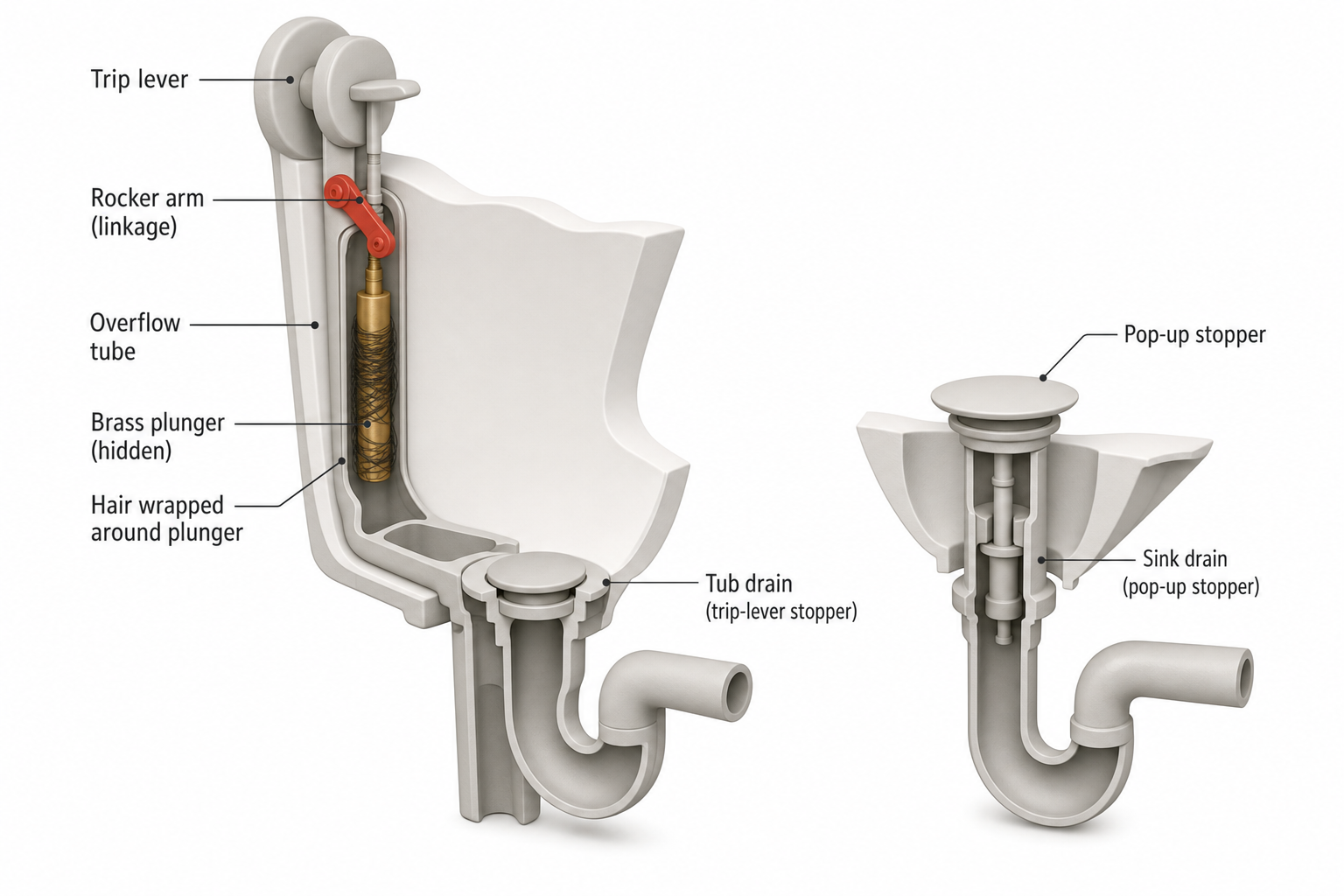
Most bathroom sinks use a simple pop-up stopper connected to a pivot rod, or just an open strainer. Tubs, on the other hand, typically use one of three stopper systems:
- Trip-lever (plunger) stoppers — a lever on the overflow plate raises and lowers a hidden brass or plastic plunger inside the overflow tube. There's no visible basket at the drain opening at all.
- Pop-up (linkage) stoppers — a visible stopper at the drain connects via a rocker arm or linkage to a lever on the overflow plate.
- Toe-touch or push-pull stoppers — a spring-loaded cap you press to open and close, threaded onto a post at the drain.
In trip-lever and linkage models, the plunger or rocker arm sits directly in the water path, and every strand of hair that goes down the drain snags on it, gradually building a dense mat. This is why tub drains slow down faster and more dramatically than sink drains, which usually only clog at the trap or in the strainer itself.
Step 1: Identify Your Stopper Type
Look at the drain opening and the overflow plate (the round plate with screws, usually a few inches above the drain on the tub wall):
- If there's a lever on the overflow plate and no visible moving stopper at the drain, you likely have a trip-lever stopper.
- If you see a stopper at the drain connected to visible linkage when lifted, and a lever on the overflow plate, it's a pop-up/linkage type.
- If the stopper twists or pushes down like a cap with no overflow-plate lever involved, it's a toe-touch style.
Step 2: Remove and Clean the Stopper Assembly
For trip-lever stoppers:
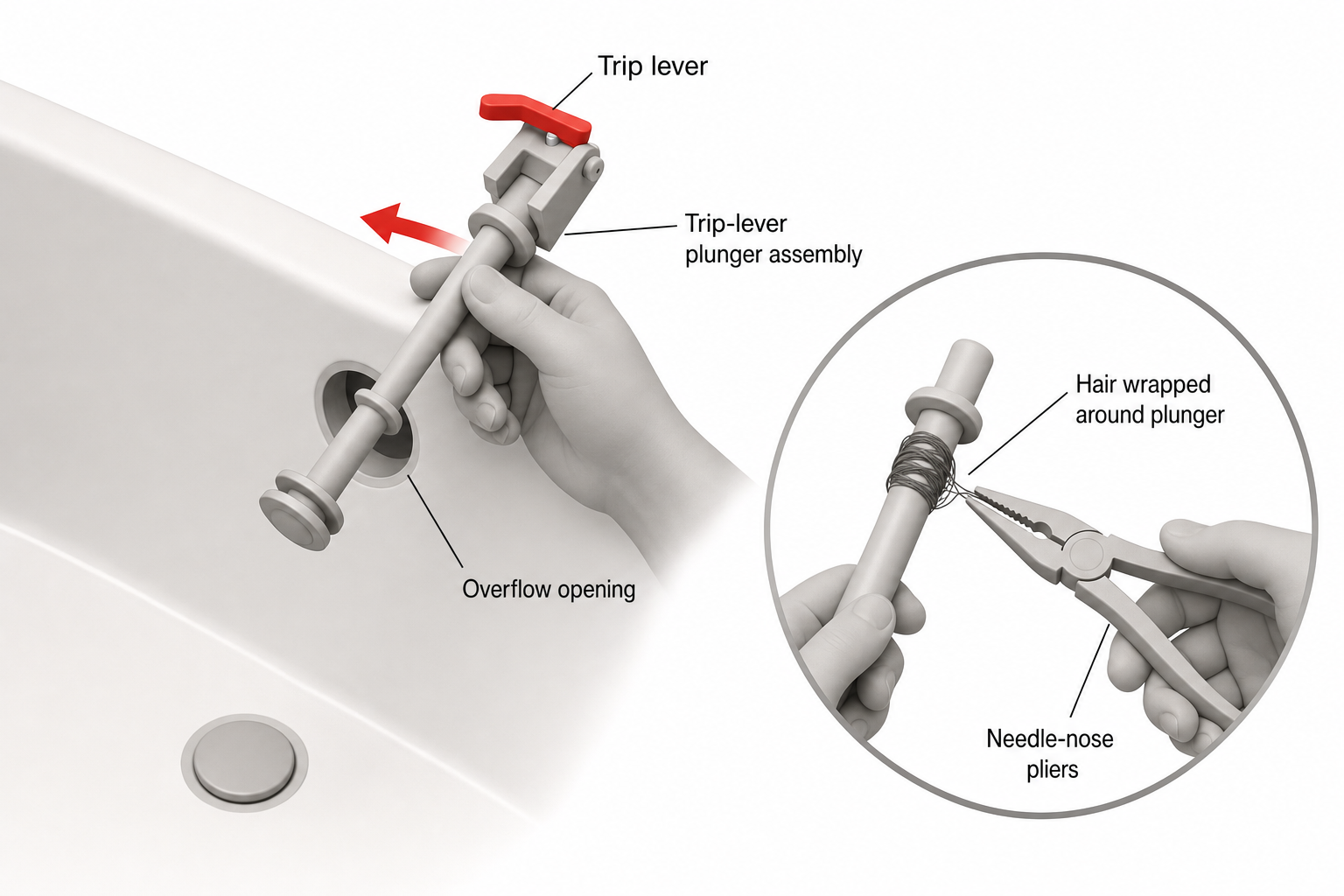
- Remove the two screws holding the overflow plate.
- Gently pull the entire assembly out through the overflow opening — the plunger and linkage will slide out as one long unit, often 8–12 inches long.
- You'll likely find a thick rope of hair and soap scum wrapped around the plunger. Pull it off by hand or with needle-nose pliers.
- Rinse the assembly, check that the linkage moves freely, and reinsert it, lining up the lever position with the plate before re-driving the screws.
For pop-up/linkage stoppers:
- Lift the stopper and turn it a quarter turn to unseat it from the rocker arm, or unscrew it if it's a screw-in type — check the manufacturer's design, as this varies.
- Pull the stopper straight up; the rocker arm usually comes with it.
- Clean hair off the rocker arm and stopper post using pliers or an old toothbrush.
- If the rocker arm itself seems bent or overly worn, it may not seat properly again — this is a common failure point after a few years of use.
For toe-touch stoppers:
- Unscrew the cap counterclockwise from the post.
- Unscrew the post itself from the drain crossbars if needed for full access.
- Clean hair from the post threads and the drain crossbars underneath.
Step 3: Clear Hair Below the Stopper
Even after cleaning the stopper itself, hair often collects just below it in the drain crossbars or the first foot of pipe. A plastic drain-cleaning tool (a flexible, barbed plastic stick sold for this purpose) or a small zip-it style tool works well here — feed it a few inches down the drain, twist, and pull. This step alone resolves a large share of slow tub drains, since it reaches the mat of hair sitting just past where a plunger-style stopper normally blocks visibility.
If the drain is still slow after this, a hand-crank plumbing snake (auger), 15–25 feet in length, fed through the drain (with the stopper removed) or through the overflow opening can reach clogs further down, including at the P-trap.
Step 4: Flush and Test
Run hot tap water for a minute or two to help clear any loosened soap scum, then run a full tub-fill-and-drain test to confirm normal flow. If drainage is still noticeably slow, the clog may be further down the line, possibly at a shared drain stack — a sign it's time to consider a proper plumbing snake attachment for a power drill or to call a plumber.
Step 5: Prevent Future Clogs
- Fit a mesh drain cover or hair catcher over the drain opening, even with a trip-lever system — a small hair-catching cover placed loosely over the drain still traps most strands before they reach the overflow tube's plunger.
- Brush out hair from the stopper and crossbars every month or two rather than waiting for slow drainage to return.
- Consider switching a hard-to-clean trip-lever stopper for a toe-touch or pop-up model during a bathroom refresh, since they're generally easier to disassemble for cleaning — see the recommendations below for stopper and drain-tool options.
FAQ
Why does my bathtub drain slowly even after I clean the stopper? Hair and soap scum often collect just below the stopper in the drain crossbars or the first section of pipe, out of sight. Use a flexible plastic drain tool to check this area before assuming the clog is deeper in the line.
Is it normal for a tub to drain slower than a sink? Somewhat, yes — tub drains handle more hair and body oils per use, and trip-lever or linkage stoppers have more internal parts for hair to snag on than a typical sink strainer, so they tend to slow down more noticeably over time.
Can I use a plunger on a slow bathtub drain? Yes, a standard sink plunger can help, but first cover the overflow opening with a wet rag to create suction, and remove or open the stopper fully if possible so the plunger can seal directly over the drain opening.
How often should I clean my tub's stopper mechanism? For households with long hair, checking every 4–8 weeks is a reasonable habit; for others, every few months is usually enough to prevent slow drainage from developing.
When should I call a plumber instead of doing this myself? If you've cleaned the stopper, cleared visible hair, and snaked the accessible line without improvement, or if other fixtures are affected when the tub drains, it's time to call a licensed plumber to inspect the branch or main drain line.