A silent sump pump during a heavy rain is one of the more stressful discoveries a homeowner can make. Most of the time the cause is one of three things: the float switch isn't triggering, the pump isn't getting power, or debris and a stuck check valve are confusing the whole system. Working through these in order will get you an answer — and hopefully a working pump — in under an hour.
Step 1: Confirm the Pump Is Actually Getting Power
Before touching the float or the pit, rule out the simplest cause.
- Check the outlet. Sump pump outlets are usually GFCI-protected. Press the "reset" button on the outlet itself — a tripped GFCI is one of the most common reasons a pump goes dead overnight. Test the outlet with a lamp or phone charger to confirm it has power.
- Check the breaker. Go to the panel and look for a tripped breaker (it'll sit in a middle position, not fully off). Reset it by pushing firmly to off, then back to on.
- Inspect the cord. Look for a cord that's been chewed, pinched under a storage shelf, or submerged where it shouldn't be. A pump cord sitting in standing water is a shock hazard — don't handle it while the circuit is live.
- Rule out a dead battery backup. If your system includes a battery backup sump pump, a failed or disconnected battery can prevent the backup unit from kicking in during an outage, even if the primary pump is fine.
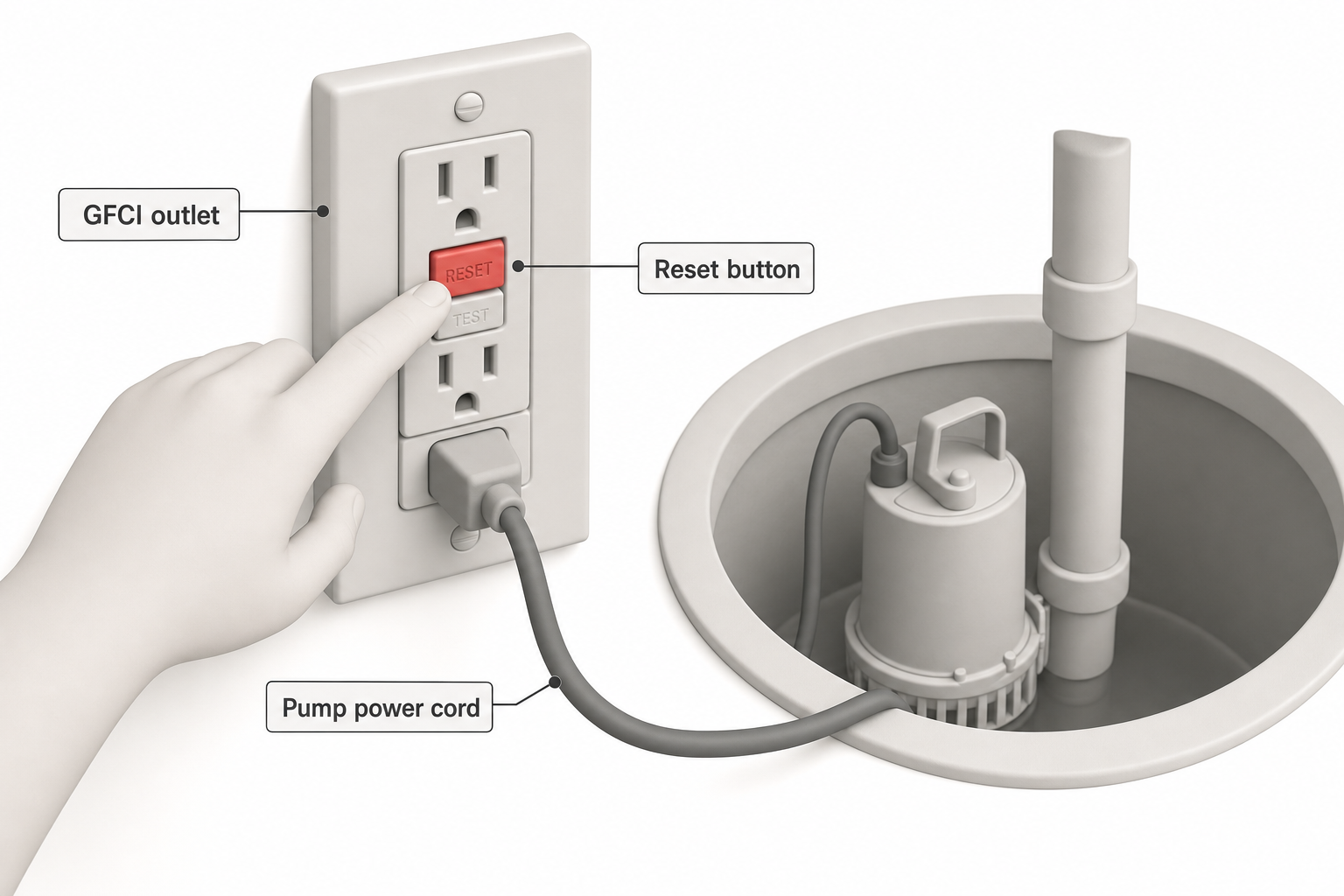
If power checks out and the pump still won't run, move to the float switch — the single most common point of failure.
Step 2: Test and Free the Float Switch
The float switch is the mechanism that senses rising water and tells the pump to turn on. It fails in a few predictable ways.
Check for a Stuck or Tilted Float
Most pedestal and submersible pumps use either a tethered float (a ball on a cord) or a vertical float rod. Both can get physically stuck:
- The pit may be too small or narrow, letting the float snag against the pit wall or the pump body itself.
- Sediment, gravel, or a shifted pump can tilt the float so it never rises to the trigger point.
- The float's cord or tether can get tangled around the discharge pipe or power cord.
With the pump unplugged, reach in and gently lift the float by hand. If the pump kicks on the moment you lift it, the float mechanism itself is fine — it's a clearance or obstruction problem. Reposition the pump so the float has 2in to 4in of unobstructed space to swing or rise, and dress any loose cords with a zip tie away from the float's path.
Test the Float Switch Directly
With the pump unplugged, you can isolate the float from the motor:
- Fill the pit manually with a few gallons of water (a bucket works) and watch whether the float rises and you hear or feel the internal switch click.
- If the float rises fully but never clicks, or clicks but the pump still won't run when plugged back in and retested, the float switch itself has likely failed internally and needs replacement.
- On pumps with a separate plug-in float switch (common on pedestal pumps), you can test the switch alone: plug the float switch's own cord into the outlet and lift it by hand. If the pump runs on the float switch's tested circuit but not through the pump's built-in switch, the float switch is bad and can usually be replaced without swapping the whole pump.
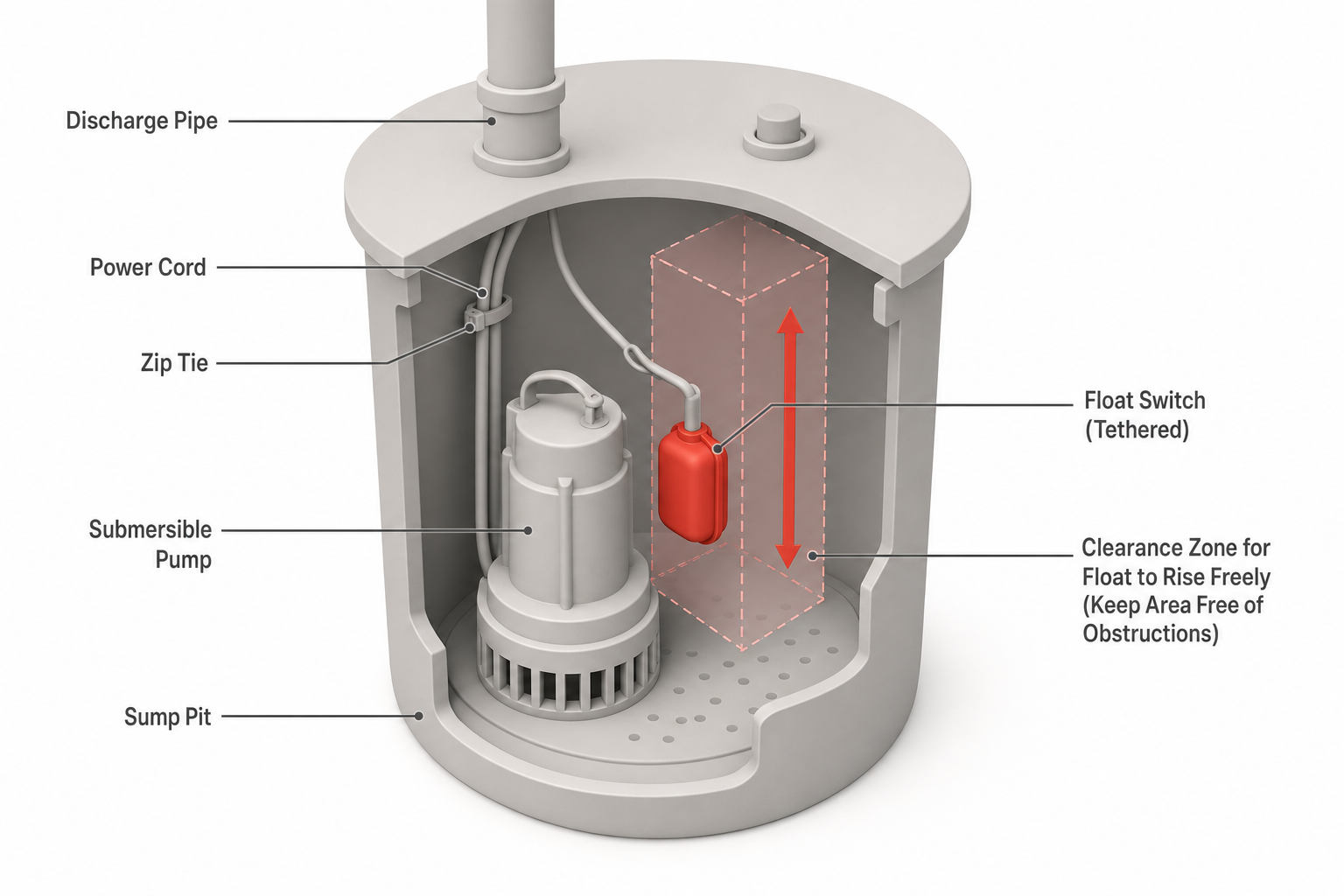
Float switches are wear items — expect to test and occasionally replace one over the life of a pump, especially in pits with a lot of sediment or iron ochre buildup.
Step 3: Rule Out a Clogged Intake or Jammed Impeller
If the pump hums but doesn't move water, or trips a breaker repeatedly, the motor may be trying to spin against a jammed impeller.
- Unplug the pump and pull it out of the pit.
- Check the intake screen on the bottom for gravel, sediment, or debris that's blocking water flow.
- Turn the impeller (the small fan-like wheel at the intake) by hand. It should spin freely. If it's gritty or won't turn, sediment has likely packed into the housing.
- Rinse the intake and impeller housing with a hose, and clear the pit bottom of loose gravel or silt that could get pulled back in.
A pump that runs constantly but never seems to lower the water level, or that cycles on and off rapidly, often has a partially clogged impeller rather than a dead motor.
Step 4: Inspect the Check Valve
The check valve sits in the discharge pipe just above the pump and prevents water from flowing back down into the pit after the pump shuts off. A failed check valve doesn't usually stop the pump from turning on, but it can mimic pump failure by letting water rush back in immediately, making the float re-trigger constantly or making it seem like the pump