
If your air conditioner suddenly starts blowing warm or lukewarm air instead of cold, the cause usually falls into one of three buckets: a thermostat or electrical issue, a restricted airflow problem, or a refrigerant-side fault. The good news is that many of these causes are easy for a homeowner to check safely before spending money on a service call. This guide walks through the checks in the order that makes sense — cheapest and safest first, more involved diagnostics later.
Start With the Thermostat
Before assuming a mechanical failure, rule out simple settings problems.
- Confirm the mode. Make sure the thermostat is set to "Cool," not "Fan" or "Auto" with the fan set to run continuously. A fan-only mode will circulate air without cooling it, which feels like warm air blowing.
- Check the setpoint. Confirm the target temperature is actually below the current room temperature. It sounds obvious, but a bumped setpoint or a child's tinkering is a common culprit.
- Replace the batteries. On battery-powered thermostats, low batteries can cause erratic calls to the compressor or blank/frozen displays that look like a bigger failure.
- Look for a blank or unresponsive screen. If the thermostat has no display at all, check the breaker (see the electrical section below) before assuming the thermostat itself is dead.
If the thermostat is a smart/Wi-Fi model, also check the app for any "delay" or "lockout" messages — many models impose a short compressor delay after any power interruption, and will blow only fan air during that window.
Check the Air Filter and Airflow
Restricted airflow is one of the most common — and most preventable — reasons an AC seems to blow warm air, especially after running hard on the hottest days.
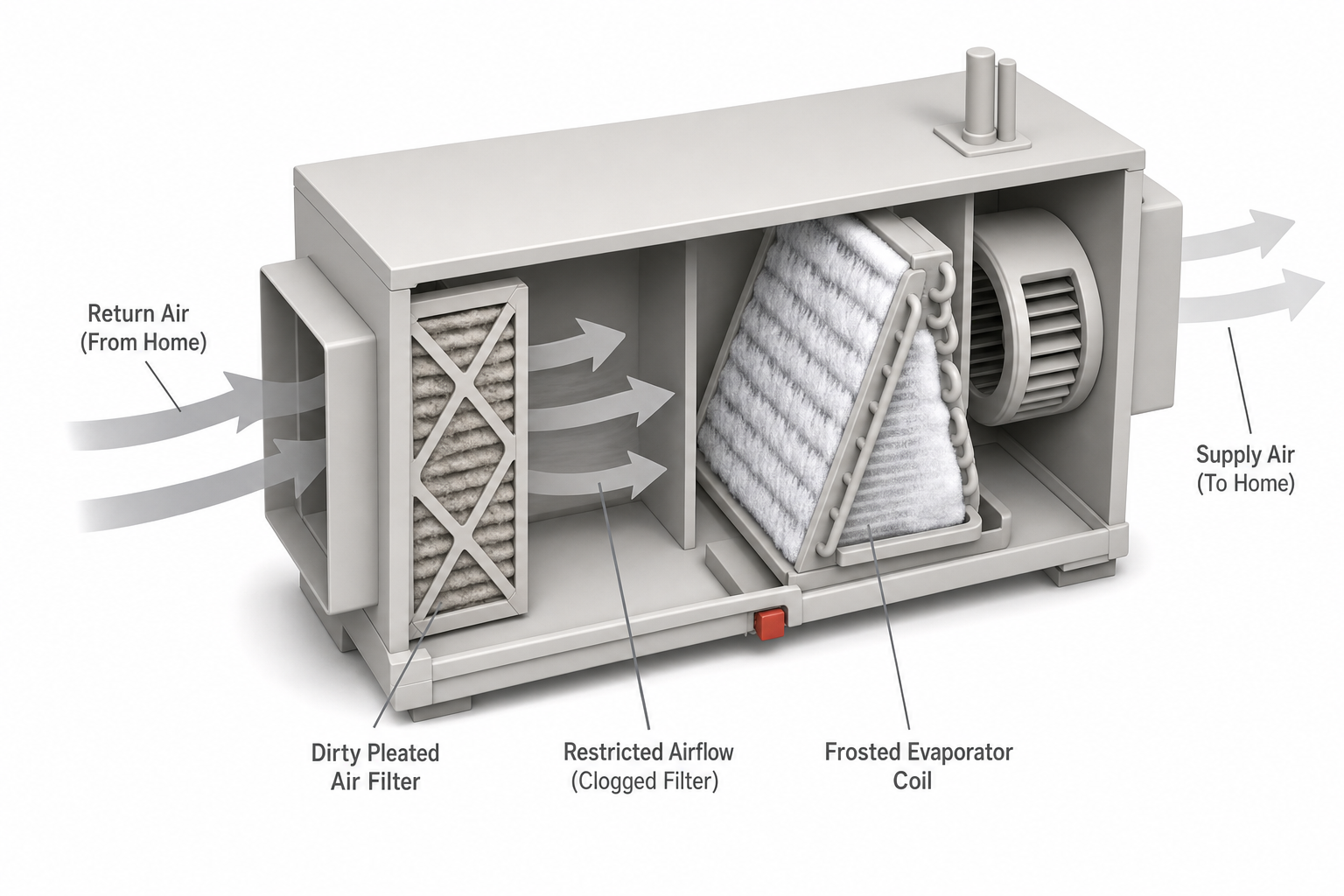
- Inspect the air filter. Pull the filter and hold it up to a light. If you can't see light through it, it's overdue for replacement. A clogged filter starves the indoor coil of airflow, which can cause the coil to ice up; once iced, the system may blow warm or barely-cool air until it thaws.
- Check supply and return vents. Make sure furniture, rugs, or curtains aren't blocking registers, and that all vents are open. Closing too many vents throughout a house can also restrict total airflow and stress the system.
- Look at the indoor evaporator coil for ice. If accessible (often behind a removable panel on the air handler or furnace), a visible layer of frost or ice on the coil or refrigerant lines confirms an airflow or refrigerant problem. Turn the system off and let it thaw completely — this can take several hours — before testing again.
- Check the condensate drain. A clogged condensate line can trigger a safety float switch that shuts off the compressor while leaving the fan running, which presents exactly like "blowing warm air." Look for a small switch near the drain pan or a shutoff at the drain line and see if it has tripped.
Inspect the Outdoor Condenser Unit
The outdoor unit is where the system rejects heat, and problems here directly affect how cold the air feels indoors.
- Clear debris. Grass clippings, leaves, cottonwood fluff, and dirt on the condenser's fins block airflow across the coil. Leave at least 2ft of clearance on all sides and keep the top clear.
- Confirm the outdoor fan is spinning. Stand back and listen — you should hear the compressor running and see the fan blade turning when the system calls for cooling. If the compressor hums but the fan doesn't spin, or the whole unit is silent, that points to an electrical or capacitor issue rather than a simple airflow fix.
- Check the breaker for the outdoor unit. A tripped breaker will stop the outdoor unit while the indoor blower keeps running, producing warm airflow indoors. Reset it once; if it trips again immediately, stop and call an HVAC technician rather than resetting repeatedly.
- Gently rinse the coil fins. If fins are visibly caked with dirt (not iced), a gentle rinse with a garden hose from the inside out, with the power off, can restore airflow. Avoid a pressure washer, which can bend the thin aluminum fins.
Signs of a Refrigerant Problem
If the filter is clean, vents are open, the outdoor fan spins, and the system still blows warm air, refrigerant is a likely suspect. A few signs point specifically to low refrigerant or a leak:
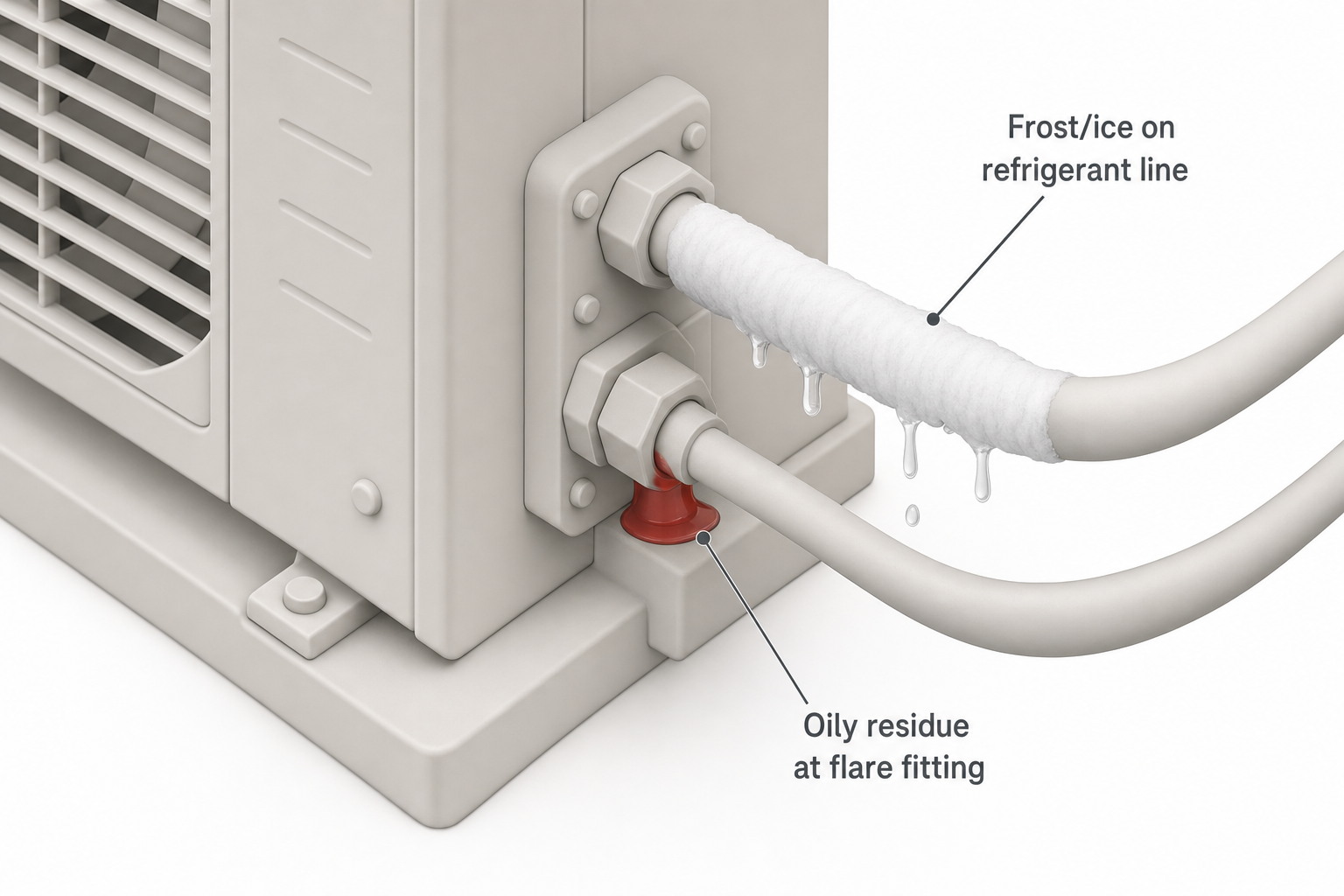
- Ice or heavy frost on the outdoor refrigerant lines or indoor coil, even in warm weather.
- A hissing or bubbling sound near the refrigerant lines, which can indicate an active leak.
- Cooling that was gradually getting weaker over days or weeks before failing outright, rather than stopping suddenly.
- An oily residue at line connections or the indoor coil — refrigerant oil often leaves a visible trace at a leak point.
When the Problem Is Electrical
Some warm-air complaints trace back to electrical components rather than refrigerant or airflow:
- A failed capacitor can prevent the outdoor fan or compressor from starting even though you hear a faint hum. This is one of the most common AC repair calls and typically requires a technician to test and replace the part.
- A failing contactor (the relay that switches power to the outdoor unit) can intermittently fail to engage, causing the system to run the indoor fan without ever starting the outdoor unit.
- A tripped high-pressure or low-pressure safety switch inside the system can shut down the compressor as a protective measure while leaving the blower running.
These components sit inside panels that carry high-voltage line power, so diagnosis and replacement should be left to a professional.
A Quick Troubleshooting Order
When the AC is blowing warm air, work through checks roughly in this order:
- Thermostat mode, setpoint, and batteries
- Air filter condition
- Vents open and unblocked
- Condensate drain switch
- Outdoor unit debris and fan operation
- Breakers for both indoor and outdoor units
- Signs of ice, frost, or oily residue (refrigerant leak indicators)
If you get through steps 1–6 without finding the cause, or you spot signs of a refrigerant leak or frosted coil that doesn't clear after a few hours of being powered off, it's time to schedule a professional diagnostic rather than keep guessing.
FAQ
Why is my AC blowing warm air but the outdoor unit is running? This usually points to either a refrigerant problem (low charge or a leak) or a mechanical failure inside the compressor itself, such as a failed internal valve. Both require a technician's diagnostic tools to confirm.
Can a dirty air filter really make an AC blow warm air? Yes. A severely clogged filter restricts airflow enough that the evaporator coil can ice over, which then blocks airflow further and can make the air coming out of vents feel warm or barely cool until the ice thaws and the filter is replaced.
Is it safe to add refrigerant myself if I find a can at a hardware store? No — in most regions handling refrigerant legally requires certification, and topping off a system that's low almost never fixes the underlying problem since AC systems are sealed and shouldn't lose charge unless there's a leak. Adding refrigerant without finding and repairing the leak also risks further damage to the compressor.
How long should I wait after resetting a tripped breaker before calling a professional? If a breaker for the outdoor AC unit trips again immediately or within a few minutes of resetting, don't keep resetting it. Repeated tripping indicates a real electrical fault, and continuing to reset it risks damaging components or creating a fire hazard.
Why does my AC blow cold air for a while and then turn warm? This pattern often points to ice buildup on the evaporator coil from restricted airflow, or a refrigerant charge that's just low enough to cool briefly before the system's protections kick in. Both scenarios point back to the filter/airflow and refrigerant checks covered above.