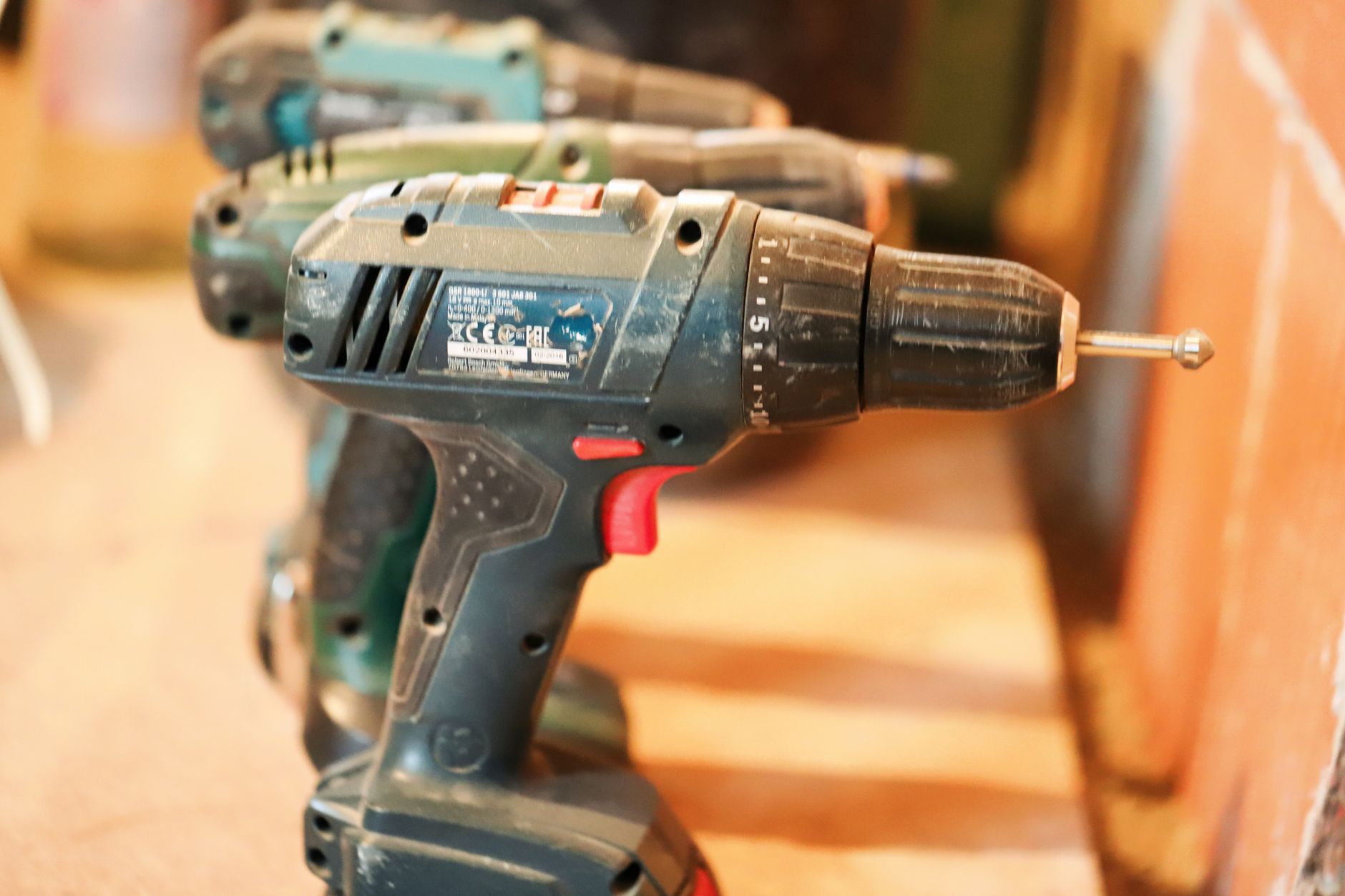
A stripped screw — one whose head has worn smooth so your screwdriver just spins without turning it — is one of the most common small repair headaches in a house. The good news is that there's a clear order of operations: start with the least invasive trick and only escalate if it fails. Working this way saves your workpiece, your fasteners, and your patience.
Below are six methods to remove a stripped screw, ranked from gentlest to most destructive, so you can stop at the first one that works.
Before You Start: Diagnose the Strip
Not all stripped screws are the same. Look closely at the head:
- Rounded-out slots (common with Phillips and Pozidriv heads) mean the driver has nowhere to bite. This is the classic candidate for the rubber band trick or an extractor bit.
- A screw that's spinning freely but not moving up or down may actually have a stripped hole in the wood, not a stripped head — the threads have chewed through the surrounding wood fibers. That's a different repair (see the FAQ).
- Rust or paint filling the head can mimic stripping. Sometimes cleaning out the recess with a small pick or old screwdriver tip restores enough grip that no special method is needed at all.
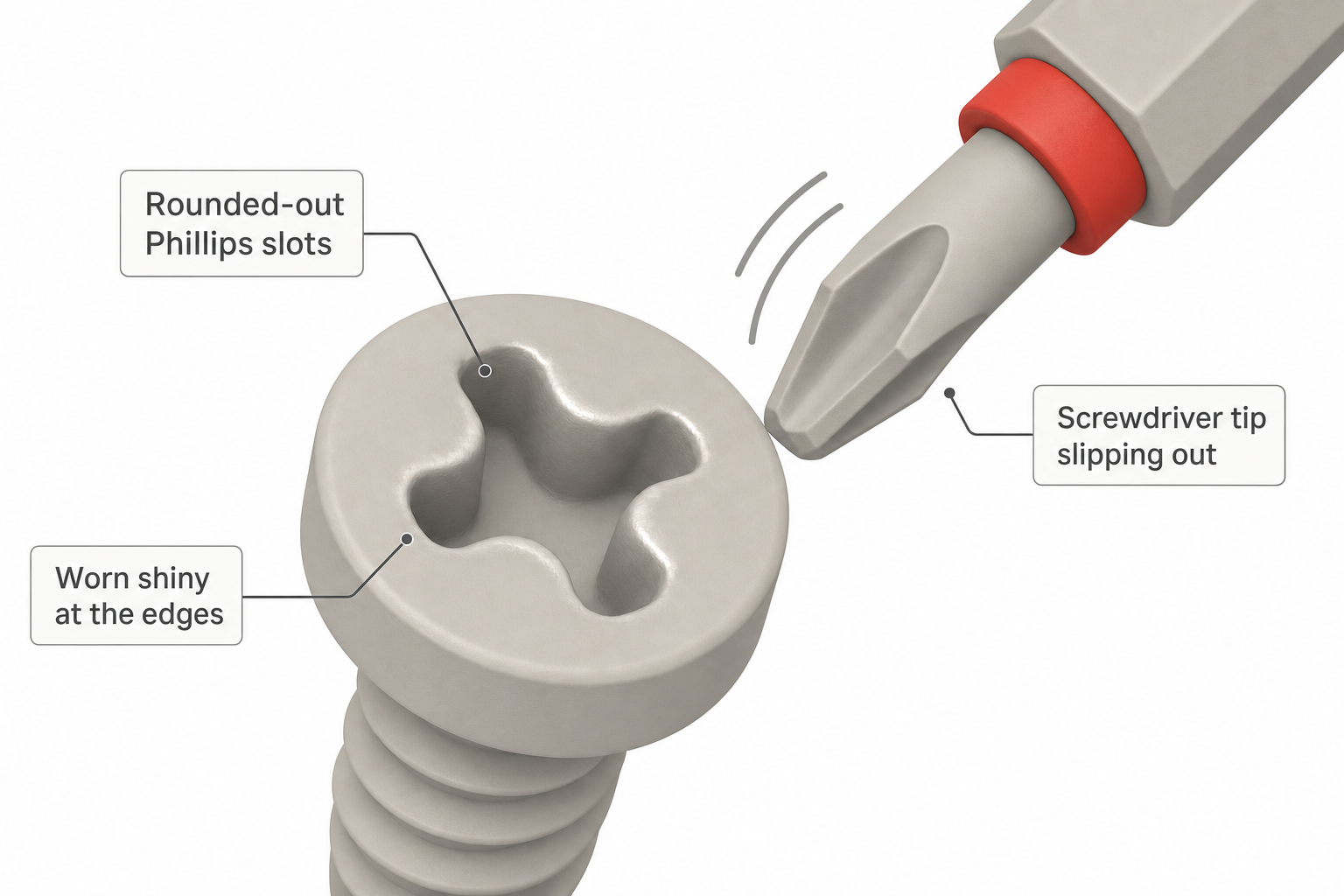
Method 1: The Rubber Band Trick (Least Destructive)
This works surprisingly often on lightly stripped heads and costs nothing.
- Lay a wide rubber band (a section cut from a bicycle inner tube also works well) flat over the screw head.
- Press a properly sized screwdriver straight down through the rubber band into the recess, so the rubber fills the worn-out gaps between the driver tip and the metal.
- Push down firmly while turning counterclockwise. The extra grip from the compressed rubber is often enough to get the screw moving.
This method is best for screws that are only mildly rounded and still mostly accessible. It does nothing for a screw that's rusted solid or buried below the surface.
Method 2: Manual Impact Driver
A manual impact driver (a hand tool struck with a hammer, not to be confused with a cordless impact driver) converts a hammer blow into a sharp rotational force. It's especially effective on stubborn screws that are stuck from corrosion or paint rather than truly stripped.
- Select the correct bit for the screw type and insert it into the impact driver.
- Set the tip firmly in the screw head, holding the tool square to the screw.
- Strike the end of the tool firmly with a hammer. The combination of downward force and rotational impact often breaks the bond and starts the screw turning.
This causes no damage to the surrounding material and is worth trying before cutting or drilling anything.
Method 3: Larger or Different-Shaped Driver
Sometimes a stripped Phillips screw will respond to a flat-blade screwdriver of the right width wedged into one of the remaining slot grooves, or to a Phillips bit one size up that bites into undamaged material deeper in the recess. This is low-risk and worth a try before moving to adhesives or extractors, though it doesn't work on heads that are severely rounded all the way around.
Method 4: Adhesive or Grip-Compound Assist
A small dab of valve-grinding compound, or in a pinch a drop of thick adhesive that hasn't yet cured, pressed into the stripped recess before inserting the driver can add just enough friction to get purchase. This is a low-destruction option but works only on lightly stripped heads and requires cleanup afterward. It's not suitable for screws you'll need to reuse, since the compound coats the threads.
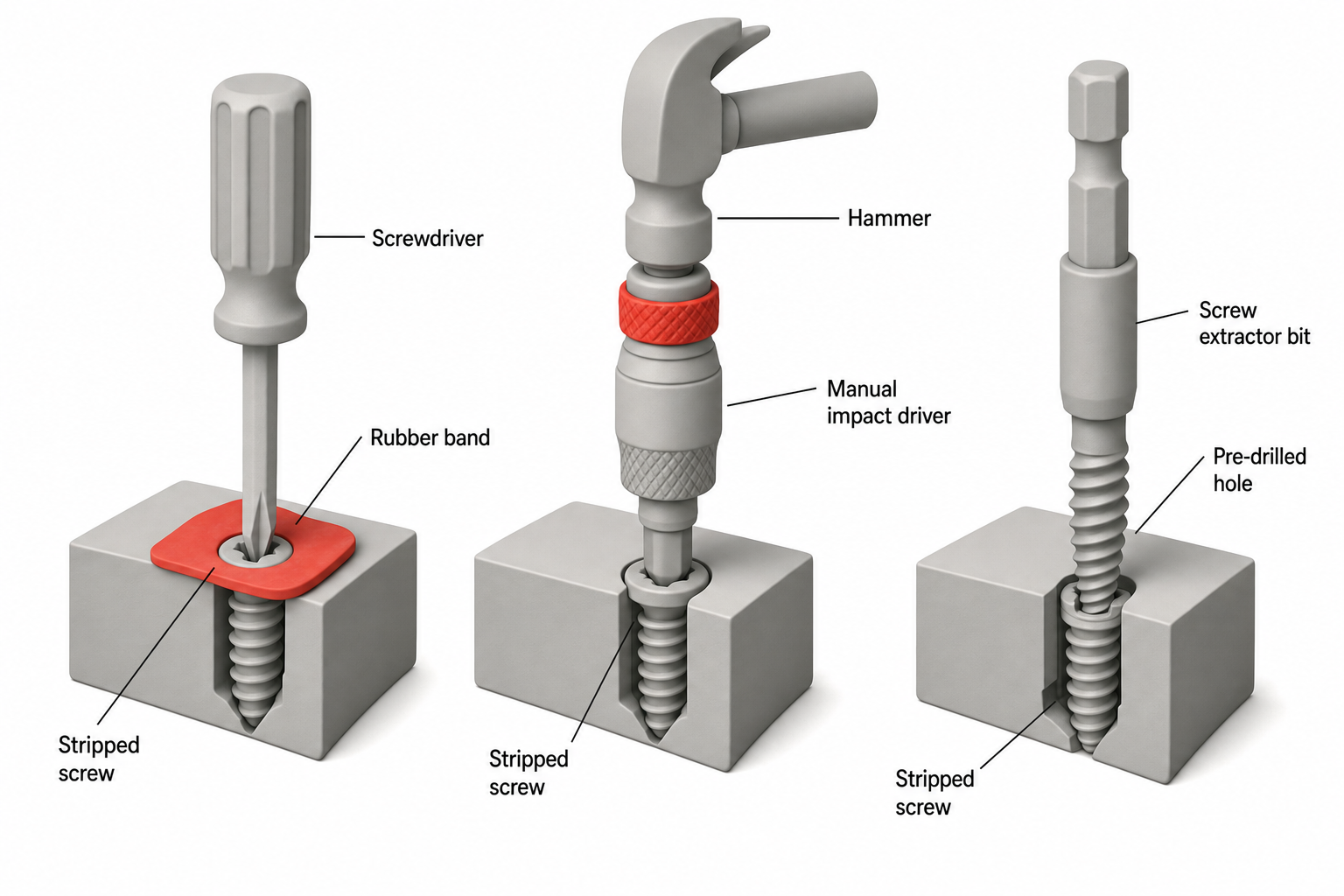
Method 5: Screw Extractor Bit (Moderately Destructive)
When the head is too far gone for friction tricks, a screw extractor is the next step. These are reverse-threaded, tapered bits designed to bite into a pilot hole and back the screw out.
- Center-punch the screw head lightly to keep the drill bit from wandering.
- Drill a small pilot hole into the center of the screw head using the bit size specified for your extractor kit — this is usually noticeably smaller than the screw itself.
- Insert the extractor into the pilot hole and turn it counterclockwise, usually with a wrench or the extractor's own handle. As it bites in, it should simultaneously tighten its grip and unscrew the fastener.
- Back the screw out slowly and steadily; extractors are relatively brittle and can snap off in the hole if forced or if the drilled hole isn't aligned straight down the screw's axis.
This method destroys the screw (it can't be reused) and enlarges the head slightly, but it typically leaves the surrounding wood or metal intact if done carefully.
[!safety] If you're extracting a screw near a live electrical box, outlet, or fixture, shut off power at the breaker first and verify with a non-contact voltage tester before working. If you're unsure which circuit controls the area, call a licensed electrician rather than guessing.
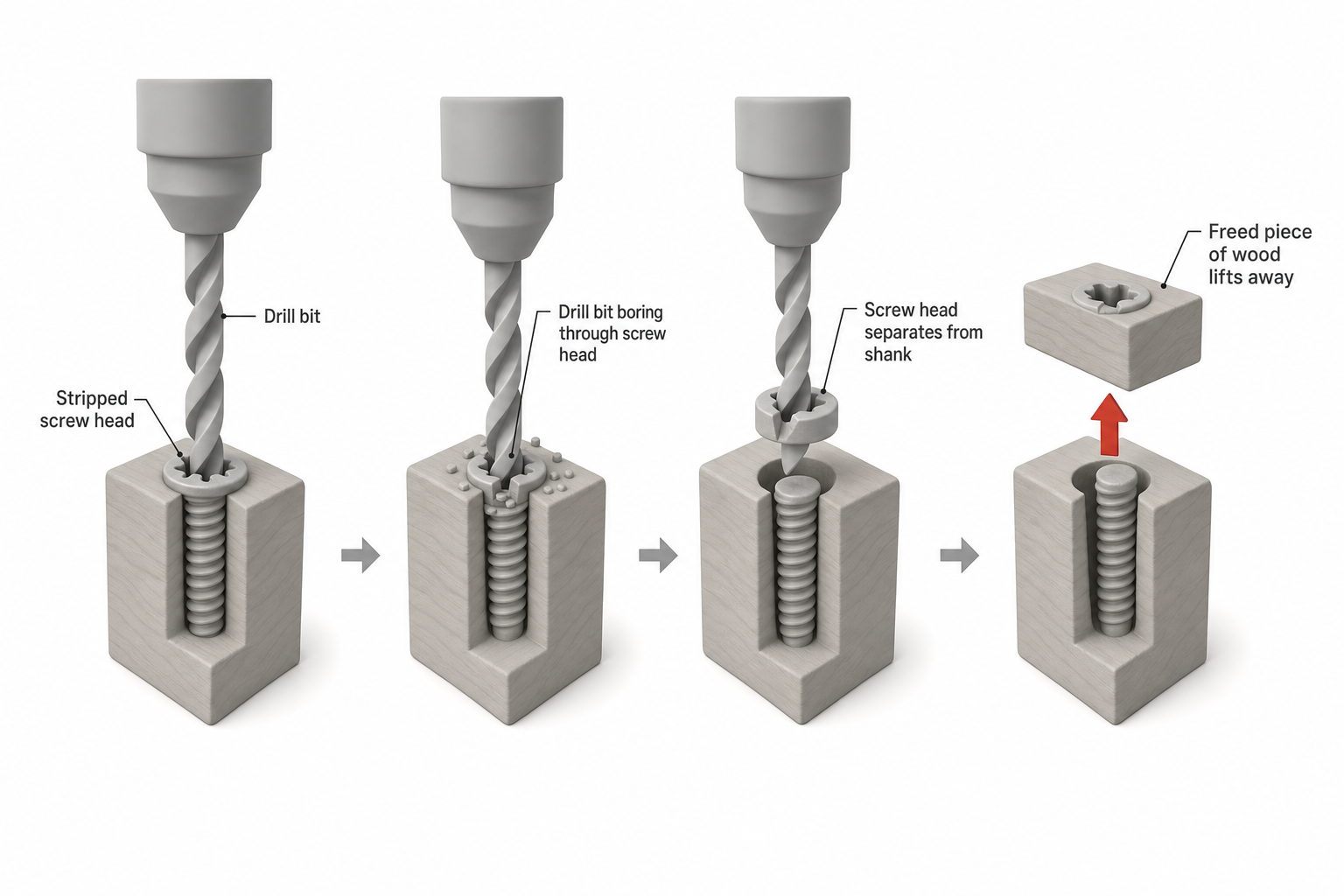
Method 6: Drilling It Out Completely (Most Destructive)
When an extractor fails, snaps off, or isn't available, drilling out the entire screw is the last resort.
- Choose a drill bit matched to the screw's shank diameter (not the head) — check it against the screw before drilling.
- Drill straight down through the center of the screw, following its original axis as closely as possible, until the head separates from the shank or the whole screw grinds away.
- The piece being fastened can usually now be lifted free; any remaining shank left in the base material can often be gripped with pliers and unscrewed, or drilled out as well if it's flush.
- If you've enlarged or damaged the original hole, you'll likely need a slightly larger replacement screw, or for wood you can glue in a hardwood dowel, let it cure, and redrill a fresh pilot hole in solid material.
This method sacrifices the screw entirely and can enlarge or weaken the surrounding hole, so treat it as the fallback once methods 1–5 have failed.
[!safety] Power drills and extractor bits can bind and kick back suddenly, especially in metal. Wear eye protection, keep your fingers clear of the bit path, and clamp small workpieces down rather than holding them by hand.
A Note on Broken or Snapped-Off Screws
If a screw snaps off flush with or below the surface rather than merely stripping, extractor bits still work the same way, but drilling accurately into a tiny flush target is harder — go slowly and consider a punch mark first to keep the bit from skating sideways.
[!region] Building and electrical code requirements for replacing structural fasteners, deck hardware, or anything inside an electrical panel vary by jurisdiction. Where a stripped screw is part of a structural connection or an electrical fixture, check with your local building department or a licensed contractor before making a repair.
FAQ
Why do screw heads strip in the first place? It usually comes down to using an undersized or worn driver bit, pushing at an angle instead of straight in, or over-torquing a cordless drill past the point the head can handle — softer metals like brass strip especially easily.
Can I reuse a screw after extracting it? Rarely. Extractor bits and drilling both damage the head or shank enough that the screw is no longer reliable; plan to replace it with a new one of the same size and type once it's out.
The screw spins freely and won't tighten — is that stripping too? That's usually a stripped hole rather than a stripped head — the wood fibers around the threads have worn away. The fix is different: back the screw out, fill the hole with wood glue and toothpicks or a wooden matchstick, let it cure fully, then redrill a pilot hole and reinsert the screw into fresh material.
Is it safe to use a rotary tool to cut a new slot in a stripped head? It can work as a low-cost middle option between the rubber band and an extractor — cutting a fresh straight-line slot lets you use a flat-blade screwdriver — but it requires a steady hand and eye protection, and it won't help if the head is also rusted to the material.
What if the screw is in a spring-loaded or load-bearing assembly? If removing the screw could release stored tension (as in garage door hardware or certain appliance mechanisms) or affect a structural connection, stop and call a licensed professional rather than continuing with extraction methods at home.