
A toilet that rocks even slightly against the floor isn't just annoying — it's slowly breaking the wax seal underneath it. Every time someone sits down and shifts their weight, the base flexes and works the seal loose. Eventually that turns into a leak at the base, water damage to the subfloor, or a soft, spongy spot around the toilet that's expensive to repair. The good news is that most wobbles have one of three causes, and all three are within reach of a confident DIYer with an afternoon and a few basic tools.
This guide walks through how to fix a wobbly toilet properly — not just jamming a wedge under the edge and calling it done, but figuring out why it's rocking so you address the real problem.
Step 1: Confirm It's Actually the Toilet, Not the Floor
Before you touch any bolts, figure out what's moving. Kneel down and rock the toilet gently by hand at the back corners, then the front.
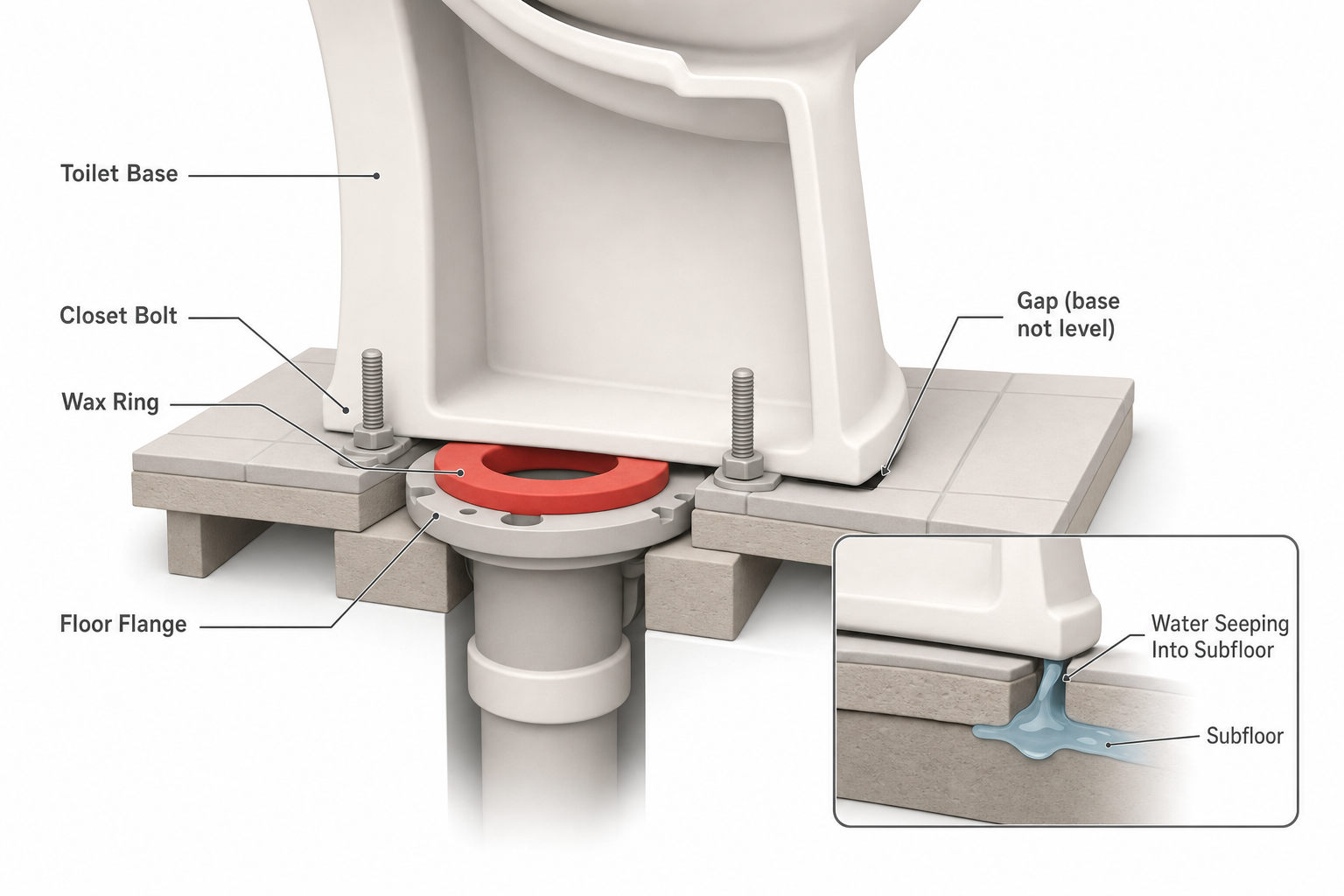
- If the whole toilet rocks diagonally (one front corner and the opposite back corner lift together), the base is sitting unevenly on an uneven floor or an old wax ring has compressed unevenly.
- If it rocks side to side or front to back only at the base, the closet bolts (the two bolts on either side of the bowl base) are likely loose or the flange is damaged.
- If the floor itself flexes or feels soft/springy when you step near the toilet, you may have a subfloor problem from a long-term leak — this needs more than shimming. See the safety note below.
Step 2: Check and Tighten the Closet Bolts
The closet bolts anchor the toilet base to the floor flange. Loose bolts are the single most common cause of a wobble and the easiest to fix.
- Pry off the plastic caps covering the bolts at the base of the toilet.
- Using an adjustable wrench, hold the bolt still from underneath the cap (some have a slot for a flathead screwdriver) and tighten the nut clockwise.
- Snug the nuts down evenly, alternating side to side, until the toilet stops rocking. Stop as soon as it's snug — overtightening is the most common mistake here.
If tightening the bolts stops the wobble and the toilet sits flat, you're likely done — just replace the plastic caps. If it still rocks, the problem is the floor or the flange, not the bolts.
Step 3: Shim an Uneven Floor
Bathroom subfloors are rarely perfectly flat, especially in older homes, and a slight dip or slope of even an eighth of an inch is enough to make a rigid porcelain base rock.
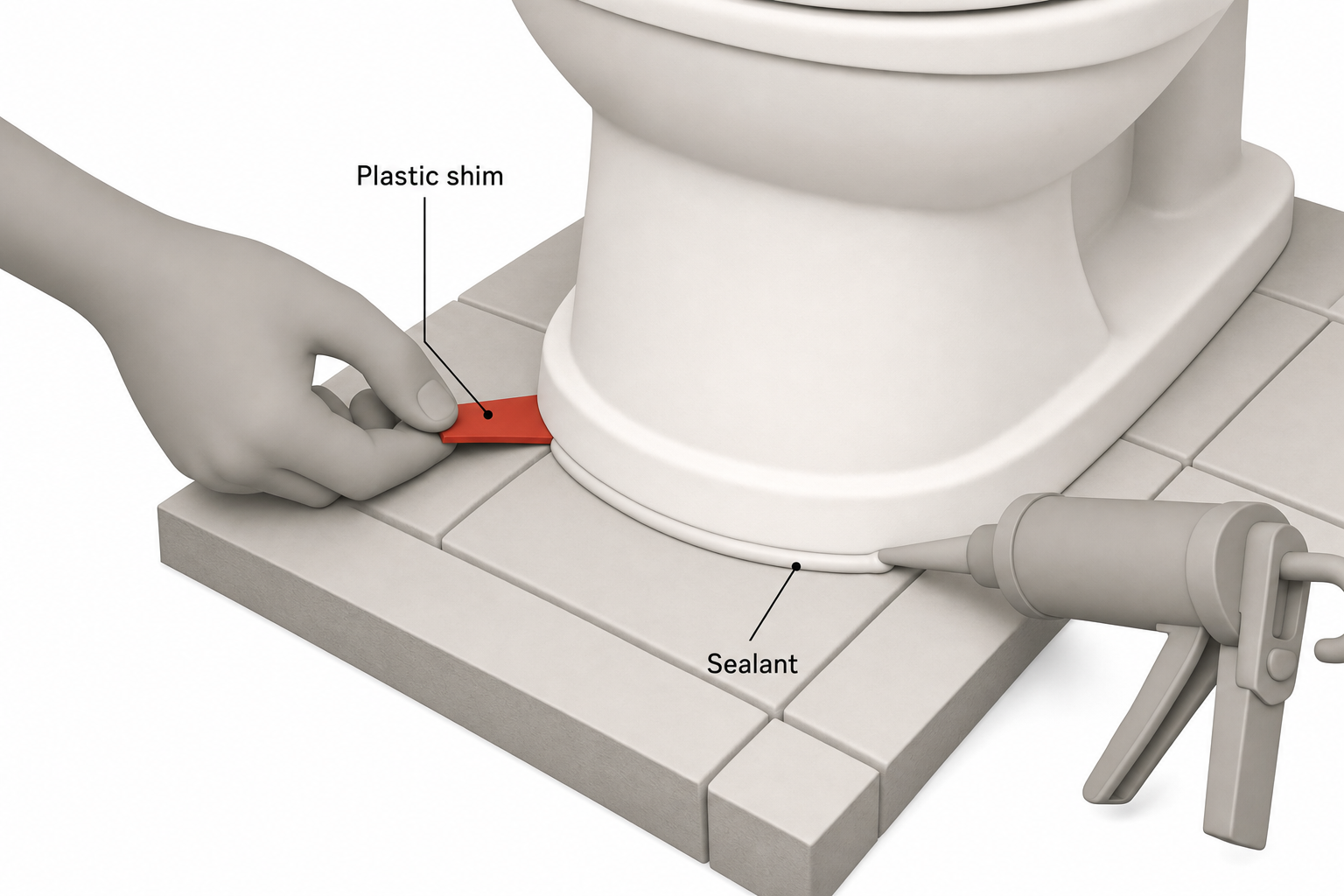
- With the toilet bolted down but still rocking, slide thin plastic shims (the kind sold for door and window installation) into the gap under the low side or corner. Avoid wood shims — they compress and rot over time in a damp bathroom.
- Work shims in from multiple sides until the toilet no longer rocks under body-weight pressure, not just a light push.
- Score the shims with a utility knife flush with the edge of the toilet base and snap off the excess so they're not visible.
- Run a bead of 100% silicone caulk around the base of the toilet where it meets the floor, leaving a small gap at the very back unc caulked (many plumbers leave an inch or two open at the rear) so that if a leak ever does develop, it shows up as a puddle instead of being hidden and rotting the floor underneath.
Step 4: Inspect the Wax Ring and Flange
If the toilet rocks significantly, if it was already loose when you found it (not something that developed gradually), or if you notice water staining on the floor around the base or on the ceiling below, the wax ring or flange itself may be compromised. This requires pulling the toilet.
To pull the toilet:
- Shut off the water supply valve behind the toilet and flush to empty the tank, holding the handle down to drain as much water as possible. Sponge out what remains in the tank and bowl.
- Disconnect the supply line from the tank.
- Remove the nuts from the closet bolts and lift the toilet straight up and off, setting it on old towels.
- Scrape the old wax ring off the flange and off the toilet's horn (the outlet on the underside) using a plastic putty knife.
What to look for:
- A cracked or corroded flange: cast iron flanges can rust through, and even PVC ones can crack if a heavy toilet was rocked repeatedly. A broken flange won't hold the closet bolts securely no matter how much you tighten them, and it needs to be repaired or replaced before reinstalling the toilet.
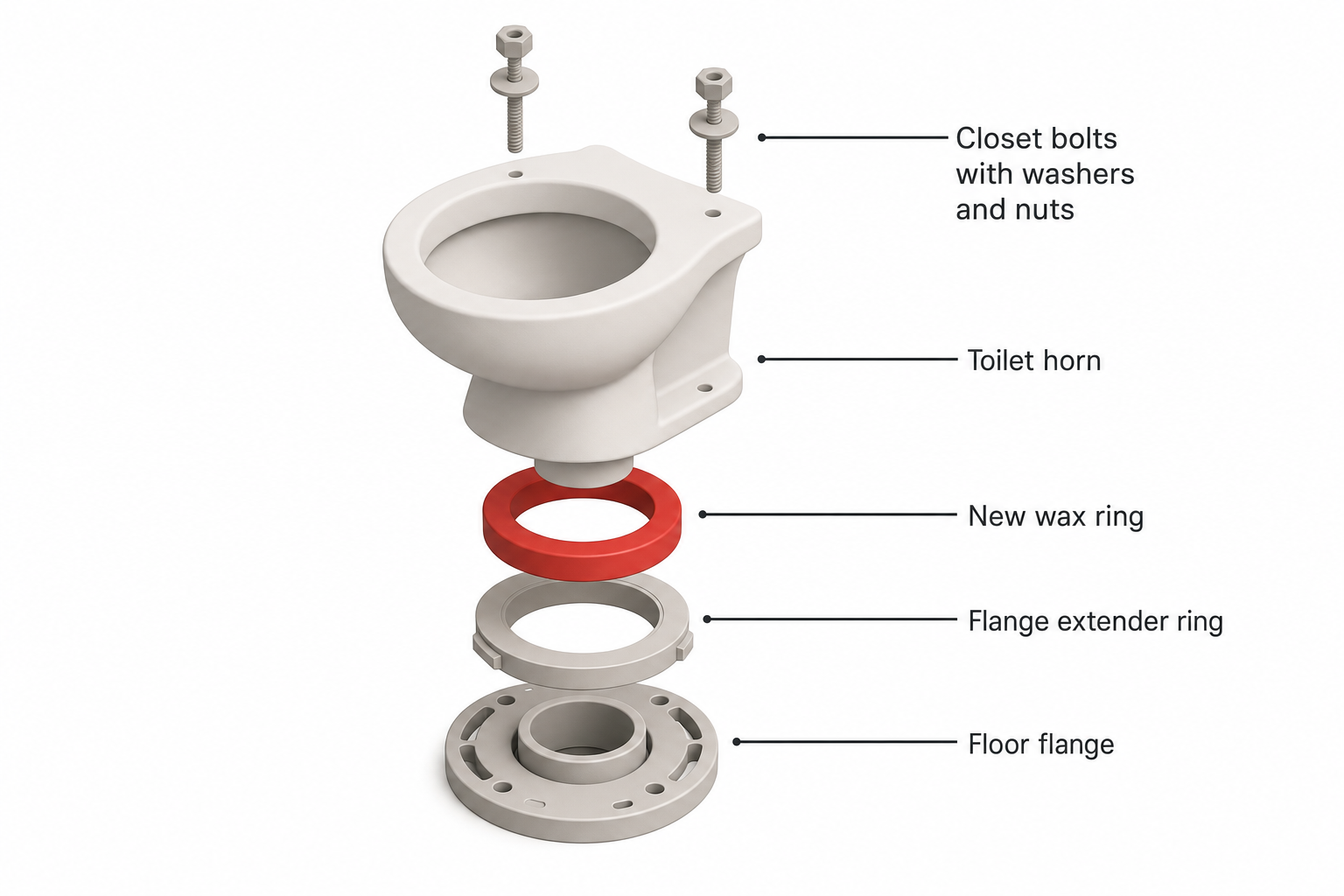
- A flange sitting below the finished floor level: if someone added tile or vinyl flooring after the flange was installed, the flange can end up recessed below the new floor surface. Manufacturers of wax rings typically specify that the flange should sit at or slightly above the finished floor for a proper seal — a recessed flange is a very common cause of chronic wobbling and leaking, especially after a flooring remodel. This is usually fixed with a flange extender kit or spacer rings rather than replacing the whole flange.
- A degraded wax ring: if the old ring is flattened unevenly, torn, or shows signs of water having pushed through it, replace it regardless of what else you find.
Step 5: Reset the Toilet with a New Wax Ring
- Install a new wax ring (or a wax-free foam gasket, which some plumbers prefer because it's less messy and more forgiving of minor flange height mismatches) onto the flange or onto the toilet horn.
- If the flange sits low, add a flange extender or plastic spacer ring first so the new seal isn't being asked to bridge too large a gap.
- Install new closet bolts if the old ones are corroded — they're inexpensive and it's much easier to do now than after the toilet is reset.
- Lower the toilet straight down onto the flange, aligning the bolt holes, then press down firmly with even weight (sitting on it works) to compress the wax ring fully.
- Install washers and nuts on the closet bolts and tighten evenly by hand-plus-wrench, alternating sides, until snug — again, stop at snug, not maximum torque.
- Reconnect the water supply, turn it back on, and check for leaks at the supply connection and around the base after flushing a few times.
- Rock the toilet by hand one more time before caulking. It should not move at all.
When to Call a Plumber Instead
Call a licensed plumber if: the flange is broken below floor level and needs cutting into the drain pipe to repair, the subfloor shows rot or water damage, you find the toilet is bolted to a flange that's misaligned with the drain pipe, or you're not comfortable working with the wax ring and don't want to risk a bad reseal that leaks later. A botched wax ring reseal is one of the more common sources of hidden water damage in bathrooms, and it's a relatively inexpensive service call compared to the cost of a rotted subfloor repair.
FAQ
Why does my toilet wobble even though the bolts are tight? Tight bolts only fix a wobble caused by a loose base — they don't fix an uneven floor, a cracked flange, or a flange that sits too low or too high relative to the finished floor. If tightening doesn't stop the rock, move on to shimming and then inspect the flange.
Is it safe to just shim a wobbly toilet without checking the wax ring? If the wobble is minor and the toilet hasn't been loose long, shimming and tightening the bolts is often enough. But if the rock was significant, or you see any staining or odor near the base, pull the toilet to check the seal — shimming a toilet with a failing wax ring just delays a leak, it doesn't prevent one.
Can I reuse a wax ring if I only pulled the toilet to check it? No — once a wax ring is compressed and disturbed, it won't reseal properly even if it looks intact. Always install a new one any time the toilet has been lifted off the flange.
How do I know if my flange is too low after new flooring was installed? After removing the toilet, lay a straightedge across the flange and measure down (or up) to the finished floor. If the flange sits noticeably below the floor surface, a flange extender kit is generally the fix; manufacturers' wax ring instructions typically note the acceptable height range.
Will caulking around the base stop the wobble? No — caulk stabilizes an already-solid installation and helps prevent water from spreading if a small leak occurs, but it's not a substitute for fixing loose bolts, shims, or a bad wax seal. Solve the wobble first, then caulk.