
A clogged furnace filter is one of the most common — and most avoidable — causes of poor heating and cooling performance. Restricted airflow forces the blower motor to work harder, can cause the heat exchanger to overheat and shut down on a safety limit switch, and drives up energy use. The fix takes about five minutes once you know what to buy and how often to do it. Cleaning is an option for a small subset of reusable filters, but most residential furnace filters are disposable and should be replaced rather than washed.
Find Your Filter's Size
Before buying anything, locate the filter slot. It's usually in one of three places:
- Inside a slot on the return-air duct near the furnace
- Inside the blower compartment of the furnace itself, close to where the return duct connects
- Behind a return-air grille on a wall or ceiling, especially in homes with the furnace in a closet or attic
Pull the old filter out and look at the frame — the size is almost always printed there as three numbers, such as 16x25x1 or 20x20x4 (width x height x thickness in inches). If the print is worn off, measure the actual slot opening yourself with a tape measure rather than trusting the old filter, since a previous owner may have installed the wrong size. Measure 16in by 25in openings to the nearest quarter inch; filters are sized to fit slightly under nominal dimensions so they slide in without binding.
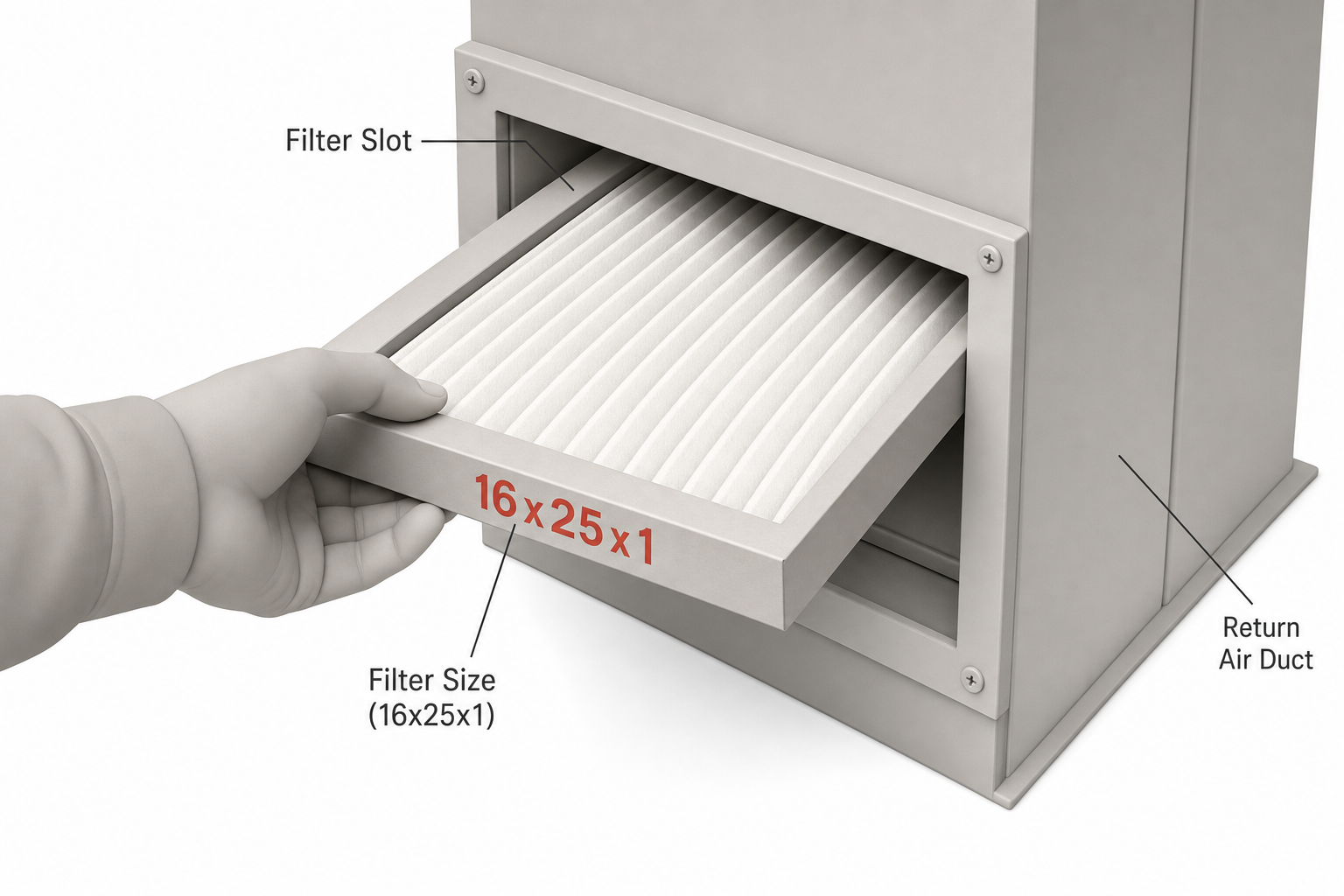
Thickness matters more than people expect. A 1in filter needs replacing far more often than a 4in or 5in media filter used in some whole-house cabinet systems, because the thicker filter has dramatically more surface area and holds more dust before airflow suffers. Don't assume you can swap a thin filter into a slot designed for a thick one, or vice versa — check your furnace or filter cabinet's manual, since undersized filters that don't seal the opening let unfiltered air bypass around the edges.
Understand MERV Ratings
MERV (Minimum Efficiency Reporting Value) is a 1-16 scale describing how well a filter captures particles; higher numbers trap smaller particles more effectively.
- MERV 1-4: Basic fiberglass filters. These mainly protect the furnace's own components from large debris and do little for indoor air quality.
- MERV 5-8: Common pleated filters for typical residential use. Reasonable balance of dust/pollen capture and airflow.
- MERV 9-12: Capture finer particles like mold spores and pet dander; a good choice for allergy-sensitive households.
- MERV 13-16: Capture very fine particles, including many bacteria and some virus-carrying droplets, but restrict airflow significantly.
The important caveat: your furnace's blower is designed around a specific static pressure range. Manufacturers typically specify a maximum MERV rating (often noted in the owner's manual or on a sticker near the filter slot) that the system can handle without overworking the blower motor. Installing a MERV 13 filter in a system designed for MERV 8 can starve the blower of airflow, potentially freezing the evaporator coil in cooling mode or tripping the furnace's high-limit switch in heating mode. If you want a higher MERV rating than your system was designed for, an HVAC technician can check whether your ductwork and blower can support it, sometimes by upsizing the filter's surface area (going to a thicker, larger media filter) rather than just choosing a denser 1-inch filter.
Step-by-Step Replacement
- Turn off the furnace. Set the thermostat to off, or switch off power at the furnace's local disconnect switch, before opening any panel. This isn't strictly required for a filter that's simply in a duct slot, but it prevents the blower from kicking on while your hand is in the airflow path.
- Open the filter compartment or pull the slot cover. Blower-compartment filters usually sit behind a hinged or screwed access panel; slot filters just slide out.
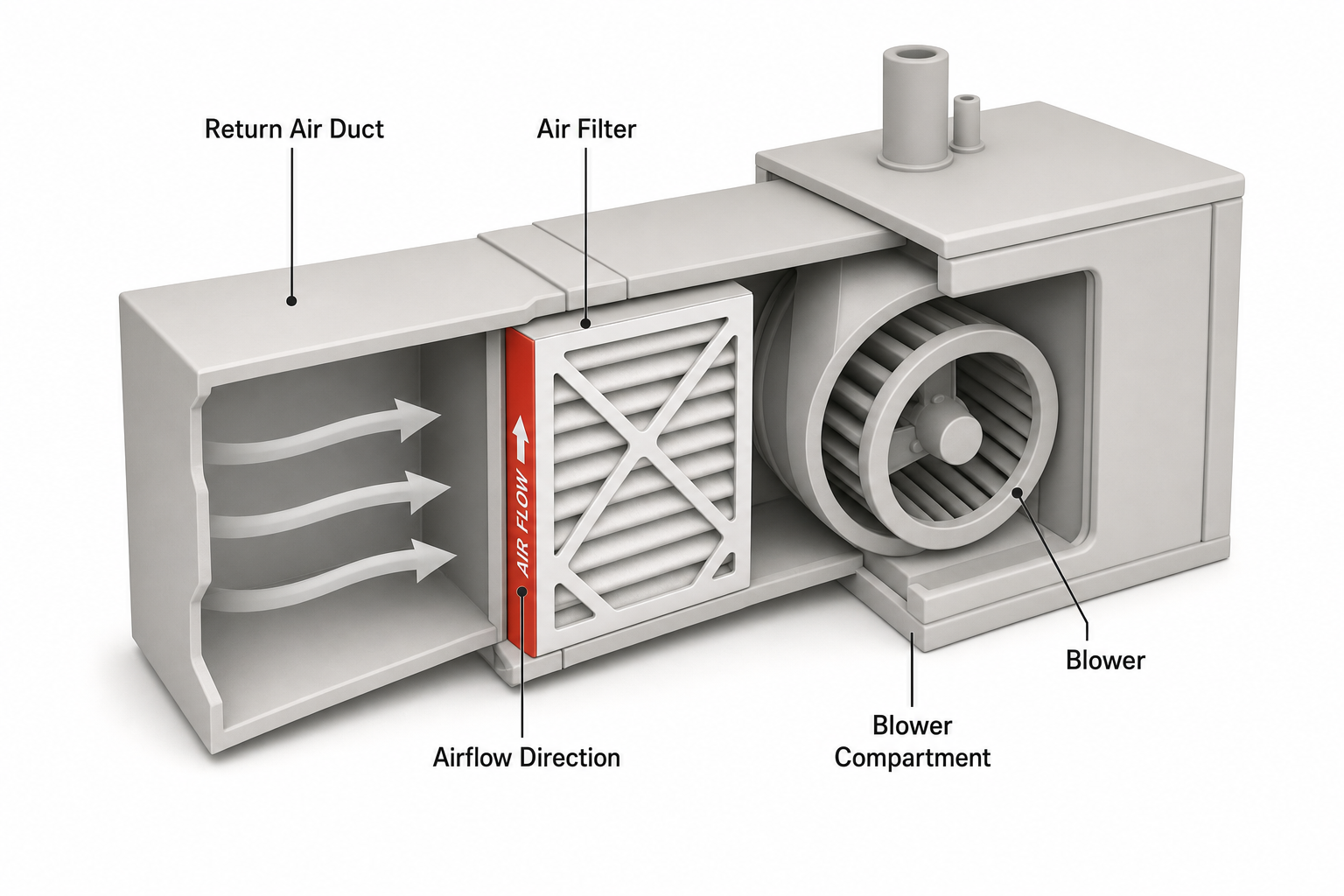
- Note the airflow direction arrow. Every pleated filter has an arrow printed on the frame showing which way air should flow through it — arrow pointing toward the furnace/blower, away from the return duct opening. Installing it backward reduces filtration efficiency and can shorten filter life.
- Slide the old filter out and inspect it. A heavily gray, matted filter that blocks light when held up is overdue. Note the general dust load to help calibrate your replacement schedule going forward.
- Insert the new filter with the arrow oriented correctly, sliding it fully into the track so there are no gaps around the edges.
- Close the panel and restore power. Turn the thermostat back to its normal setting.
- Write the install date on the filter frame with a marker, or set a reminder — this is the single easiest way to stay on schedule.
Reusable and Washable Filters
A smaller category of filters — usually electrostatic or foam-media types marketed as washable — can be cleaned instead of discarded. If you have one:
- Vacuum loose debris off the surface first using a soft brush attachment.
- Rinse with a garden hose or in a utility sink using cool water, spraying from the clean side toward the dirty side to push debris out rather than deeper in.
- Let it air dry completely — this can take 24in of drying rack space and 24+ hours — before reinstalling. Installing a damp filter promotes mold growth inside the ductwork.
Most disposable pleated filters should not be washed; wetting the paper media weakens it and can let it collapse or tear, allowing unfiltered air through.
How Often to Replace
There's no single universal number, since it depends on filter thickness, MERV rating, household dust load, pets, and whether the system runs constantly:
- 1-inch pleated filters: commonly every 1 to 3 months during heavy heating or cooling season
- Homes with pets or shedding carpet: check monthly, since fur clogs filters faster
- 4- to 5-inch media filters: often good for 6 to 12 months due to their larger surface area
- Basic fiberglass filters: cheap enough to replace monthly since they offer minimal filtration to begin with
Rather than relying purely on a calendar, check the filter visually every month for the first season to learn your home's actual dust rate, then set a schedule based on what you observe.
Signs You're Overdue
- Noticeably weaker airflow from supply registers
- The furnace runs longer cycles or short-cycles (turns on and off repeatedly)
- A burning-dust smell when the system first kicks on after being off
- Higher-than-normal utility bills with no other explanation
- Visible dust buildup around the return grille
FAQ
How do I know if I bought the right filter size? Compare the three printed dimensions on the old filter's frame to the new one, and physically test-fit it in the slot — it should slide in with light resistance and sit flush without buckling or leaving a visible gap.
What's the highest MERV rating I can use? It depends on your specific furnace and ductwork's static pressure design; check the owner's manual or a sticker near the filter slot for a manufacturer-specified maximum, or ask an HVAC technician to evaluate your system before upgrading.
Can I run my furnace with no filter at all, even briefly? It's best to avoid this. Running without a filter lets dust and debris reach the blower wheel and evaporator coil, causing buildup that reduces efficiency and can eventually damage components.
Does a bigger, thicker filter always mean better filtration? Not necessarily — MERV rating measures filtration efficiency while thickness mainly affects surface area and how long the filter lasts before clogging. A thick MERV 8 filter still only filters to MERV 8 standards.
Why does my filter turn gray so quickly? Common causes include pets, nearby construction or renovation dust, a dusty attic or crawlspace connected to return air leaks, or simply a high-MERV filter doing its job by capturing more particles per cycle.