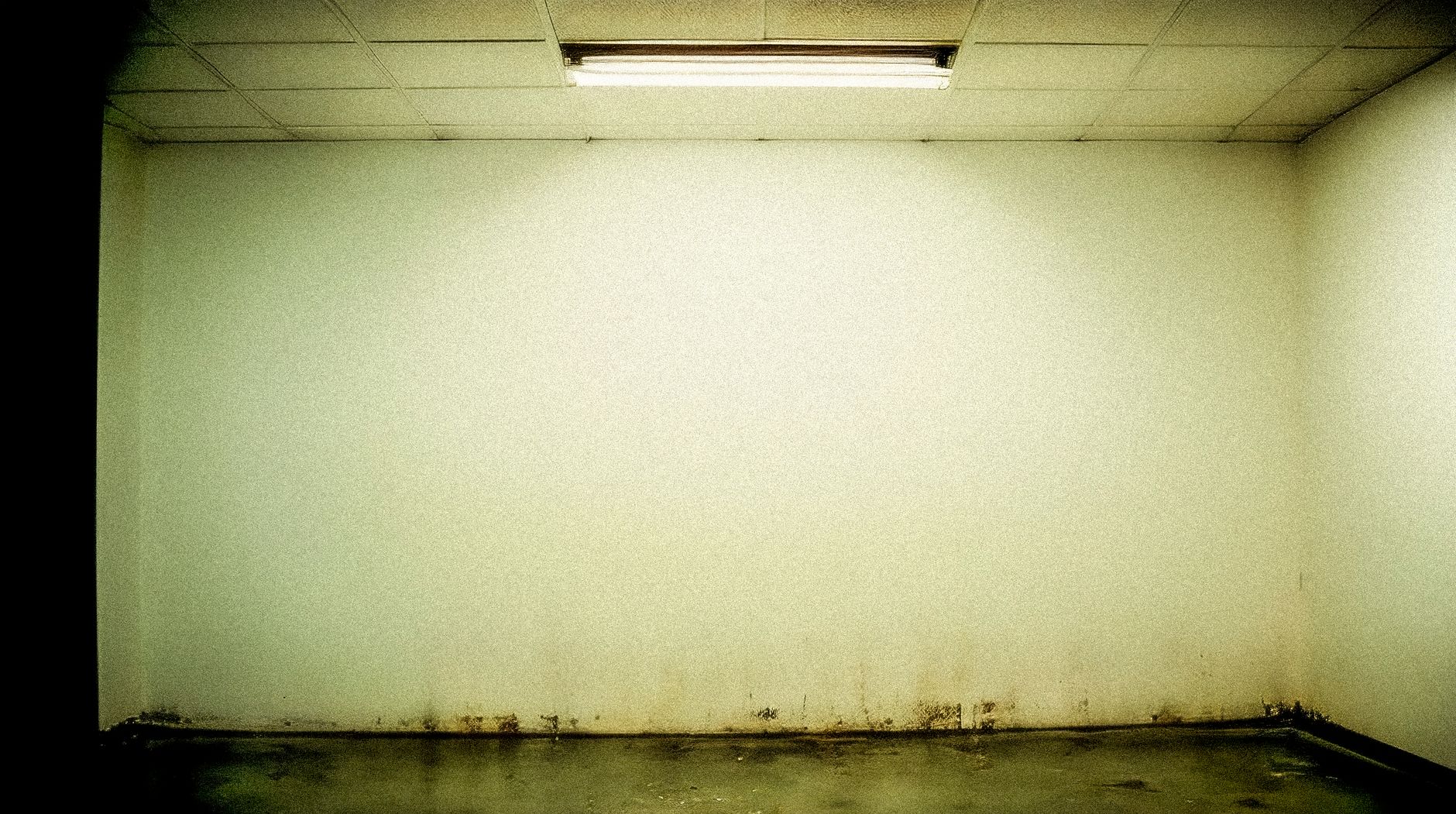
That musty basement smell isn't just unpleasant — it's a warning sign. The odor comes from microbial volatile organic compounds (MVOCs) released by mold and mildew as they digest damp organic material like cardboard, wood framing, drywall paper, or dust. Spraying an air freshener down there covers the smell for an hour and does nothing to the colony producing it. To actually get rid of a musty basement smell, you need to find where moisture is entering or lingering, remove what's already growing, and then keep humidity low enough that it can't come back.
This guide walks through that process in order: diagnose, remediate, dry, and prevent.
Step 1: Find the Moisture Source
Mold needs three things to grow: organic material (it's rarely short on this in a basement), moderate temperatures, and moisture. Since you can't easily strip a basement of every trace of paper, wood, and dust, moisture is the variable you control.
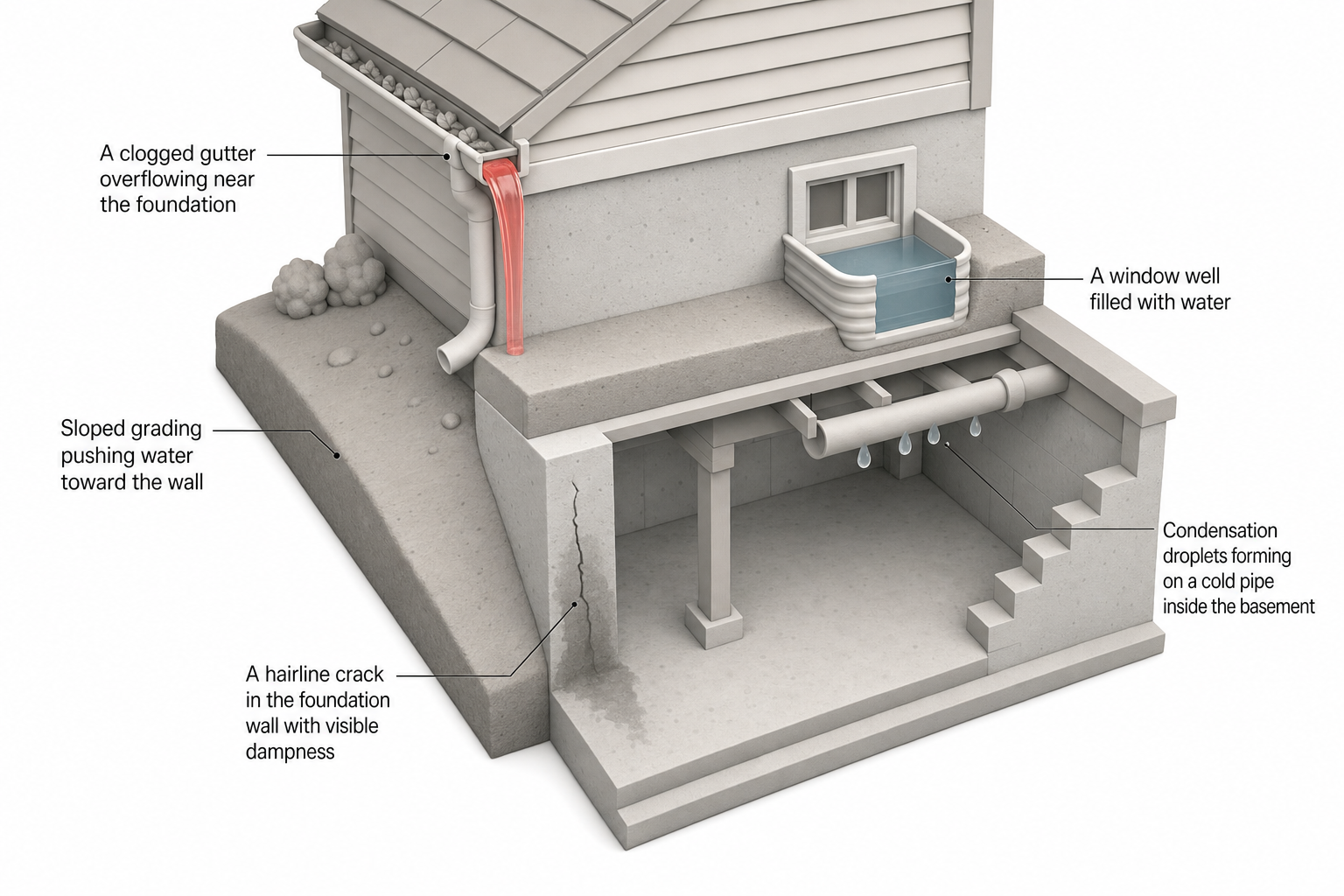
Walk the basement and check these common sources:
- Exterior grading. Stand outside after a dry spell and look at where the ground slopes near your foundation. Soil that slopes toward the house instead of away from it channels rainwater straight to your walls.
- Gutters and downspouts. Clogged gutters or downspouts that dump water within a few feet of the foundation are one of the most common causes of damp basements.
- Foundation cracks and cove joints. Check where the foundation wall meets the floor slab (the cove joint) and any visible cracks for white chalky residue (efflorescence) or dark staining — both indicate water has been moving through.
- Condensation. In summer, warm humid air meeting a cool basement wall or cold water pipe can condense into liquid water even with no leak at all. Run a hand along ductwork, pipes, and walls on a humid day to check.
- Plumbing. Look under sinks, near the water heater, and around washing machine hoses for slow drips that have gone unnoticed.
- Window wells. Wells that fill with debris or lack proper drainage let water pool against basement window frames.
Step 2: Test Your Humidity Level
Buy an inexpensive digital hygrometer and leave it in the basement for a full day. Most building scientists and HVAC professionals recommend keeping indoor relative humidity between 30% and 50%; mold growth becomes increasingly likely above roughly 60% relative humidity, especially when sustained for days at a time. If your basement consistently reads above 55-60%, that alone likely explains the musty smell even without an active leak.```
Step 3: Remove Visible Mold and Mildew Growth
Before you can dry the space out and expect the smell to go, you need to physically remove what's already growing.
- Identify the extent. Small surface patches of mildew on a hard, non-porous surface (tile, concrete, metal) are a manageable DIY job. Mold that has spread across more than roughly 10 square feet, or that has soaked into porous material like drywall, carpet, or wood framing, is generally better handled by a certified mold remediation professional — porous materials often need to be cut out and replaced rather than cleaned.
- Protect yourself. Wear an N95 or better respirator, rubber gloves, and eye protection. Ventilate the area with a fan pushing air toward an open window or door, not recirculating it through the house.
- Clean hard surfaces. A solution of water and a small amount of unscented dish soap, scrubbed with a stiff brush, removes most surface mildew. Some homeowners use a diluted bleach solution on non-porous surfaces, but bleach doesn't penetrate porous materials and can react with other cleaning products — check manufacturer guidance before using it, and never mix bleach with ammonia-based cleaners.
- Discard what can't be cleaned. Cardboard boxes, old carpet padding, water-stained paper, and moldy insulation should be bagged and thrown out rather than cleaned. These items also feed future mold growth just by sitting there.
- Dry everything completely before putting it back, including shelving and storage bins.
Step 4: Fix the Moisture Source
Match the fix to what you found in Step 1:
- Grading: Regrade soil so it slopes away from the foundation at a rate of roughly 6 inches of drop over the first 10 feet, using compacted fill dirt, not loose topsoil that will wash away.
- Gutters: Clean gutters at least twice a year and extend downspouts so they discharge water at least 4-6 feet from the foundation.
- Cracks: Hairline foundation cracks can often be sealed with an epoxy or polyurethane injection kit. Wider or actively leaking cracks, or a persistently wet cove joint, usually point to a drainage problem needing an interior drain tile system or exterior waterproofing — this is a job for a waterproofing contractor.
- Condensation on pipes: Wrap cold water pipes and ductwork with foam pipe insulation sleeves to stop them from sweating.
- Window wells: Add a layer of gravel for drainage and consider a clear plastic window well cover to keep out rain and debris.
Step 5: Dehumidify and Ventilate Properly
Once active leaks and growth are addressed, ongoing humidity control is what keeps the smell from returning.
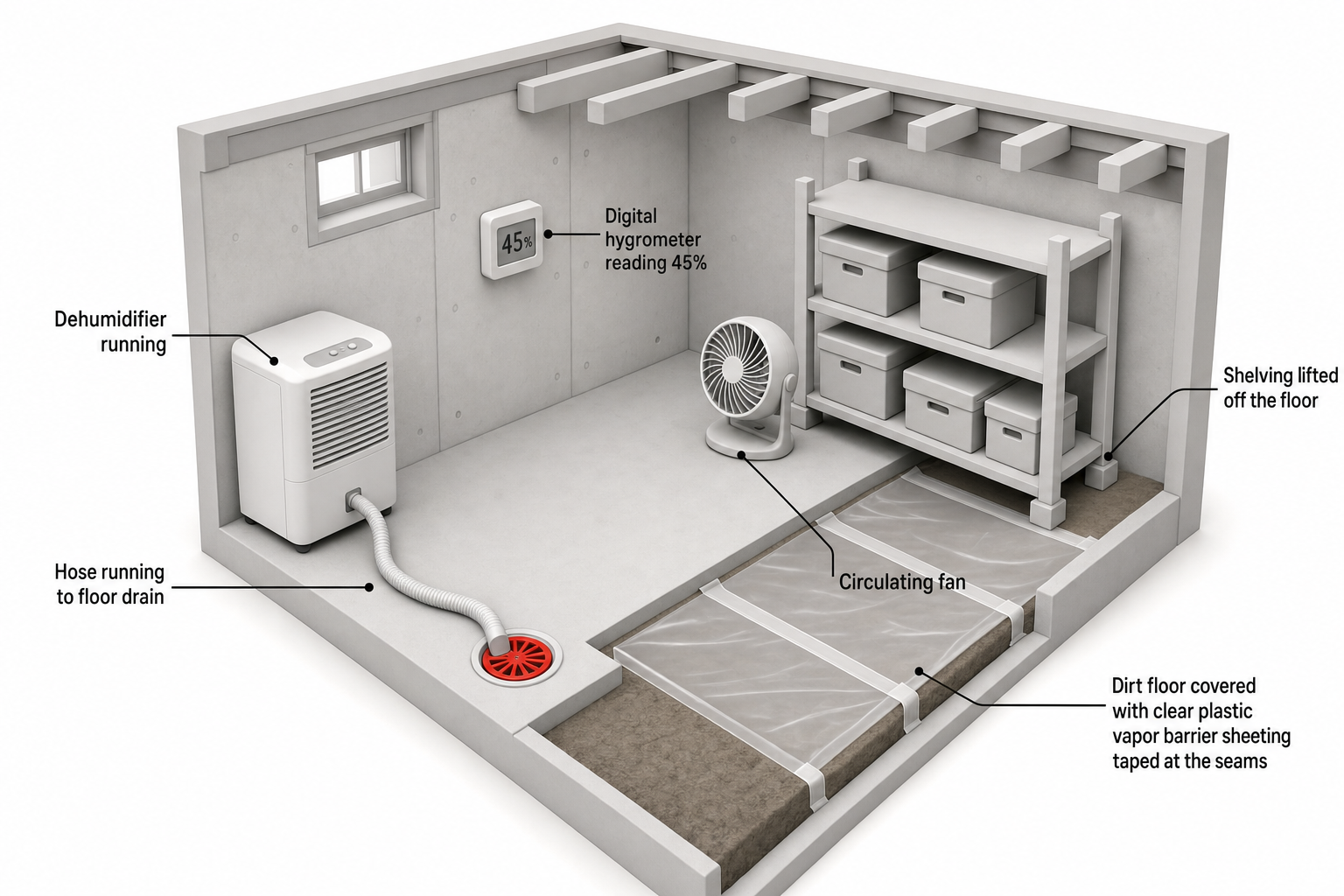
- Run a dehumidifier sized for the space. Basement dehumidifiers are typically rated by pints removed per day; a chronically damp basement usually needs a larger-capacity unit than a small bedroom dehumidifier. Set it to maintain 45-50% relative humidity and empty or plumb the reservoir to a drain so it runs continuously.
- Improve air circulation. Stagnant air pockets behind furniture or in closets are prone to mildew even in an otherwise dry basement. A small circulating fan or simply pulling furniture a few inches off the wall helps.
- Consider your HVAC setup. If your basement is finished and served by the home's central air, make sure supply and return vents aren't blocked, and consider whether the space needs its own return to balance airflow.
- Avoid unvented sources of moisture. Running a clothes dryer without a properly vented exhaust, or storing firewood, in a basement adds humidity load directly to the air.
- Address exposed dirt floors or crawlspace connections. A dirt floor releases significant moisture through simple evaporation; a vapor barrier (heavy plastic sheeting sealed at the seams and edges) laid over exposed soil can measurably cut basement humidity.
Step 6: Address Lingering Odor in Materials
Even after moisture and mold are handled, porous materials can hold onto MVOCs for a while.
- Activated charcoal or baking soda placed in open containers around the room absorbs residual odor over days to weeks — this is a genuine odor absorption method, not a mask, but it only works after the moisture source is fixed.
- Wash washable fabrics and rugs that were in the space, and consider having upholstered furniture professionally cleaned if it was exposed to damp air for an extended period.
- Seal exposed concrete or masonry with a masonry sealer if the material itself has absorbed moisture repeatedly over the years, as untreated concrete can off-gas a musty smell after damp periods.
- Prime and repaint stained drywall or framing with a stain-blocking, mold-resistant primer once you're certain the material is fully dry and the underlying moisture problem is solved — painting over an active leak only traps the problem.
FAQ
Will a dehumidifier alone get rid of a musty basement smell? Sometimes, if the smell is caused purely by ambient humidity with no active mold growth or water intrusion. But if mold is already established on a surface or the odor is coming from a specific damp spot, a dehumidifier lowers ambient moisture without addressing the source, so the smell often returns once conditions shift.
How long does it take for basement odor to go away after fixing the moisture problem? Surface odors from ambient humidity can improve within days of running a properly sized dehumidifier. Odors trapped in porous materials like drywall or wood framing may take longer, and if the material stays smelly after a few weeks of dry conditions, it likely needs to be replaced rather than aired out.
Is musty basement smell dangerous to breathe? The smell itself (MVOCs) is generally considered a nuisance rather than acutely toxic, but its presence indicates mold growth, and some people experience respiratory irritation, headaches, or allergy-like symptoms with prolonged exposure. Anyone with asthma or mold sensitivities should take the odor seriously as a signal to remediate promptly.
Can I just paint over musty smelling drywall instead of replacing it? Painting over drywall that's still damp or has mold growing within it will trap moisture and the smell will likely return, sometimes with paint bubbling or peeling. Drywall that has been wet for an extended period, especially near the base of a wall, is often better cut out and replaced than treated in place.
Do scented sprays or plug-ins actually make the underlying problem worse? They don't cause mold growth, but relying on them delays finding and fixing the moisture source, giving mold more time to spread into porous materials and making eventual remediation more extensive and costly.