
That high-pitched squeal every time you open the bedroom or closet door isn't just annoying — it's a sign of dry, worn, or slightly corroded metal grinding inside the hinge barrel. A quick spritz of a water-displacing spray like WD-40 will quiet things down for a day or two, but it evaporates fast and can actually attract dust that turns into grinding paste later. To fix a squeaky door hinge permanently, you need to pull the pin, clean the barrel, and pack it with a lubricant built to stay put.
This takes about 10–15 minutes per door and needs almost no tools you don't already own.
What You'll Need
- A hammer and a nail set, flat-head screwdriver, or an old awl (something to tap the pin out)
- A rag or paper towel
- Fine steel wool or an old toothbrush
- A long-lasting lubricant: white lithium grease, silicone spray, or plain petroleum jelly all work well; avoid thin oils that will just drip out again
- Painter's tape (optional, to catch drips on the floor and trim)
Step 1: Identify the Noisy Hinge
Open and close the door slowly and listen. Most doors have two or three hinges, and often only one is the culprit — usually the one bearing the most weight or the one furthest from the latch. If you can't tell by ear, have someone flex the door while you rest a finger lightly on each hinge barrel to feel for vibration.
Step 2: Support the Door
Open the door most of the way and wedge a doorstop or a couple of thin books under the bottom edge. This takes the weight off the hinge you're about to disassemble and keeps the door from swinging while the pin is out.
Step 3: Remove the Hinge Pin
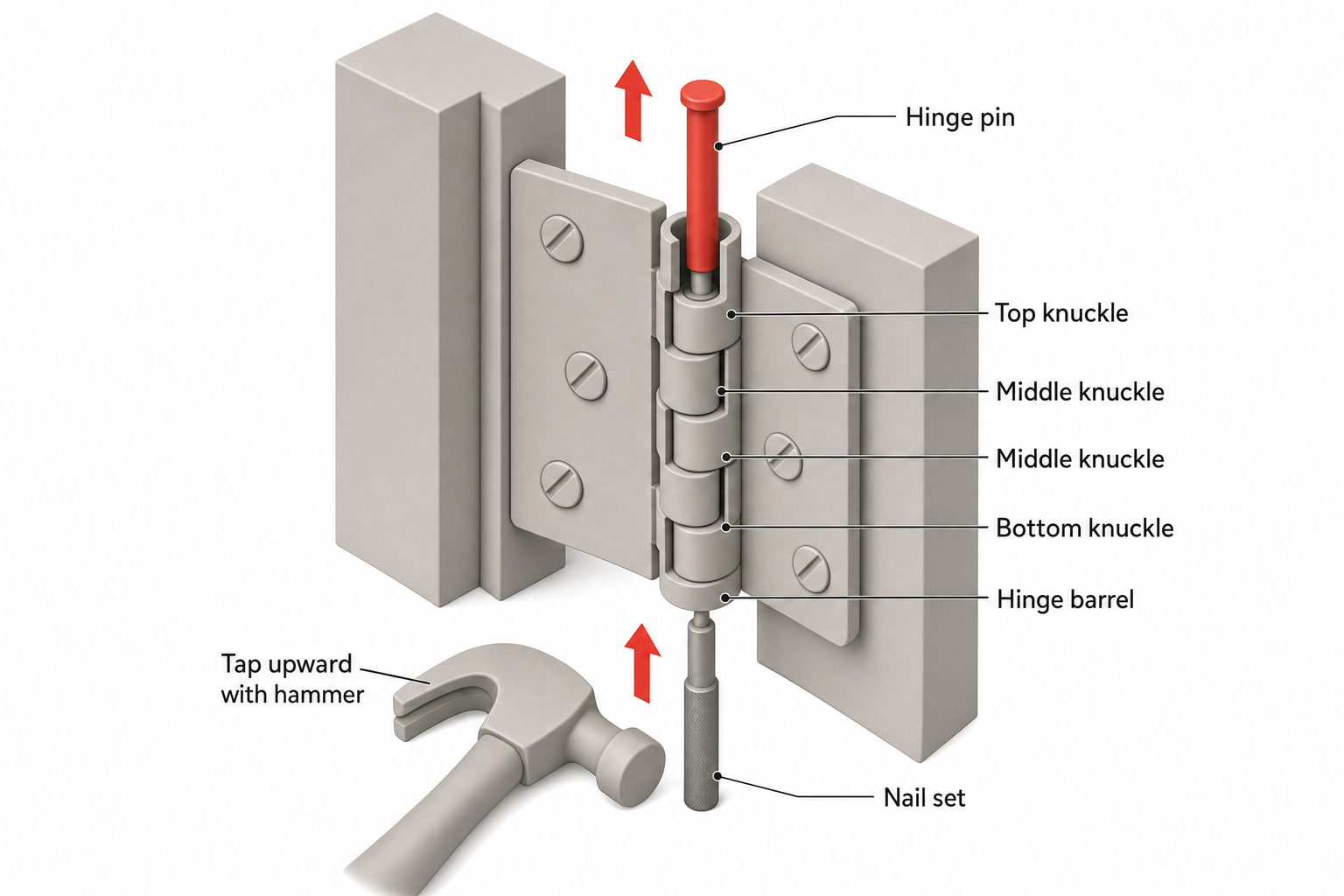
Most interior and exterior door hinges use a simple removable pin, visible as a knob at the top of the hinge barrel.
- Place the tip of a nail set or flat-head screwdriver against the underside of the pin head.
- Tap upward gently with a hammer. The pin will start to rise out of the top.
- Once enough pin is exposed, grip it with pliers and pull it the rest of the way out.
On hinges near the top of a door frame, there may not be room to tap upward. In that case, tap the pin downward from the top instead, or open the door fully and use a hooked tool (a bent nail works) to draw the pin up from underneath.
Step 4: Clean the Pin and Barrel
Once the pin is out, you'll likely see dried grease, rust specks, or grimy buildup — this is almost always the actual source of the squeak, not just "lack of oil."
- Wipe the pin down with a rag until it's bright and smooth.
- If it's rusty or pitted, polish it with fine steel wool until it feels smooth to the touch.
- Use an old toothbrush or a rolled-up corner of the rag to clean inside each knuckle (the tubular segments the pin passes through). Flaking rust or dirt inside the barrel will keep grinding even after you relubricate, so this step matters more than the lubricant itself.
Step 5: Choose the Right Lubricant
This is where most quick fixes go wrong. A light penetrating oil is designed to loosen rusted bolts, not to lubricate a load-bearing pivot — it thins out, drips away, and leaves the metal dry again within days.
For a lasting fix, use one of the following instead:
- White lithium grease — thick, water-resistant, and made for exactly this kind of metal-on-metal friction point. Available as a spray or in a tube.
- Silicone spray lubricant — dries to a slicker, less sticky finish than grease and won't attract as much dust; a good choice for hinges in dusty environments like garages or workshops.
- Plain petroleum jelly — a reasonable household substitute if you don't have either of the above; it's not as durable but is far better than a thin oil.
Avoid cooking oils or all-purpose thin oils long-term; they oxidize and turn gummy.
Step 6: Coat and Reassemble
- Apply a thin, even coat of your chosen lubricant along the entire length of the pin.
- Slide the pin back into the barrel from the top, pushing it down until the knob seats fully.
- Open and close the door a few times to work the lubricant through all the knuckles. A little grease may squeeze out at the top and bottom — wipe away the excess so it doesn't attract dust or stain the floor.
- Repeat Steps 3–6 for any other noisy hinges.
Step 7: Check for Loose Screws While You're In There
A squeak is sometimes accompanied by a slight sag or wobble, which points to loose hinge screws rather than dry metal. While the door is supported, check each screw:
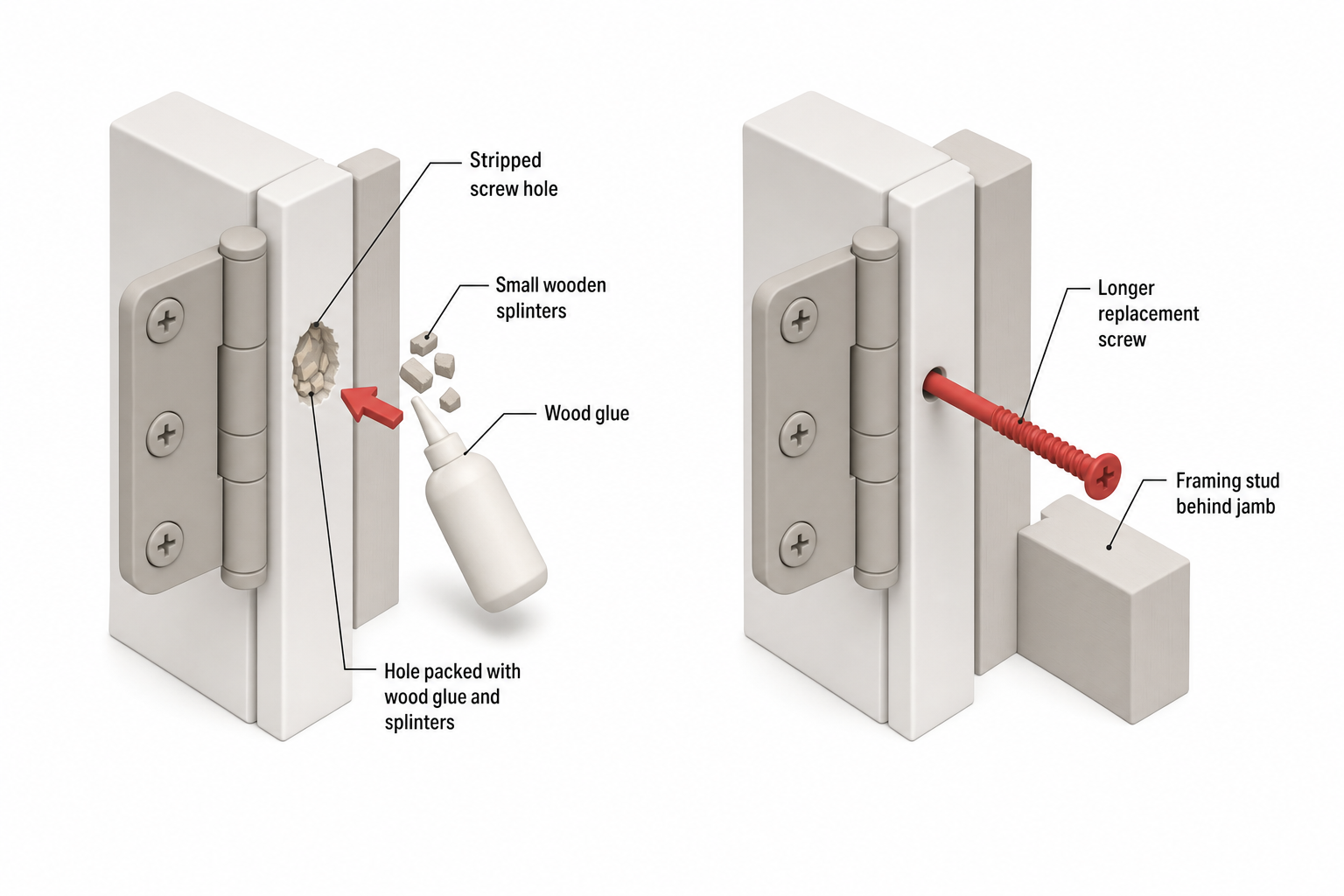
- If a screw spins without tightening, the wood screw hole has stripped out.
- A common fix is removing the screw, filling the hole with wood glue and a few wooden golf tees or matchsticks (broken off flush once dry), and reinstalling the original screw once the glue cures.
- For a longer-lasting repair on a frequently used door, replacing at least one screw per hinge with a longer one (long enough to bite into the framing stud behind the jamb, not just the jamb itself) meaningfully reduces future sag.
When It's Not the Hinge
If you've lubricated every hinge and the squeak persists, check whether the door itself is rubbing against the frame or floor, which produces a similar sound but no amount of hinge grease will fix. Look for shiny worn spots on the door edge or weatherstripping and consider whether the frame has shifted — a common issue in older homes as foundations settle slightly over time.
FAQ
Will WD-40 damage my hinges if I keep using it? Not typically in the short term, but because it's a thin, fast-evaporating lubricant, repeated use without cleaning the hinge first just adds a film that attracts dust and grit, which can accelerate wear on the pin over months of use.
Can I fix a squeaky door hinge without removing the pin? You can spray lubricant into the top of the barrel while the door is closed, and it will usually quiet things temporarily. However, without removing the pin to clean out dried grease and rust, the fix rarely lasts more than a few weeks.
What if the hinge pin won't budge at all? This usually means it's been painted over or has rusted in place. Try working a penetrating oil into the top of the barrel first, let it sit for 10–15 minutes, then try tapping again. If it still won't move, the hinge itself may need to be unscrewed from the door and frame as a whole unit rather than disassembled in place.
Is it normal for one door to have multiple squeaky hinges? Yes — hinges on the same door tend to dry out and collect grime at roughly the same rate, especially on exterior doors exposed to weather, so it's worth doing all of them in one session even if only one is currently noisy.
How often should I relubricate hinges to prevent squeaking again? There's no fixed schedule since it depends on usage and environment, but checking hinges on frequently used doors once a year, or whenever a squeak starts to return, is a reasonable habit for most households.