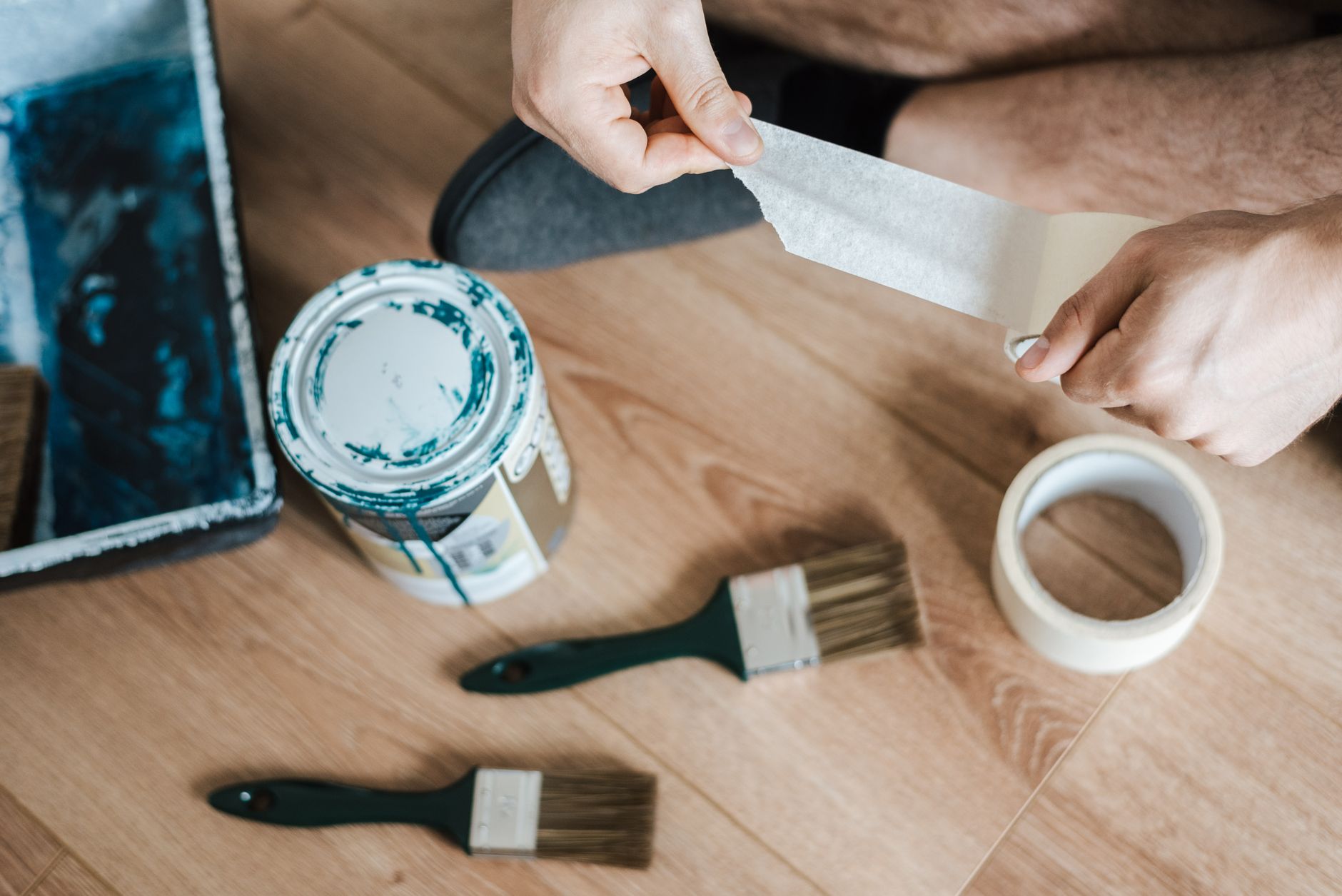
Paint splatters on a hardwood floor are common after a DIY room refresh, but the wrong removal method can leave permanent scratches in the finish that are far more noticeable than the paint ever was. The key is patience and the right combination of tools: a plastic scraper to lift the bulk of the paint, and mineral spirits to soften and dissolve what's left without attacking the wood finish underneath. Metal scrapers, box cutters, and abrasive scrub pads are the most common cause of gouged floors — avoid them entirely for this job.
This method works well for latex and oil-based paint splatters on polyurethane, wax, or oil-finished hardwood. It's slower than scrubbing, but it's the difference between an invisible fix and a finish repair job.
What You'll Need
- A rigid plastic putty scraper or credit-card-style scraper (never metal)
- Mineral spirits (paint thinner)
- Soft, lint-free rags or microfiber cloths
- A small bowl or dish for the mineral spirits
- Warm water and a few drops of mild dish soap
- Fine-grade steel wool (000 or finer) for stubborn spots — optional, used sparingly
- Painter's tape (to protect surrounding finish if needed)
Step 1: Test in an Inconspicuous Spot First
Before treating a visible splatter, test both the scraping technique and the mineral spirits on a hidden area of the floor — inside a closet or under a rug's edge is ideal. Some older finishes, especially shellac or certain waxes, can be softened or dulled by solvents. Apply a small dab, let it sit for 30 seconds, and wipe it away to confirm the finish isn't lifting or clouding before moving to the actual splatters.
Step 2: Soften Dried Splatters With Warm, Soapy Water
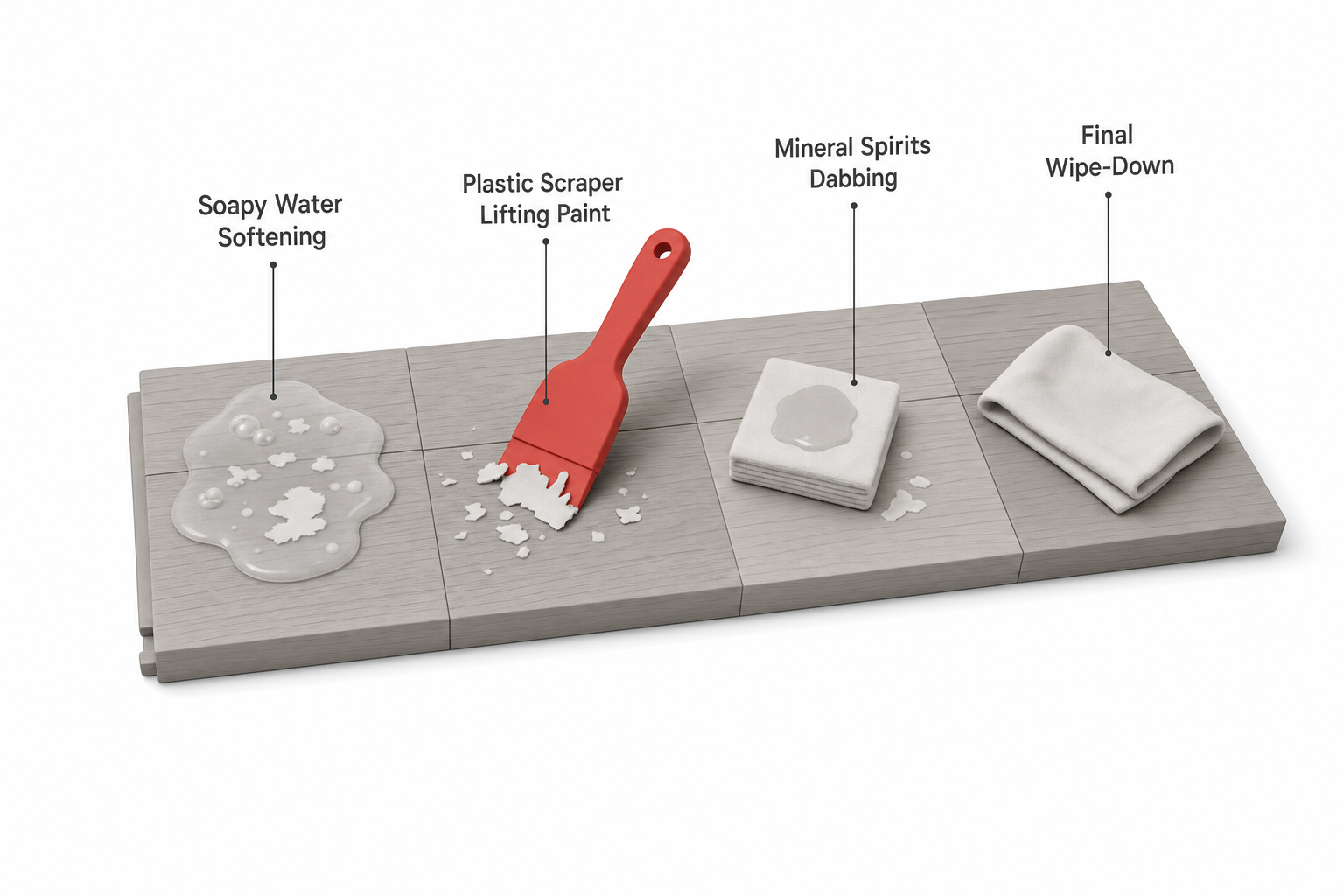
Start gentle. Dampen a rag with warm water and a drop of dish soap, and lay it over the splatter for two to three minutes to soften the outer edges. Fresh or thin splatters sometimes lift entirely at this stage, which means you can skip solvents altogether.
Step 3: Scrape With a Plastic Tool at a Low Angle
Hold a plastic putty scraper nearly flat against the floor — closer to a 15–20 degree angle than straight up and down — and push forward under the edge of the paint splatter. The shallow angle lets the scraper lift the paint chip without digging into the finish. Work in the direction of the wood grain wherever possible.
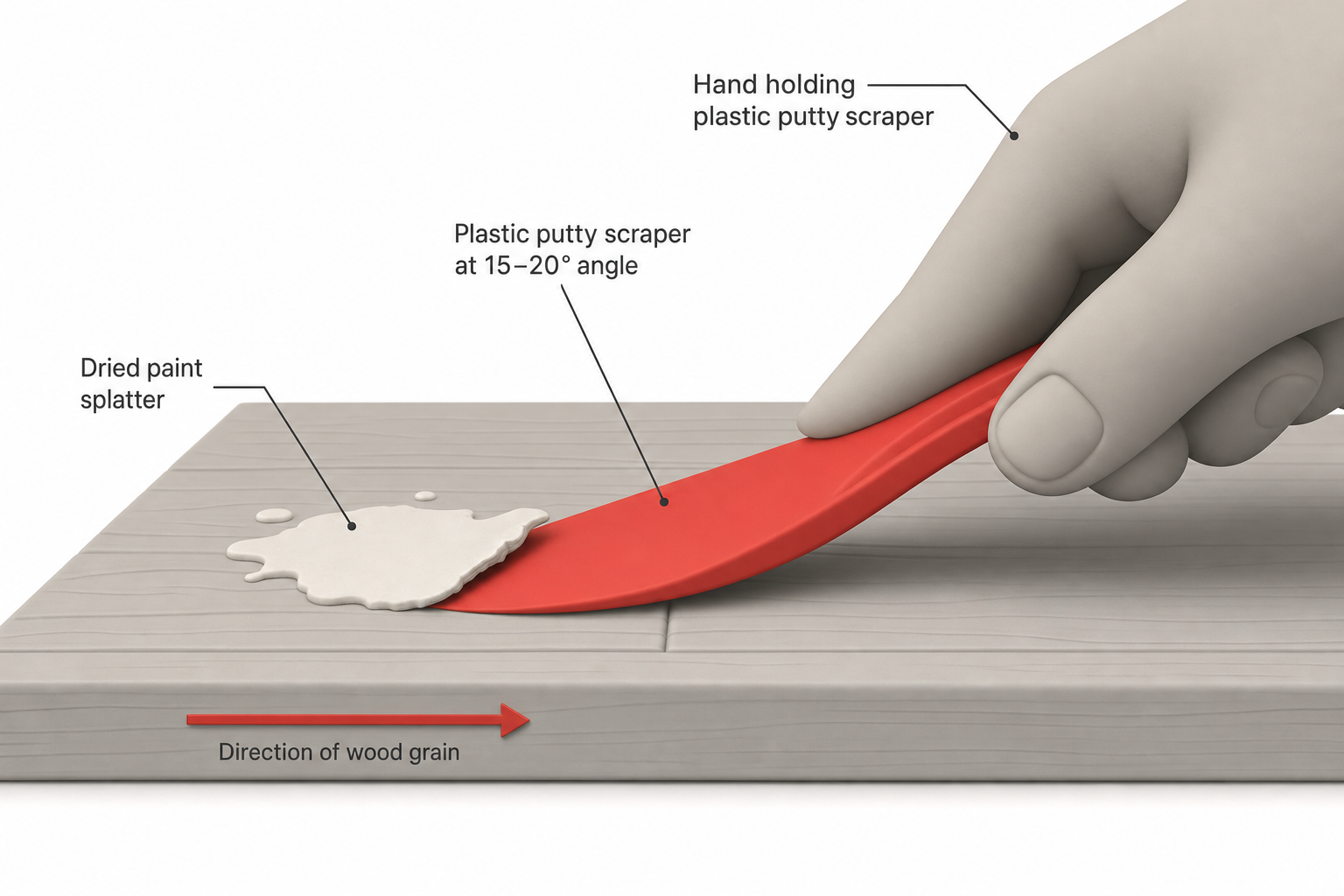
If the paint doesn't lift cleanly after a couple of passes, don't force it — move on to the mineral spirits step rather than pressing harder or switching to a metal tool.
Step 4: Apply Mineral Spirits to Remaining Residue
Dampen a clean cloth (not soaking wet) with mineral spirits and dab it directly onto the remaining paint residue. Let it sit for 30 to 60 seconds to soften the paint, then gently rub in small circles with the cloth, following up with the plastic scraper on any spots that lift into a soft film. Reapply as needed for thicker splatters, working in small sections rather than flooding a large area.
Avoid letting mineral spirits pool or sit for extended periods, since prolonged solvent contact can dull or soften some floor finishes over time.
Step 5: Clean Up Solvent Residue
Once the paint is gone, wipe the treated area with a clean cloth dampened in the warm soapy water from Step 2 to remove any leftover mineral spirits film. Dry thoroughly with a separate cloth — leftover solvent residue can leave a slightly hazy or sticky patch if it's not fully wiped away.
Step 6: Handle Stubborn Spots With Fine Steel Wool (If Needed)
For small, stubborn flecks that survive scraping and solvent, very fine (000 or finer) steel wool can be used with light pressure, always rubbed with the grain. This is a last resort — steel wool can burnish or dull a glossy finish if overused, so limit it to the exact spot of the splatter and check your progress frequently.
Step 7: Restore Shine If the Finish Looks Dull
If the treated spot looks slightly duller than the surrounding floor after cleanup, a small amount of the same floor polish or wax used elsewhere on the floor can blend it back in. Apply sparingly and buff with a soft cloth — matching the existing finish type matters, since mixing wax over polyurethane (or vice versa) can cause cloudiness.
When to Call a Professional
If splatters cover a large portion of the room, if the finish appears damaged after your test spot, or if you're dealing with an antique or unusually valuable hardwood floor, it's worth calling a professional floor refinisher. Sanding and refinishing mistakes are expensive to fix, and a pro can assess whether spot-treatment or a full refinish is the better path.
FAQ
Will mineral spirits damage my hardwood floor's finish? Used briefly and in small amounts, mineral spirits are generally safe on cured polyurethane finishes, but they can soften wax or shellac finishes if left too long. Always test in a hidden spot first and wipe away residue promptly.
Can I use a metal scraper if the plastic one isn't working? Avoid metal scrapers and razor blades on hardwood — even a slight change in angle can cut through the finish and into the wood, leaving a scratch that's harder to fix than the original paint splatter.
What if the paint splatter is fresh, not dried? Fresh latex paint often wipes up with just a damp cloth and warm soapy water — try that first before reaching for mineral spirits, which are mainly needed for paint that's already cured.
Does this method work on engineered hardwood or laminate? The soft-scraper technique is generally safe on engineered hardwood with a similar finish, but laminate flooring's protective layer can be more sensitive to solvents, so test carefully and consider a gentler soapy-water approach first.
How do I prevent paint splatters on hardwood floors during future projects? Lay down a canvas drop cloth (plastic sheeting alone can let paint bleed through at seams) and tape down the edges before painting, which avoids this cleanup entirely.