
Fruit flies aren't just an annoyance that flew in through an open window. If you're seeing more than a few, chances are they're already breeding somewhere in your kitchen—and every trap you set is only catching the adults while a new generation hatches every few days. Getting rid of fruit flies for good means finding and eliminating the wet, organic gunk they're laying eggs in, not just swatting at the ones you can see.
Why Traps Alone Don't Work
A female fruit fly can lay dozens of eggs at a time, and those eggs can hatch into adults in as little as a week under warm kitchen conditions. If you're only trapping visible adults with a vinegar jar or a store-bought lure, you're managing symptoms while the breeding site keeps producing new flies. The real fix is a two-part approach: find every wet organic surface where larvae could be living, clean it out, and then use traps as cleanup for the adults that remain.
Step 1: Find the Breeding Sites
Fruit flies need moisture and fermenting organic matter to breed—they're not just attracted to ripe fruit, they're drawn to anything sugary, yeasty, or decaying. Walk through your kitchen and check each of these:
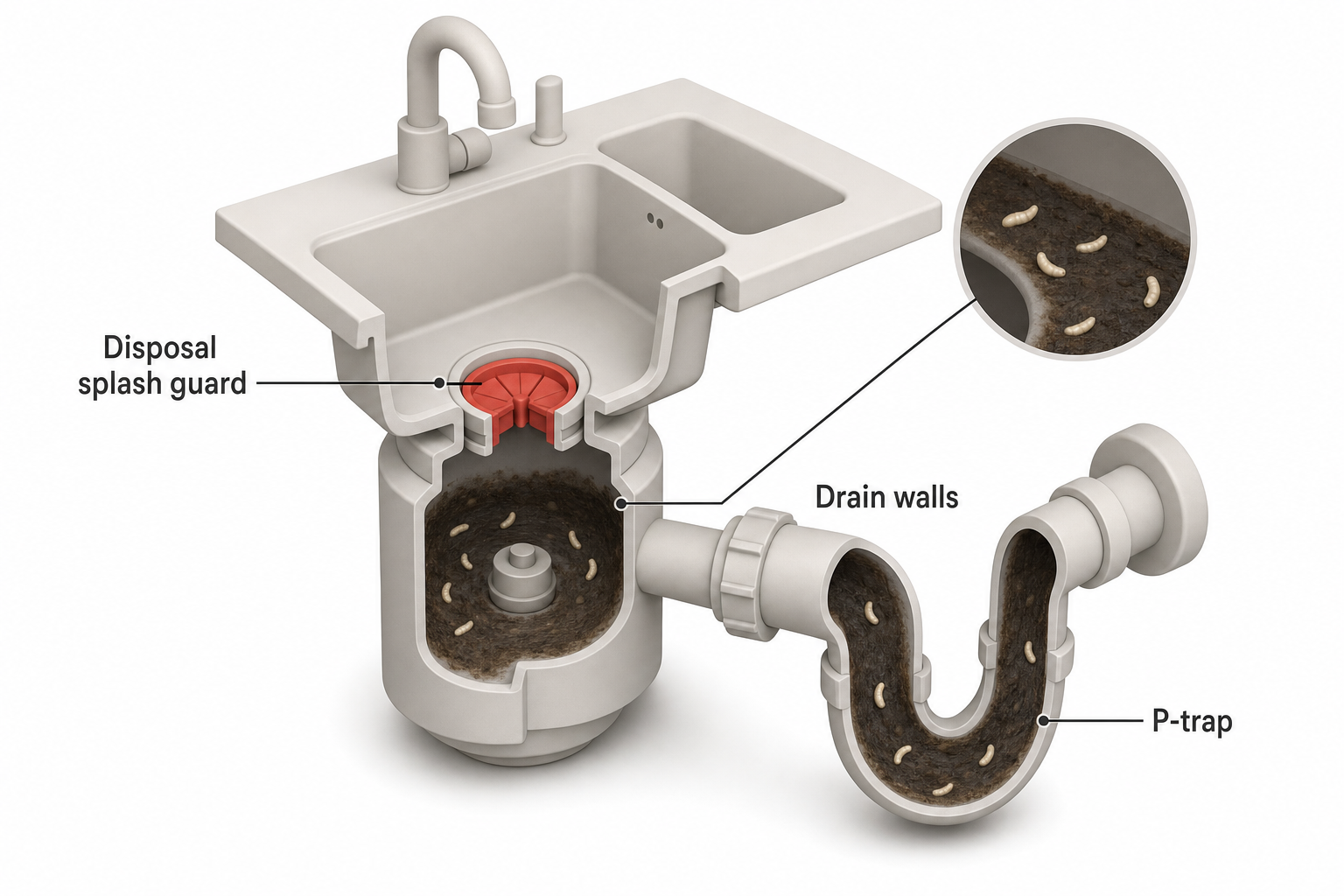
- Drains — kitchen sink drains, especially if you run a garbage disposal, accumulate a slimy film of food particles and grease along the inner walls. This gunk is one of the most common and most overlooked breeding grounds.
- Garbage disposal — the underside of the splash guard and the walls of the disposal chamber trap wet food debris.
- Produce bowls and fruit baskets — overripe bananas, tomatoes, and other soft fruit sitting at room temperature are prime egg-laying sites.
- Trash and recycling bins — especially recycling bins that held juice, soda, or beer containers with residue still inside.
- Compost bins — indoor countertop compost containers are a favorite breeding spot if they aren't emptied often.
- Empty bottles and cans — sitting in a bin or on a counter waiting to be rinsed.
- Mop buckets, damp sponges, and drip trays under houseplants — anywhere organic residue stays consistently damp.
The Drain Test
To check if your drain is the culprit, cover it tightly with plastic wrap overnight and poke a few small holes in the top. If flies are breeding in the drain, you'll find them trapped on the wrap by morning. Repeat this on any drain you suspect, including a rarely used bathroom or laundry drain, since fruit flies can travel between them.
Step 2: Clean Out the Drain and Disposal
Once you've identified a drain as a breeding site, the film of organic buildup has to be physically removed—rinsing with water alone usually isn't enough because the residue clings to the pipe walls.
- Use a stiff drain brush or an old bottle brush to scrub as far down the drain opening as you can reach, working the bristles against the pipe walls in a circular motion.
- For garbage disposals, unplug or switch off the unit at the wall before reaching in. Use a long-handled brush to scrub the underside of the rubber splash guard, which often holds a thick layer of hidden grime.
- Flush the drain with a pot of boiling water to loosen remaining residue, followed by a mixture of baking soda and vinegar, left to fizz for 10–15 minutes before a final hot water rinse.
- Repeat the cleaning every few days for a week or two if the infestation has been going on for a while, since a single cleaning may not remove every egg or larva.
[!safety] Never put your hand inside a garbage disposal, even when it seems switched off. Disconnect the unit at the wall outlet or switch off the breaker before cleaning inside it, and use tools rather than fingers to reach the blades area.
Step 3: Remove or Isolate Produce
- Store ripening fruit in the refrigerator instead of on the counter whenever the fruit type allows it—cold temperatures slow ripening and make the fruit far less attractive to egg-laying flies.
- For fruit that needs to stay at room temperature, such as bananas or tomatoes, keep it in a container with a lid or a mesh cover rather than an open bowl.
- Check fruit and vegetables daily and remove anything that's overripe, bruised, or starting to ferment—these are the pieces flies target first.
- Rinse produce when you bring it home from the store, since fruit fly eggs can occasionally hitch a ride on the skin of fruit before it ever reaches your counter.
Step 4: Empty and Rinse Trash, Recycling, and Compost
Empty kitchen trash more frequently while dealing with an infestation, and rinse out any recycling containers that held sugary liquids before they go in the bin. If you keep a countertop compost container, empty it daily rather than letting scraps sit for several days, and wash the container itself with soap and hot water at least weekly to remove the residue film building up on its walls.
Step 5: Trap the Remaining Adults
Once breeding sites are cleaned, a simple trap will mop up any adult flies still in the air within a few days.
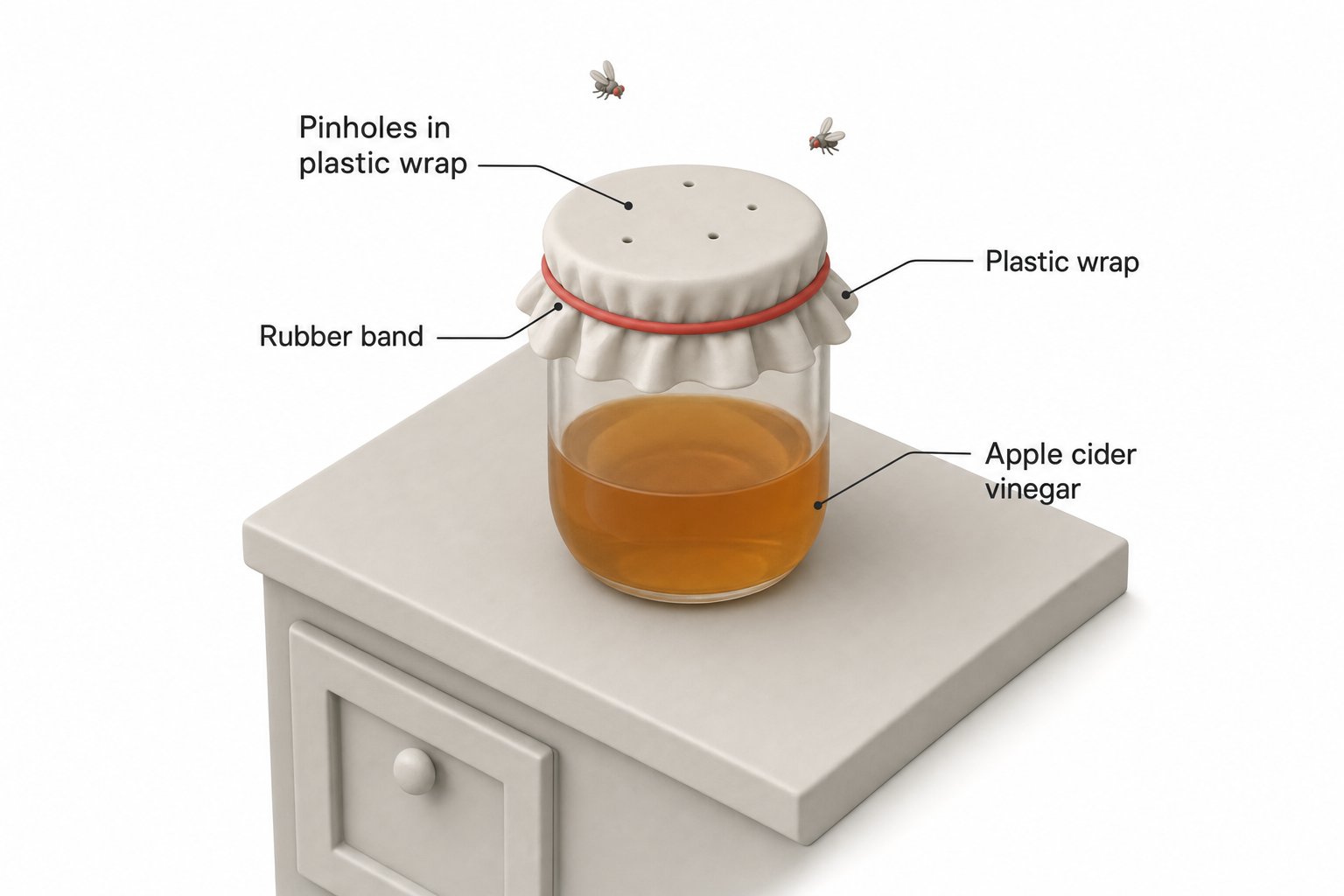
- Fill a small jar with apple cider vinegar and a drop of dish soap, which breaks the surface tension so flies sink instead of floating on top.
- Cover the jar with plastic wrap secured by a rubber band and poke several small holes in the top.
- Place traps near the sink, produce bowl, and trash area, and replace the liquid every couple of days.
Step 6: Prevent Them From Coming Back
- Keep drains clean on an ongoing basis by running hot water and an occasional baking soda and vinegar flush every couple of weeks, especially if you use the disposal often.
- Wipe down counters and stovetops after cooking to remove sticky spills before they attract flies.
- Store fruit in the fridge once it's ripe rather than leaving it out indefinitely.
- Take trash out before it accumulates, and keep bin lids closed.
- Repair any minor leaks under the sink promptly, since a slow drip against a damp cabinet floor can become a hidden breeding site of its own.
[!region] In warmer or more humid climates, fruit flies may breed and spread faster, and some pest control guidance in these regions recommends more frequent drain cleaning during summer months. Check advice from a local pest control service or extension office for specifics in your area.
When to Call a Professional
If you've cleaned every suspected breeding site, kept trapping adults, and are still seeing new flies appear after two to three weeks, there may be a hidden source you can't reach—inside wall cavities, under appliances, or in a drain line further down than a household brush can reach. A licensed pest control professional can inspect for less obvious sources and, if needed, treat drain lines more thoroughly than home methods allow.
FAQ
How long does it take to get rid of fruit flies once I start cleaning? Most infestations noticeably improve within a few days of removing breeding sites, but because eggs and larvae already present can take about a week to finish developing, it's common to see a few more adults appear even after cleaning. Repeating drain cleaning and trapping for one to two weeks usually clears the full life cycle.
Are fruit flies from drains dangerous or just annoying? Fruit flies themselves aren't typically considered a direct health hazard in a home setting, but the organic buildup they're breeding in can also harbor bacteria and produce odors, so cleaning it out benefits more than just fly control.
Why do fruit flies keep coming back even though I don't leave fruit out? Drains, disposals, empty bottles in the recycling bin, and damp mop buckets are common overlooked sources. If fruit isn't the issue, systematically check every drain in the house with the plastic wrap test, since fruit flies can travel between rooms.
Do fruit flies come from outside or do they breed indoors? They can do both—adults can enter through small gaps around windows and screens or ride in on produce from the store, but once inside, they reproduce quickly on any suitable wet organic matter, which is why indoor breeding sites are usually the bigger long-term problem.
Will bleach kill fruit fly larvae in a drain? Bleach may kill some larvae on contact but generally doesn't remove the organic film they're feeding on, so flies can return quickly. Physically scrubbing the drain with a brush, followed by a hot water flush, tends to be more effective at removing the underlying buildup.