
Paint color gets all the attention, but sheen level is what determines how a room actually lives day to day. The right paint finish for each room affects how easy walls are to clean, how forgiving they are of drywall flaws, and how much light they bounce around. Get it wrong and you end up with a nursery that scuffs if you look at it, or a hallway so glossy it highlights every dent. Here's how to match sheen to function, room by room.
Understanding the Sheen Spectrum
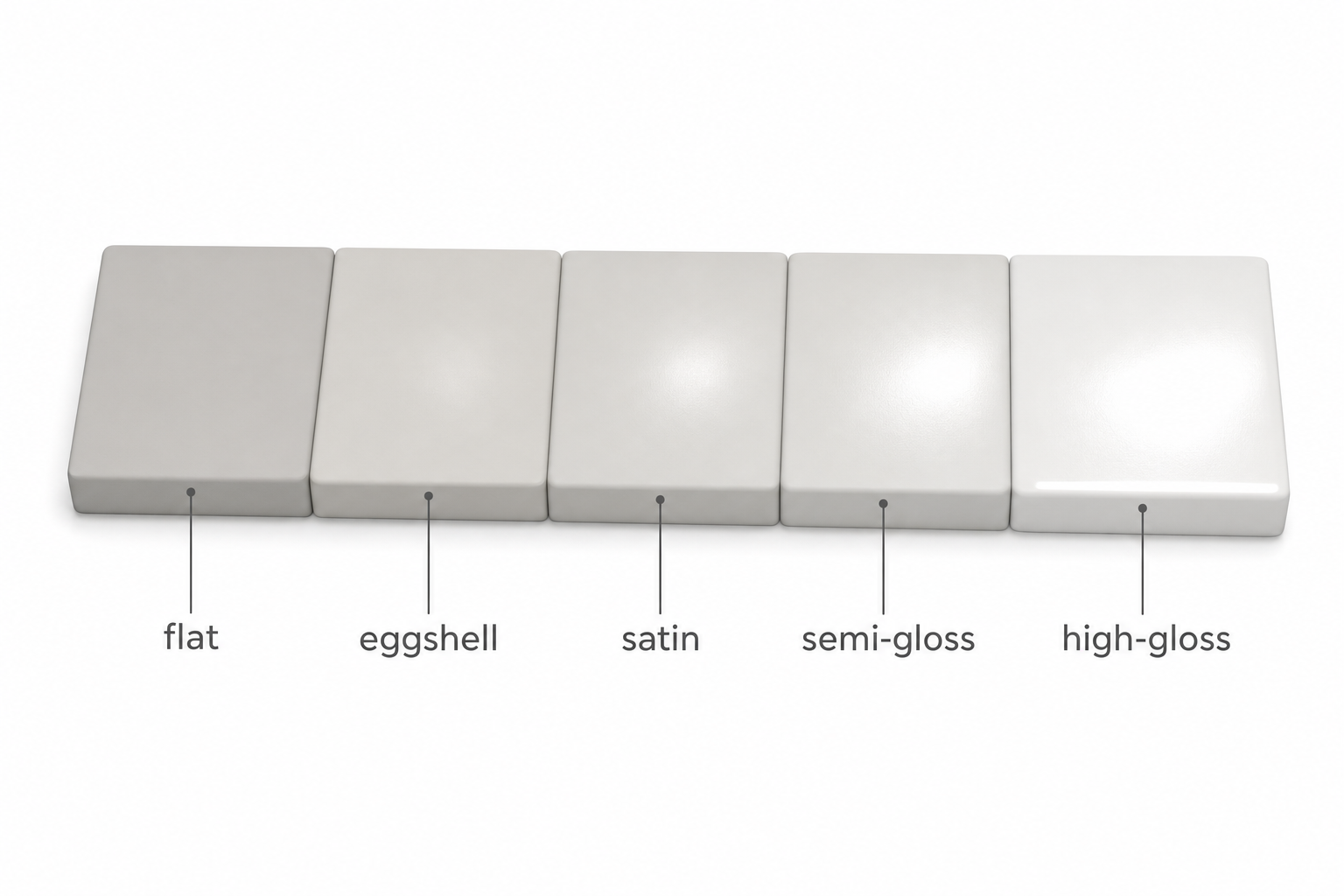
Paint finishes fall on a spectrum from flat to high-gloss, and the difference comes down to how much resin is in the formula. More resin means a harder, shinier, more washable surface — but also one that shows surface imperfections more readily.
- Flat/matte — no shine, best hiding of wall imperfections, least washable
- Eggshell — slight sheen (often compared to an actual eggshell), a common all-purpose choice for living areas
- Satin — noticeably smoother and more reflective than eggshell, more washable, common in higher-traffic rooms
- Semi-gloss — durable and easy to wipe down, often used on trim, doors, and cabinets
- High-gloss — the shiniest and most durable, but also the least forgiving of prep flaws
As a general rule, durability and washability increase as sheen increases, while imperfection-hiding decreases. That trade-off is the whole game when choosing a finish.
Living Rooms and Dining Rooms
These rooms see moderate foot traffic but not much moisture or grease. Eggshell is the usual sweet spot: it has enough sheen to wipe down light smudges but still hides minor drywall texture, nail pops, or patch work from view. If the room gets heavy use — kids, pets, frequent gatherings — stepping up to satin gives more scrubbability at the cost of slightly more visible wall flaws under raking light (light that hits the wall at a low angle, like from a floor lamp or window).
Bedrooms
Bedrooms are typically the lowest-traffic, lowest-moisture rooms in the house, which makes flat or matte finishes a reasonable choice if you want to disguise imperfect drywall or an older wall that's been patched multiple times. Many homeowners still prefer eggshell here for a touch more durability, especially in kids' rooms where crayon and handprints are a fact of life. For a nursery or a child's room specifically, satin is worth considering purely for the wipeability, even though it will show more wall texture than flat paint would.
Kitchens
Kitchens deal with grease splatter, steam, and frequent cleaning, so a low-sheen finish struggles here. Satin is a common baseline, and many painters push to semi-gloss on backsplash-adjacent walls or anywhere near the stove and sink where grease and moisture concentrate. Semi-gloss also holds up well to the repeated wiping a kitchen wall gets over the years. Cabinets are their own project and typically call for semi-gloss or a specialty cabinet-grade enamel for a hard, durable shell — see the recommendations below for suitable products.
Bathrooms
Bathrooms have the highest humidity of any room in the house, and consistent moisture will eventually cause flat paint to peel, blister, or grow mildew, especially near tubs and showers. Satin or semi-gloss is the standard recommendation because the tighter, glossier film resists moisture penetration and is easy to wipe down. Ceilings in bathrooms with showers can also benefit from at least an eggshell or satin finish rather than flat, since ceiling condensation is common.
Hallways, Entryways, and Stairwells
These are the most heavily trafficked, most frequently bumped surfaces in most homes — think backpacks, furniture moves, and pets brushing past. Satin is the common choice for durability, and some homeowners go with semi-gloss on stairwell walls specifically because they take the most abuse from shoes and hands on the railing side. Flat paint in these zones tends to show scuff marks that are difficult to spot-clean without leaving a dull patch.
Trim, Doors, and Cabinets
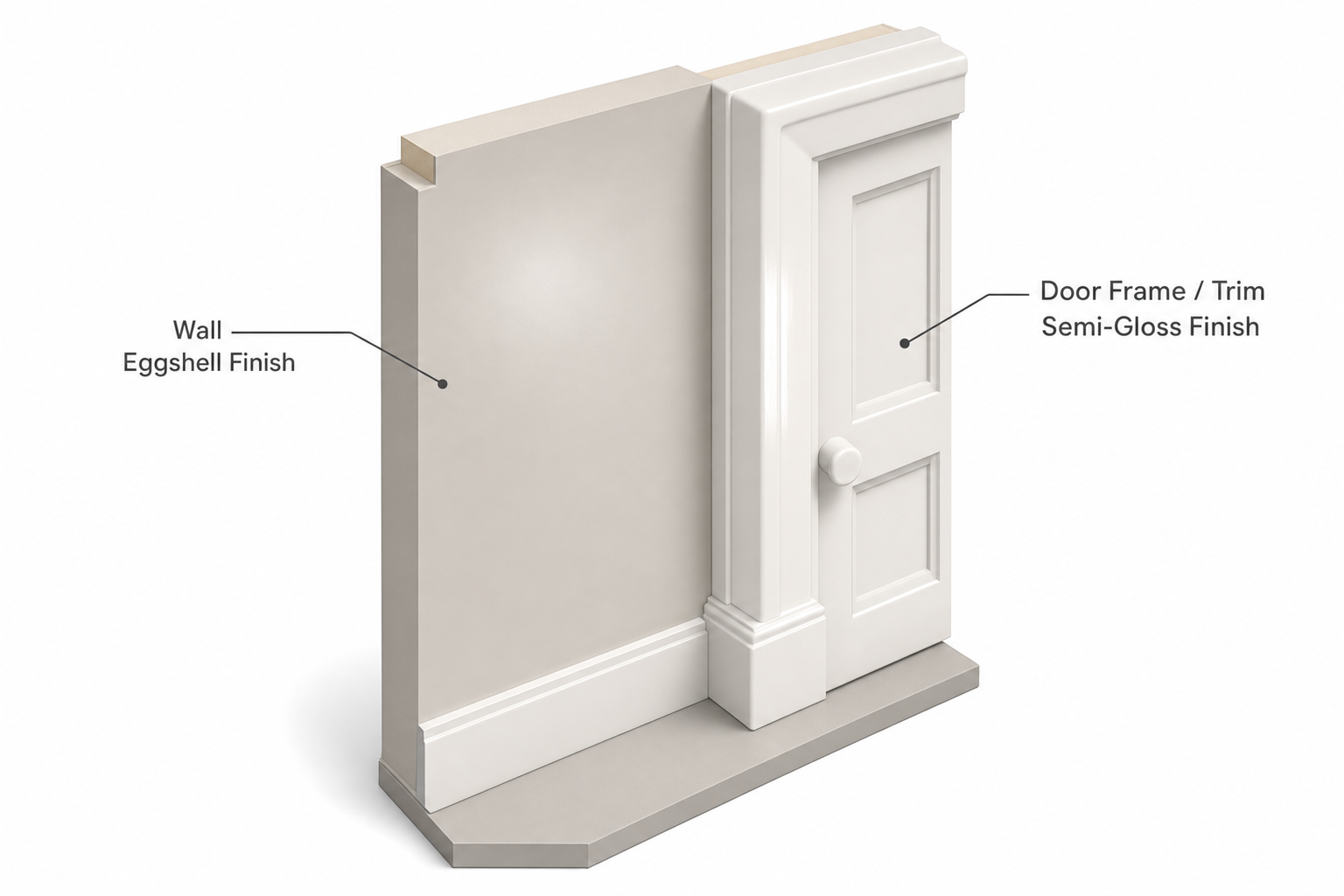
Regardless of the wall finish in a room, trim and doors are almost always painted at a higher sheen than the walls — typically semi-gloss or occasionally high-gloss. The higher sheen makes trim pop visually against a flatter wall color, and it holds up to the constant contact that doors, doorframes, and baseboards receive from hands, shoes, and vacuum cleaners.
Ceilings
Ceilings are almost universally painted in flat or matte finish, for two reasons: ceilings rarely get touched or dirtied, and flat paint minimizes glare and hides the minor imperfections common in ceiling drywall or texture. The exception is high-moisture ceilings, like above a shower, where a slightly higher sheen resists condensation better.
Garages, Basements, and Utility Rooms
These spaces vary widely in use, but if the room sees moisture, oil, or heavy scuffing — a workshop or a garage wall near where cars are parked — a satin or semi-gloss finish will hold up far better than flat. Unfinished basement walls being painted for the first time may also benefit from a specialty masonry or moisture-resistant paint rather than a standard interior formula; manufacturers typically specify which of their products are rated for below-grade or masonry use, so check the label before buying.
Quick Reference by Room
| Room | Typical Finish |
|---|---|
| Living/Dining Room | Eggshell (satin if high-traffic) |
| Bedroom | Flat or Eggshell |
| Kitchen | Satin to Semi-Gloss |
| Bathroom | Satin to Semi-Gloss |
| Hallway/Stairwell | Satin |
| Trim/Doors/Cabinets | Semi-Gloss |
| Ceiling | Flat |
| Garage/Basement | Satin to Semi-Gloss |
Testing Before You Commit
Sheen can look quite different once it's rolled onto a full wall compared to a small paint chip, especially under different light sources. Paint a sample patch at least 2ft by 2ft on the actual wall, and check it at different times of day — morning light, midday, and after dark with the room's normal artificial lighting on. This is especially worth doing in rooms with large windows, where glare off a satin or semi-gloss wall can be more noticeable than expected.
FAQ
Can I mix finishes in the same room? Yes, and it's standard practice — walls at one sheen, trim and doors at a higher sheen like semi-gloss, and the ceiling in flat. This is less about rules and more about creating visual contrast and matching durability to how each surface gets used.
Will a higher sheen make my paint color look different? Yes. Higher-sheen finishes reflect more light and can make a color read slightly lighter or more saturated than the same color in flat, while flat finishes tend to look more matte and muted. Always test the actual sheen you plan to use, not just the color.
Is eggshell washable enough for a kitchen? It can handle light cleaning, but it's generally less durable against grease and repeated scrubbing than satin or semi-gloss. Most painters recommend satin or semi-gloss specifically for kitchen walls for this reason.
What finish hides wall imperfections best? Flat and matte finishes scatter light rather than reflecting it, which minimizes the appearance of drywall seams, texture, and minor dents. This makes flat a good choice for older walls or rooms where the drywall hasn't been perfectly finished.
Do ceiling and wall paint need to be the same brand? Not necessarily, but using paints from the same product line can help ensure consistent touch-up compatibility and similar drying/sheen characteristics. Check the manufacturer's guidance if you're combining different lines or types.