
Using the wrong extension cord outdoors isn't just an inconvenience — it's one of the more common ways homeowners start electrical fires or quietly ruin a power tool's motor. The two things that matter most are how much current your tool or appliance draws and how far the cord has to run. Get either one wrong and the cord can overheat under insulation you can't see, or the voltage sagging at the far end can make a saw bog down or a shop vac struggle. This guide walks through the actual math so you can pick a cord with confidence instead of guessing.
Why Gauge and Length Both Matter
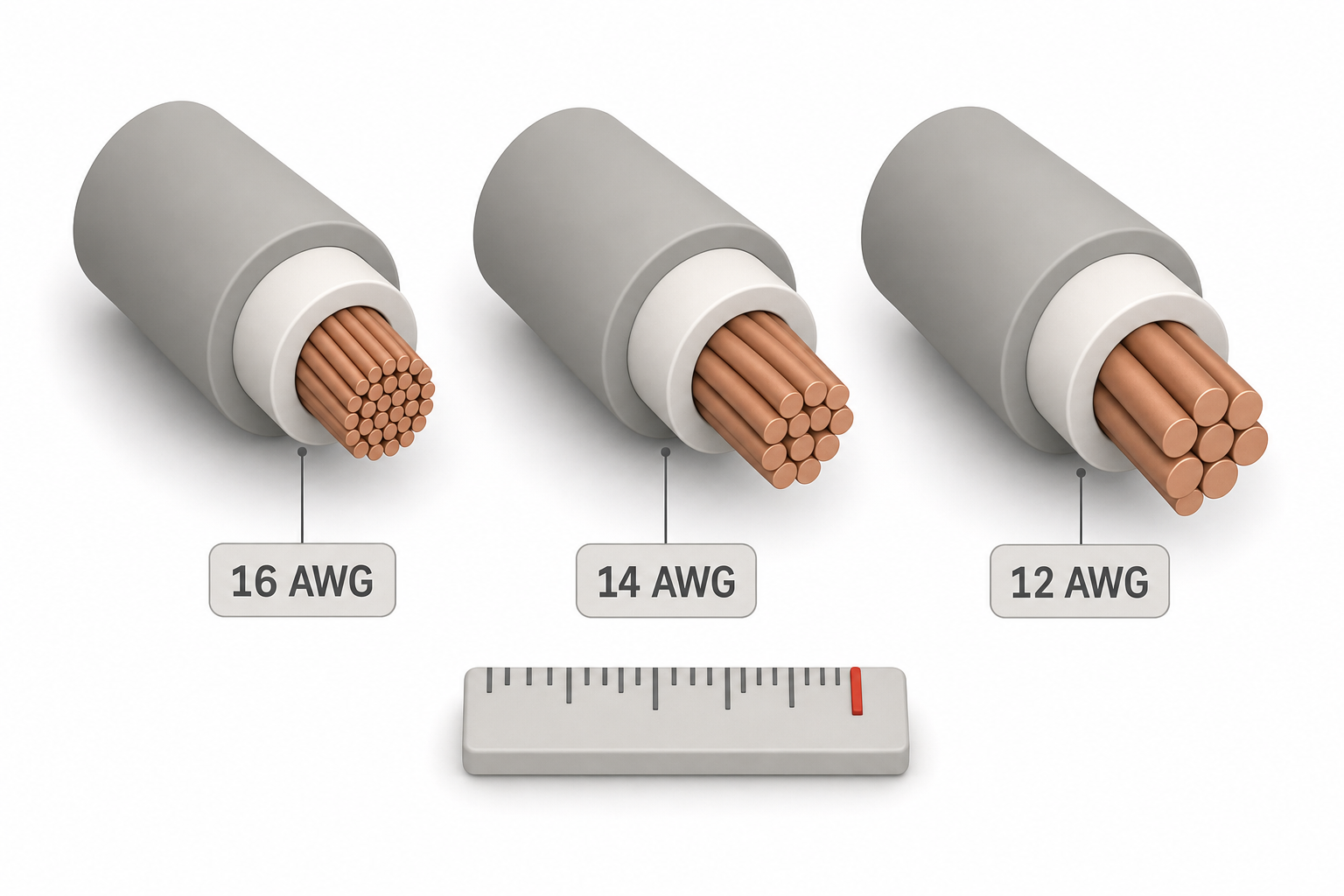
Extension cords are rated by American Wire Gauge (AWG). Confusingly, a lower AWG number means a thicker wire — a 12-gauge cord carries more current safely than a 16-gauge cord. Thicker copper has less electrical resistance, so it wastes less energy as heat and delivers more of the voltage to the tool at the far end.
Resistance is cumulative over distance, so a cord that's perfectly fine at 25 feet may not be adequate at 100 feet for the same tool. This is the part people skip — they check the amperage rating printed on the cord's tag but ignore the length, and that's exactly the combination that causes trouble.
Step 1: Find Your Tool's Amperage Draw
Check the nameplate on the tool, appliance, or the label near its power cord — it typically lists either amps or watts.
- If it lists amps, use that number directly.
- If it lists only watts, divide by 120 (standard household voltage in North America) to estimate amps: watts ÷ 120 = amps.
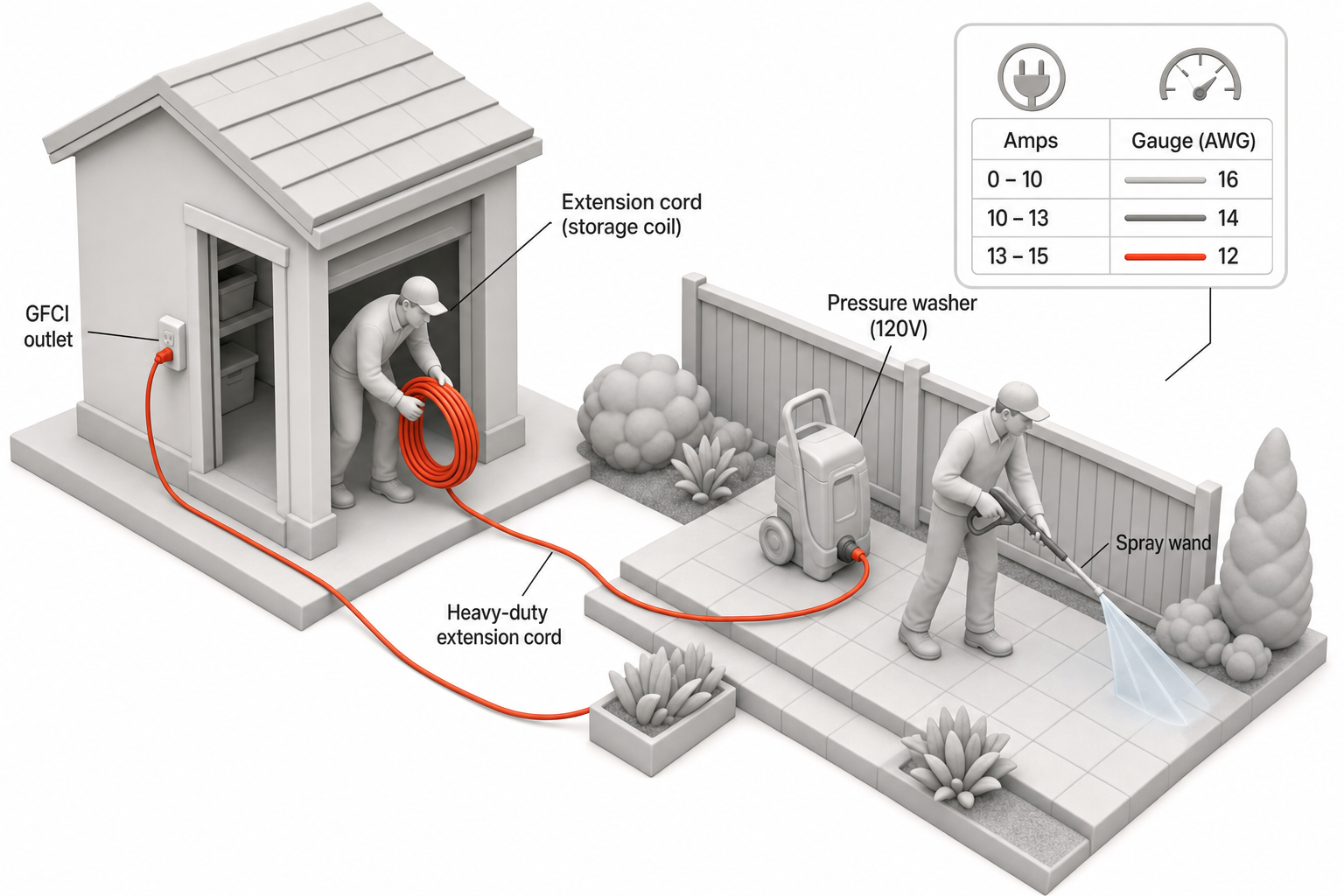
For example, a 1,500-watt pressure washer draws roughly 12.5 amps. A small string trimmer might draw 4–6 amps, while a large shop vac or space heater can draw 12–15 amps. If you're running multiple tools off one cord — a common mistake with power strips outdoors — add up the amperage of everything plugged in at once.
Step 2: Measure the Actual Run Length
Measure the real path the cord will take, not the straight-line distance — around the side of the house, up over a fence, coiled near an outlet. Round up to the next common cord length (25, 50, 100, or 150 feet) so you're not caught short mid-project.
Step 3: Match Amperage and Length to Gauge
Here are widely used general-purpose guidelines for 120-volt circuits; manufacturers' charts vary slightly, so check the chart printed on your cord's packaging or tag when possible.
| Cord Length | Up to 7 amps | 7–10 amps | 10–15 amps | 15–20 amps |
|---|---|---|---|---|
| 25 ft | 16 AWG | 16 AWG | 14 AWG | 12 AWG |
| 50 ft | 16 AWG | 14 AWG | 12 AWG | 10 AWG |
| 100 ft | 14 AWG | 12 AWG | 10 AWG | 10 AWG (or avoid) |
| 150 ft | 12 AWG | 10 AWG | 10 AWG | not recommended |
A few practical takeaways from this kind of chart:
- When in doubt, size up. A heavier-gauge cord than strictly necessary is never a safety problem — it's just bulkier and pricier. An undersized cord is the actual hazard.
- High-draw tools at long distances get impractical fast. If your table saw needs a 100-foot run, you may be better off running a proper outdoor-rated circuit or generator closer to the work area — at that point, consider whether the job calls for an electrician rather than a longer cord.
- Multiple cords chained together effectively add their lengths and should be sized for the combined distance, not treated as separate short runs.
Step 4: Confirm It's Rated for Outdoor Use
Gauge alone isn't the whole story. Outdoor-rated cords are jacketed in materials designed to resist sunlight, moisture, and abrasion, and they're typically marked with a