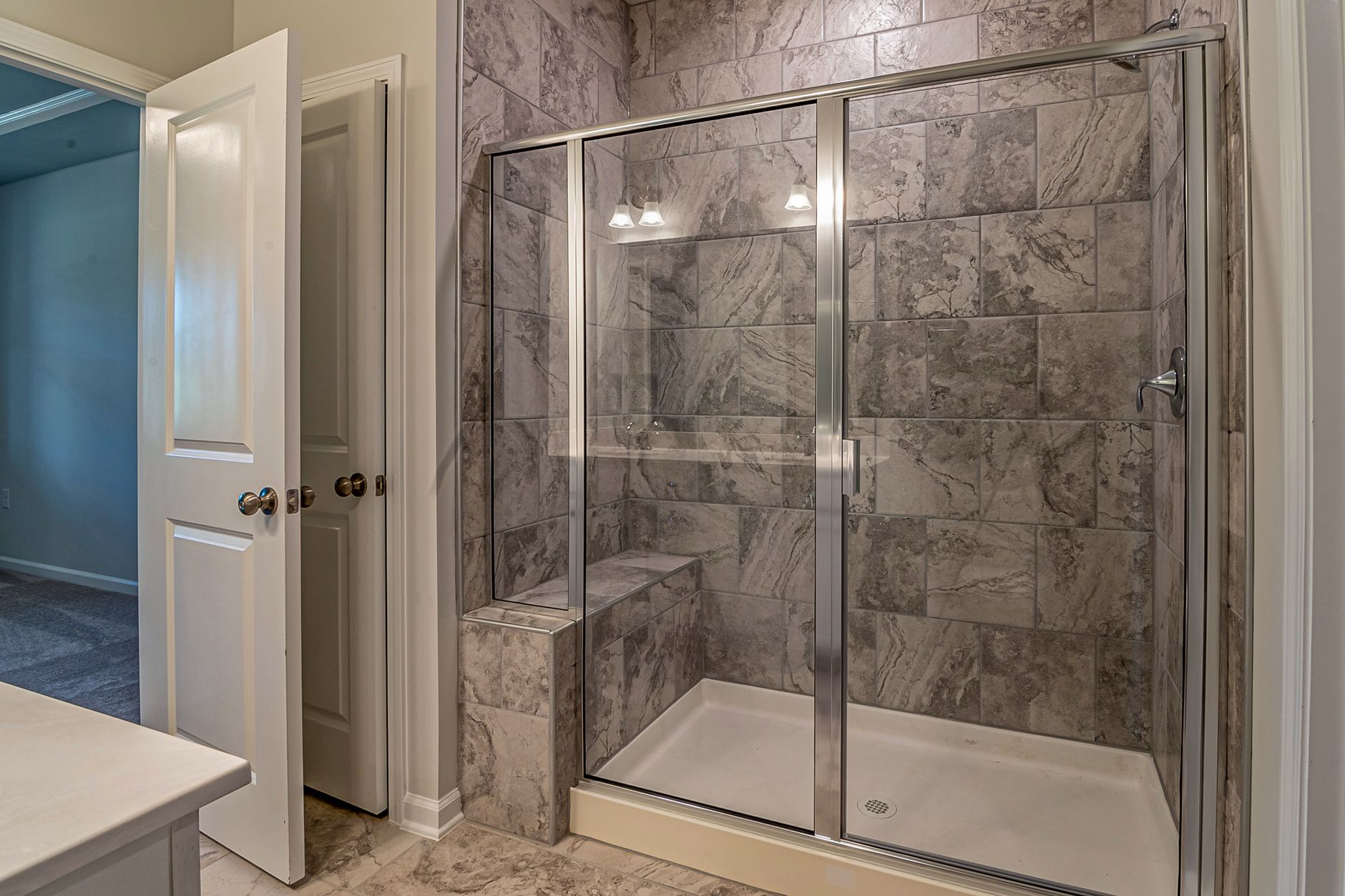
Cloudy, chalky buildup on a glass shower door is almost always mineral scale left behind as hard water evaporates, not dirt. Because it's mineral deposit rather than grime, regular soap and a sponge won't touch it — you need something acidic to dissolve the minerals, or an abrasive-free chemical stain remover formulated for the job. This guide compares the two main approaches and shows how to seal the glass afterward so the stains don't just come right back.
Why Shower Doors Get Cloudy
Hard water contains dissolved calcium and magnesium. When water beads on glass and evaporates, it leaves those minerals behind as a thin film. Over weeks and months, layer after layer builds into the white, crusty haze you see at eye level and along the bottom third of the door, where water sits longest. Soap scum often mixes in too, since soap reacts with hard water minerals to form an insoluble film — that's the grayish, slightly greasy layer sometimes found under the chalky white one.
Method 1: Distilled White Vinegar
Vinegar is a mild acid (acetic acid) and it's usually the first thing worth trying, especially for light-to-moderate buildup.
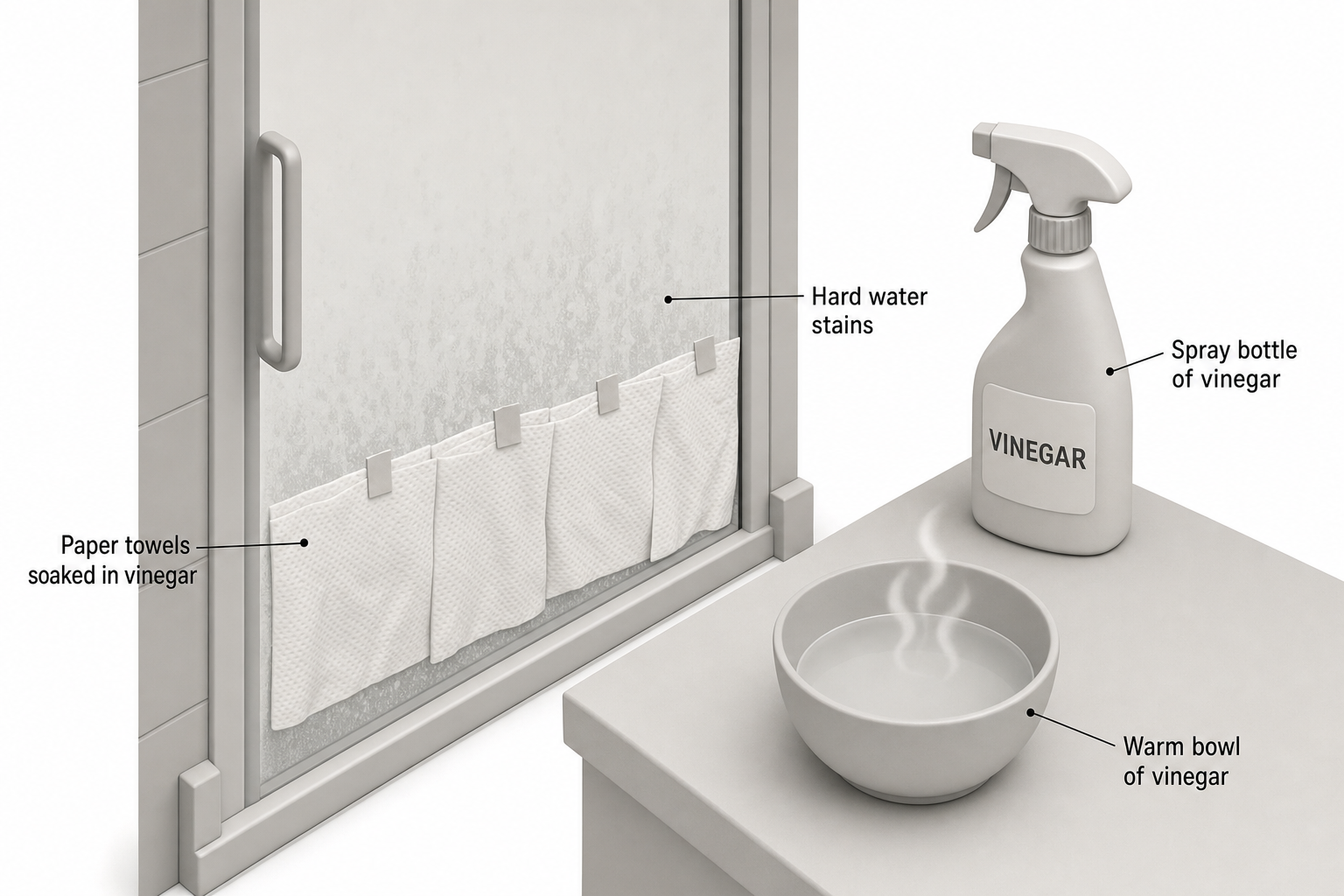
- Heat the vinegar slightly. Warm vinegar (not boiling — just warmer than room temperature) dissolves mineral deposits faster than cold. A microwave-safe bowl for 30–45 seconds works.
- Soak paper towels or a microfiber cloth in the vinegar and press them directly onto the glass, covering all stained areas.
- Let it sit for 15–30 minutes. For heavy scale, up to an hour is reasonable — just don't let the towels dry out; mist them with more vinegar if needed.
- Scrub gently with a non-scratch nylon scrub pad or a soft cloth, working in small circles.
- Rinse thoroughly with warm water and squeegee or towel-dry immediately, since leftover vinegar residue can leave its own dull film if allowed to evaporate on the glass.
For stubborn spots, a paste of vinegar and baking soda (applied after the vinegar soak, left for a few minutes, then scrubbed) adds mild abrasion without scratching most glass or fiberglass shower surfaces.
Method 2: Commercial Hard Water Stain Removers
When vinegar isn't cutting through months or years of buildup, a commercial glass and shower stain remover formulated with stronger acids (often citric, glycolic, or phosphoric acid blends) can be more effective in a single pass. These products are generally worth reaching for when:
- The stains have a rough, sandpaper-like texture rather than a smooth haze (a sign of thick, aged scale).
- Vinegar soaking hasn't fully cleared the film after two or three attempts.
- You're dealing with a large glass enclosure and want to save time.
General application steps (always confirm against the specific product's label, since formulations differ):
- Apply to dry or slightly damp glass rather than a soaking-wet surface — this keeps the product concentrated instead of diluting it.
- Let it dwell for the time stated on the label, typically a few minutes, not hours.
- Scrub with a non-scratch pad, focusing on textured or etched buildup.
- Rinse completely and dry the glass.
Vinegar vs. Commercial Removers: Which to Choose
| Factor | Vinegar | Commercial Remover |
|---|---|---|
| Cost per use | Very low | Higher |
| Strength | Mild acid, slower on heavy scale | Often stronger, faster acting |
| Safety | Low toxicity, safe to touch | Requires gloves/ventilation |
| Best for | Light to moderate, regular upkeep | Heavy, long-neglected buildup |
| Fume risk if mixed wrong | Low, but never mix with bleach | Higher — follow label strictly |
A practical approach many homeowners use: try vinegar first since it's inexpensive and gentle, and reserve a commercial remover for a one-time deep clean on doors that haven't been treated in a long while.
Etched Glass: When Stains Won't Come Out
If the cloudiness doesn't budge no matter what you use, and running a fingernail across the glass reveals a rough, pitted texture rather than a smooth (if hazy) surface, the mineral deposits may have etched into the glass itself over years of neglect. This is physical damage to the glass surface, not a removable stain, and no cleaner will reverse it. At that point the realistic options are a professional glass polishing/restoration service (which uses specialized cerium oxide compounds and buffing equipment) or replacing the glass panel.
Sealing the Glass to Prevent Stains From Returning
Cleaning solves the existing problem; a sealant addresses the recurring one. After the glass is completely clean and dry, applying a hydrophobic sealant creates a surface that makes water bead up and run off rather than sheeting and evaporating in place — which is what leaves mineral deposits behind.
- Confirm the glass is fully clean and dry before sealing — sealant applied over existing residue traps it in rather than repelling future stains.
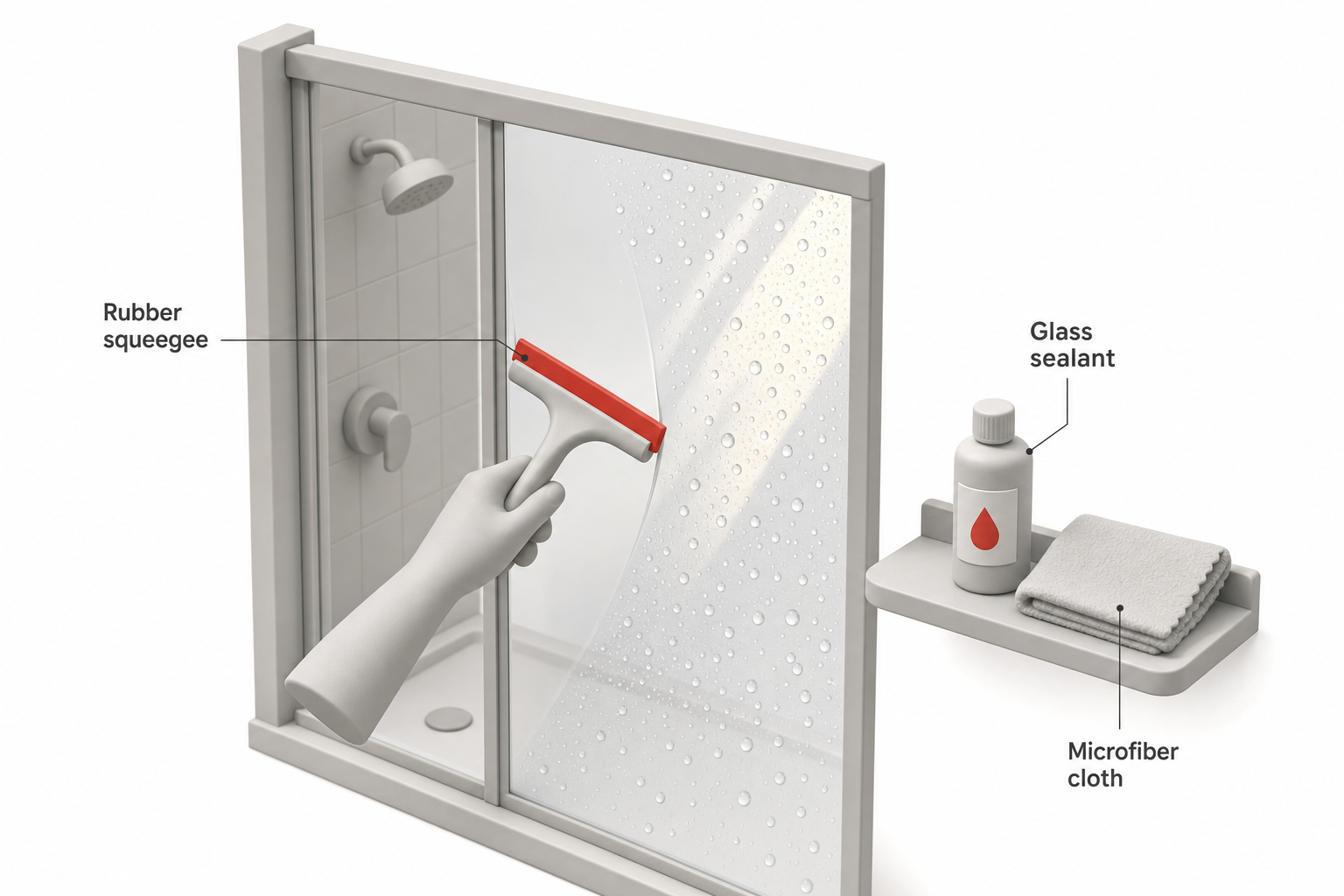
- Apply a glass sealant or rain-repellent coating (the same category of product used on car windshields works on shower glass) in thin, even coats following the label's directions — most call for buffing off excess after a short cure time.
- Reapply periodically. Most sealants wear down with regular washing and squeegee use; reapplying every one to three months is a common recommendation, though this varies by product and how hard your water is.
- Squeegee after every shower. This single habit — wiping the glass dry with a squeegee right after use — does more to prevent hard water buildup long-term than any cleaner, because it removes water before it has a chance to evaporate and leave minerals behind.
Maintenance Routine That Actually Works
- Squeegee the glass after every shower — takes under a minute.
- Wipe down with a vinegar-dampened cloth once a week to catch buildup early, before it hardens.
- Deep clean with vinegar or a commercial remover every one to two months, or sooner if you notice haze returning.
- Reapply a glass sealant on the schedule the product recommends.
This rhythm turns stain removal from an occasional deep-scrub chore into quick weekly maintenance.
FAQ
Will vinegar damage my shower door frame or hardware? Vinegar can dull or corrode certain metal finishes, especially brass, bronze, and some anodized aluminum, with prolonged contact. Confine vinegar applications to the glass itself and rinse metal frame edges promptly if they get splashed.
How often should I clean hard water stains off a glass shower door? A quick squeegee after every use combined with a weekly vinegar wipe-down usually prevents stains from building up enough to need a deep clean more than every month or two, though this depends on how hard your local water is.
Can I use a razor blade or metal scraper on glass shower doors? It's generally best avoided on tempered shower glass unless the manufacturer specifically permits it, since razor blades can scratch glass or damage protective coatings; a non-scratch nylon pad is a safer default.
Do glass sealants really stop hard water stains for good? No sealant is permanent — they reduce how quickly minerals redeposit by making water bead and run off, but they wear down with washing and need periodic reapplication, especially in hard-water areas.
Is it worth replacing a glass shower door instead of cleaning it? If the cloudiness is confirmed to be etching (permanent glass damage) rather than a removable film, and the door is old or already showing other wear like hardware corrosion, replacement can be more cost-effective long-term than repeated failed cleaning attempts — a glass installer can assess this in person.