
Rust on metal patio furniture usually starts small — a bubble in the paint at a weld joint, a rough patch on a chair leg where water pools — but left alone it spreads and eventually eats through thin steel tubing. The right fix depends heavily on what the furniture is made of and how deep the rust has gone. This guide walks through three approaches (mechanical removal with a wire brush, chemical removal with a vinegar soak, and rust conversion) and explains when each one makes sense.
Identify Your Metal First
Before treating anything, figure out what you're working with, since the wrong method can damage the finish or the metal itself.
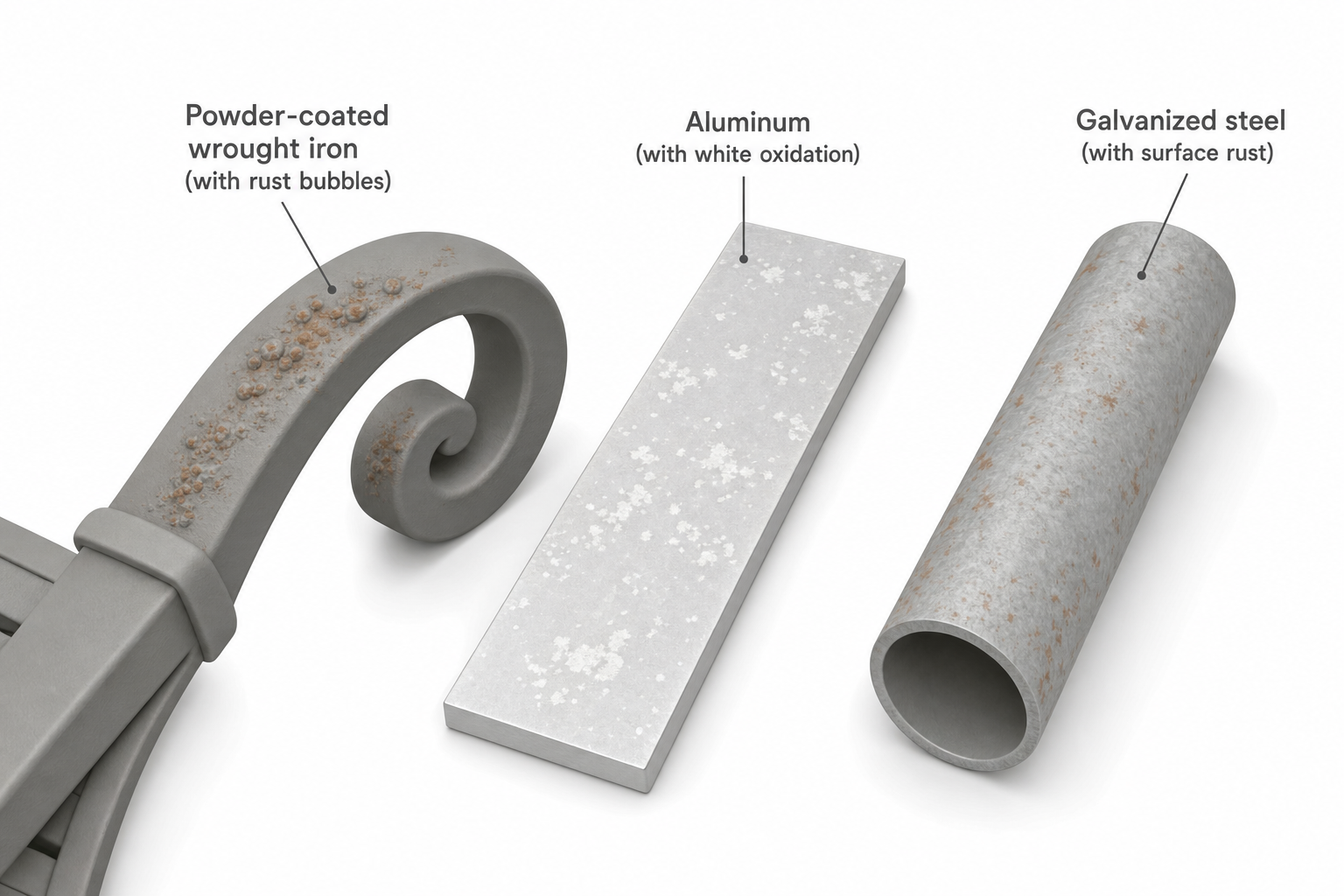
- Wrought iron or steel — heavy, magnetic, often with a powder-coated or painted finish. Rusts readily once the coating is scratched or chipped.
- Aluminum — lightweight, non-magnetic. True rust (iron oxide) doesn't form on aluminum, but it can develop white, powdery oxidation that looks similar and is treated differently.
- Galvanized steel — has a zinc coating that sacrifices itself to protect the steel underneath; look for a dull gray, slightly speckled surface. Surface rust here is often just the zinc layer wearing thin, not the steel itself failing yet.
If you're not sure, a magnet is the fastest test: it will stick firmly to iron and steel, and not at all to aluminum.
Method 1: Wire Brush and Sanding (Best for Heavy Surface Rust on Iron/Steel)
This is the go-to method when rust has already broken through paint and formed flaking or pitted patches on iron or steel furniture.
- Brush off loose material. Use a stiff wire brush or a wire wheel attachment on a drill to knock off flaking rust and loose paint. Work in the direction of the metal's grain or tubing where possible to avoid gouging.
- Sand the transition zone. Switch to 120- to 220-grit sandpaper (or a fine sanding sponge for curved arms and scrollwork) to smooth the edge between bare metal and remaining sound paint, so the repaint doesn't show a ridge.
- Address pitting. If the wire brush reveals small pits or shallow holes, a light pass with a rust-removal wheel or coarse sandpaper (80-grit) can knock down the high points, though deep pits will still show slightly under new paint.
- Wipe down with a degreaser or denatured alcohol to remove dust and oils before priming.
This method is fast and works on any thickness of rust, but it's dusty, can leave visible tool marks on decorative ironwork, and requires immediate priming — bare steel will start forming new surface rust within hours in humid conditions.
Method 2: Vinegar Soak (Best for Small Hardware and Light-to-Moderate Rust)
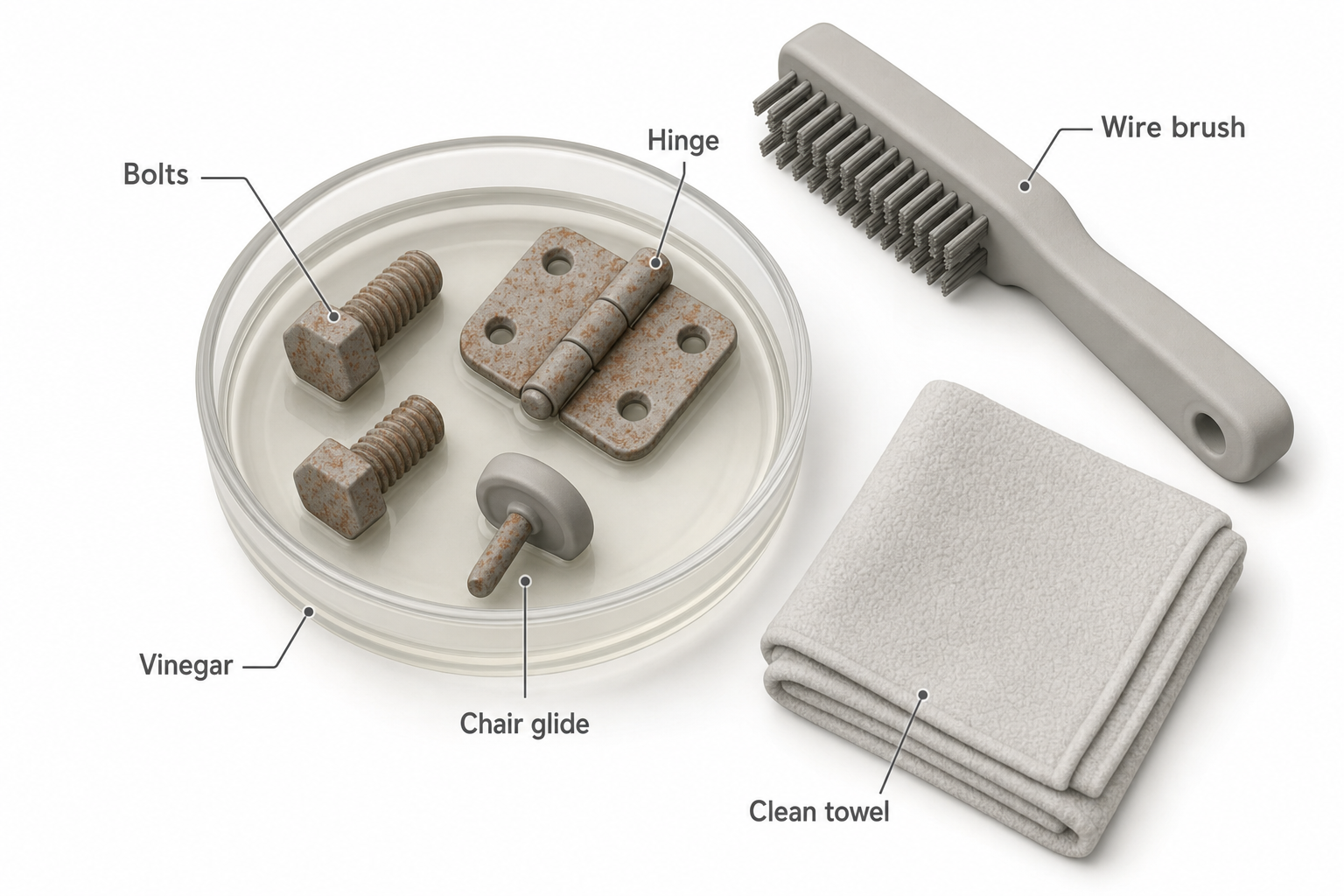
Plain white vinegar's acetic acid dissolves iron oxide without heavy abrasion, which makes it well suited to removable parts — bolts, hinges, chair glides, small brackets — rather than a whole frame.
- Disassemble what you can. Remove screws, bolts, and hardware where possible.
- Submerge in undiluted white vinegar. Use a container that fully covers the rusted part. For light rust, 1-2 hours is often enough; for moderate rust, an overnight soak (8-12 hours) is more typical.
- Scrub with a brush or steel wool after soaking — the loosened rust should wipe away much more easily than before soaking.
- Rinse thoroughly and dry immediately. Vinegar residue left on bare metal will encourage flash rust within the hour, so rinse with water, then wipe dry, then let air-dry completely.
- Neutralize if needed. A quick rinse in a baking-soda-and-water solution after the vinegar soak can help neutralize any remaining acid before drying.
For larger furniture pieces that can't be submerged, vinegar-soaked rags wrapped around a rusty joint and covered in plastic wrap for a few hours can achieve a similar, if slower, effect.
Vinegar is inexpensive and gentle on surrounding paint, but it's slow on heavy rust, won't do much for deep pitting, and shouldn't be left on for extended periods on aluminum or on metal with decorative plating, since the acid can dull or etch those finishes.
Method 3: Rust Converter (Best for Rust You Can't Fully Remove)
A rust converter is a liquid or gel, typically based on tannic acid, that chemically transforms iron oxide into a stable black compound and often leaves a paintable primer layer behind. It's the right call when rust has pitted the metal enough that full removal isn't realistic, or when you want a longer-lasting result on a frame you don't want to fully strip.
- Remove loose rust and scale first. A converter needs to reach the rust surface — wire-brush off flaking material and loose paint, but you don't need to sand down to bare shiny metal the way you would before priming alone.
- Clean and dry the surface. Any oil, wax, or moisture will interfere with the chemical reaction.
- Apply according to the product's instructions, usually with a brush, in a thin even coat. Most manufacturers specify avoiding puddling, since thick applications can stay tacky.
- Let it cure fully. Converters typically need several hours to a full day depending on humidity and temperature; check the specific product's instructions for cure time before touching or painting over it.
- Prime and paint if the product requires it, or leave it if the converter is labeled as a standalone protective coating. Many but not all rust converters are formulated to be painted over directly.
Rust converters are the best option for extending the life of furniture with moderate pitting, but they don't restore lost metal — a badly rusted-through leg or a weak weld should still be evaluated for structural safety rather than just cosmetically treated.
Choosing the Right Method by Furniture Type
| Furniture material | Light surface rust | Moderate rust | Heavy/pitted rust |
|---|---|---|---|
| Wrought iron / steel | Vinegar soak or light sanding | Wire brush + primer | Wire brush + rust converter + primer |
| Galvanized steel | Usually just clean and monitor | Light sanding, avoid removing all zinc coating | Rust converter, since sanding through zinc exposes bare steel |
| Aluminum (oxidation, not true rust) | Mild soap and water, or a vinegar wipe | Fine steel wool + aluminum-safe polish | Rarely needed; deep pitting usually means the finish is beyond restoration |
After Treatment: Sealing It Back Up
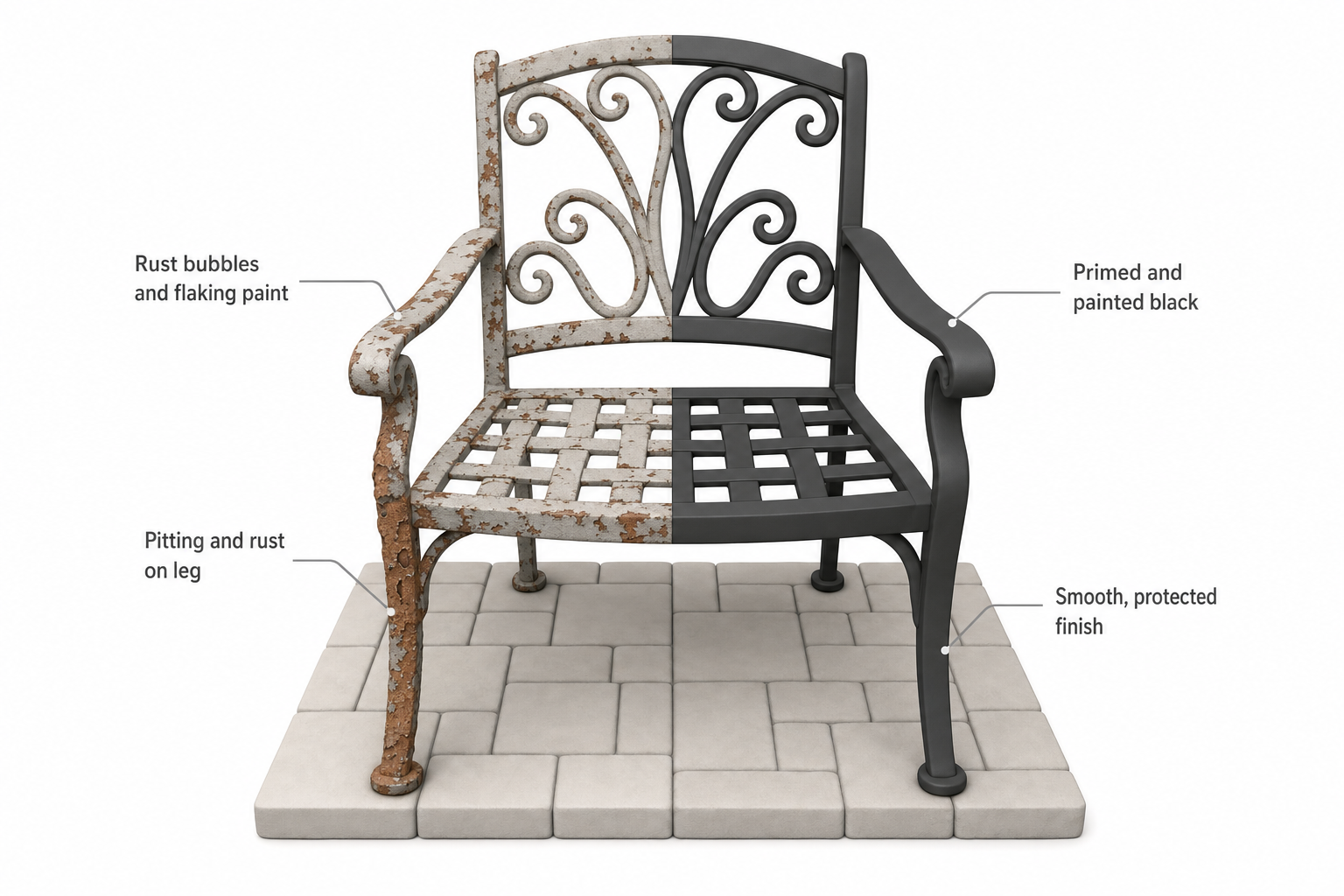
Whatever method you use, bare metal left unprotected outdoors will rust again quickly. Once the surface is clean, dry, and (if applicable) converted:
- Apply a metal primer suited for outdoor use, following the dry-time listed on the product.
- Follow with two thin coats of an exterior-rated metal paint rather than one thick coat, which is more prone to cracking.
- Consider a clear protective topcoat on pieces that sit directly on wet ground or get regular sprinkler contact.
- Add furniture pads, gravel, or a raised base under legs to reduce standing water contact going forward.
FAQ
Can I use baking soda instead of vinegar to remove rust? Baking soda paste is milder and works better as a light cleaner or as a neutralizing rinse after a vinegar soak than as a primary rust remover; for actual rust dissolving, vinegar's acidity is doing most of the work.
Will rust keep coming back after I paint over it? If any active rust or moisture was sealed in under the paint, it typically will resurface, which is why full drying and, for pitted areas, a rust converter before painting matters more than the paint itself.
Is it safe to sit on furniture that has surface rust? Light surface rust on paint or coating is usually cosmetic, but if a leg, arm, or weld feels soft, flexes, or has rusted through to a visible hole, treat it as a structural concern and test carefully or avoid using it until repaired.
Can I use a pressure washer to remove rust? A pressure washer can knock off very loose flaking rust and old paint but generally isn't strong enough to remove adhered rust on its own, and it can force water into hollow tubing joints, so it's best used only as a pre-cleaning step before wire brushing.
How often should I check outdoor metal furniture for rust? Checking at the start and end of the outdoor season, and after any period of heavy rain or snow, is a reasonable habit, especially at welds, screw holes, and anywhere the finish has visible chips.