
A gate that won't latch is almost never a problem with the latch itself — it's a symptom of something shifting elsewhere in the system. The gate frame, hinges, posts, and latch hardware all have to line up within a few millimeters for the latch to catch cleanly. When one of those moves, even slightly, the latch either overshoots, undershoots, or binds. The good news is that the fix is usually a 20-30 minute adjustment, not a rebuild — as long as you diagnose the actual cause first instead of just hacking at the latch plate.
This guide walks through the three most common culprits in order of likelihood: a settled or leaning post, sagging hinges, and simple latch misalignment. Work through them in this order, because fixing a post problem can eliminate the need to touch the hinges or latch at all.
Step 1: Diagnose Before You Adjust Anything
Before reaching for a screwdriver, spend five minutes watching the gate move.
- Close the gate slowly and watch where it stops. Does the latch bolt line up with the strike but stop just short (gate needs to travel further)? Does it overshoot and hit the post (gate is swinging too far)? Or does the bolt line up vertically but miss the strike opening entirely (hinge sag)?
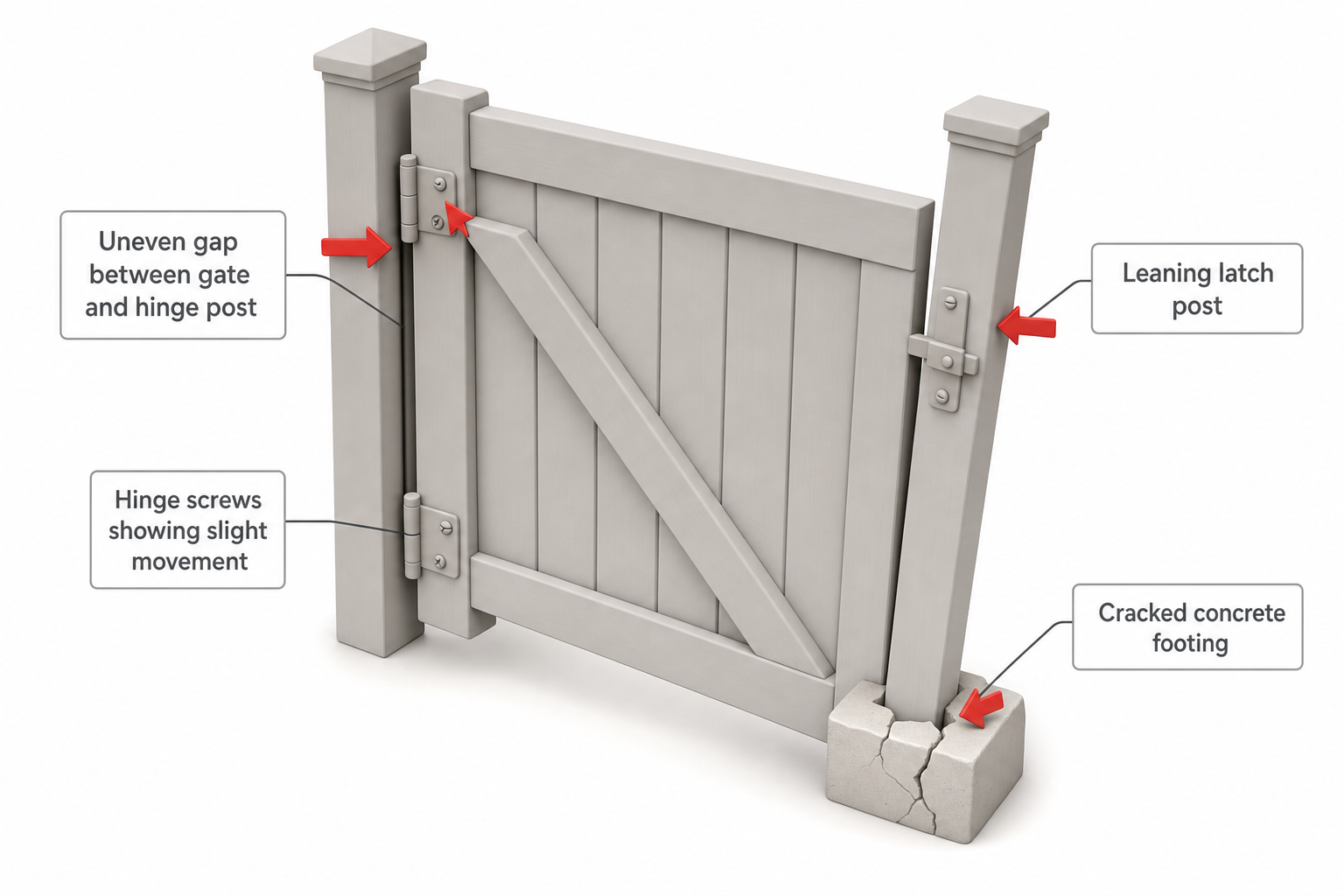
- Check the gap along the hinge side. Stand back and look at the reveal (gap) between the gate and the hinge post, top and bottom. If the gap is even top to bottom, the hinges are probably fine. If the gap is wider at the top and tighter at the bottom (or vice versa), the gate has dropped — almost always a hinge or post issue.
- Push down gently on the latch-side corner of the gate. If it moves more than a few millimeters, or you hear the hinge screws shift in the wood, the hinges have loosened.
- Look at the posts themselves. Grab the latch post and hinge post separately and give each a firm push front-to-back. Any visible lean, wobble, or gap between the post and the ground/concrete footing points to a foundation problem, not a hardware problem.
Cause 1: Post Settling or Leaning
Over months or years, a gate post set in soil (rather than a full concrete footing) can shift as the ground freezes, thaws, dries, or gets saturated by rain. A leaning post throws off the entire geometry of the gate opening, even if the gate and hinges are in perfect condition.
How to confirm it: Use a torpedo level against the face of both posts. Anything more than roughly 1-2 degrees off plumb is enough to misalign a latch. Also check whether the post rocks in the ground when you push on it — a loose post will keep moving even after you fix the latch.
How to fix it:
- If the post rocks but is still structurally sound, you can often stabilize it without resetting it fully. Dig out 6-8 inches of soil around the base, tamp in packed gravel, and top with fresh soil or a quick-setting concrete mix poured around the post.
- If the post has rotted at the base or the concrete footing has cracked and separated, it typically needs to be reset: dig it out, replace the footing, and reset it plumb using temporary braces until the concrete cures (usually 24-48 hours before hanging the gate, depending on the concrete product's cure time).
- Once the post is plumb and stable, recheck the latch alignment before making any adjustments to the hinges or latch — resetting the post may have already solved the problem.
[!region] Frost heave is a common cause of post movement in climates with freezing winters, and local building codes in those areas often specify a minimum footing depth below the frost line for structural posts. Requirements vary significantly by region, so check with your local building department before resetting a post.
Cause 2: Hinge Sag
Hinge sag happens when the screws holding the top or bottom hinge have loosened in the wood, or when the hinge itself has bent slightly under the gate's weight. This is especially common on wide or heavy gates (over about 4 feet) hung on hinges that are undersized for the load.
How to confirm it: With the gate closed, measure the gap between the gate and the latch post at the top and at the bottom. A difference of more than about 6mm (1/4 inch) between top and bottom usually indicates the gate has dropped on its hinge side.
How to fix it:
- Tighten loose screws first. If screws spin freely without biting, the pilot holes have worn oversized. Remove the screws, fill the holes with wood glue and wooden golf tees or matchsticks, let the glue cure fully, then re-drive the screws once the wood filler has hardened.
- Upgrade to longer screws if the originals are short (under 1.5 inches) — longer screws bite into fresh wood behind the worn-out holes and hold significantly better, especially on gate posts where the outer wood has weathered.
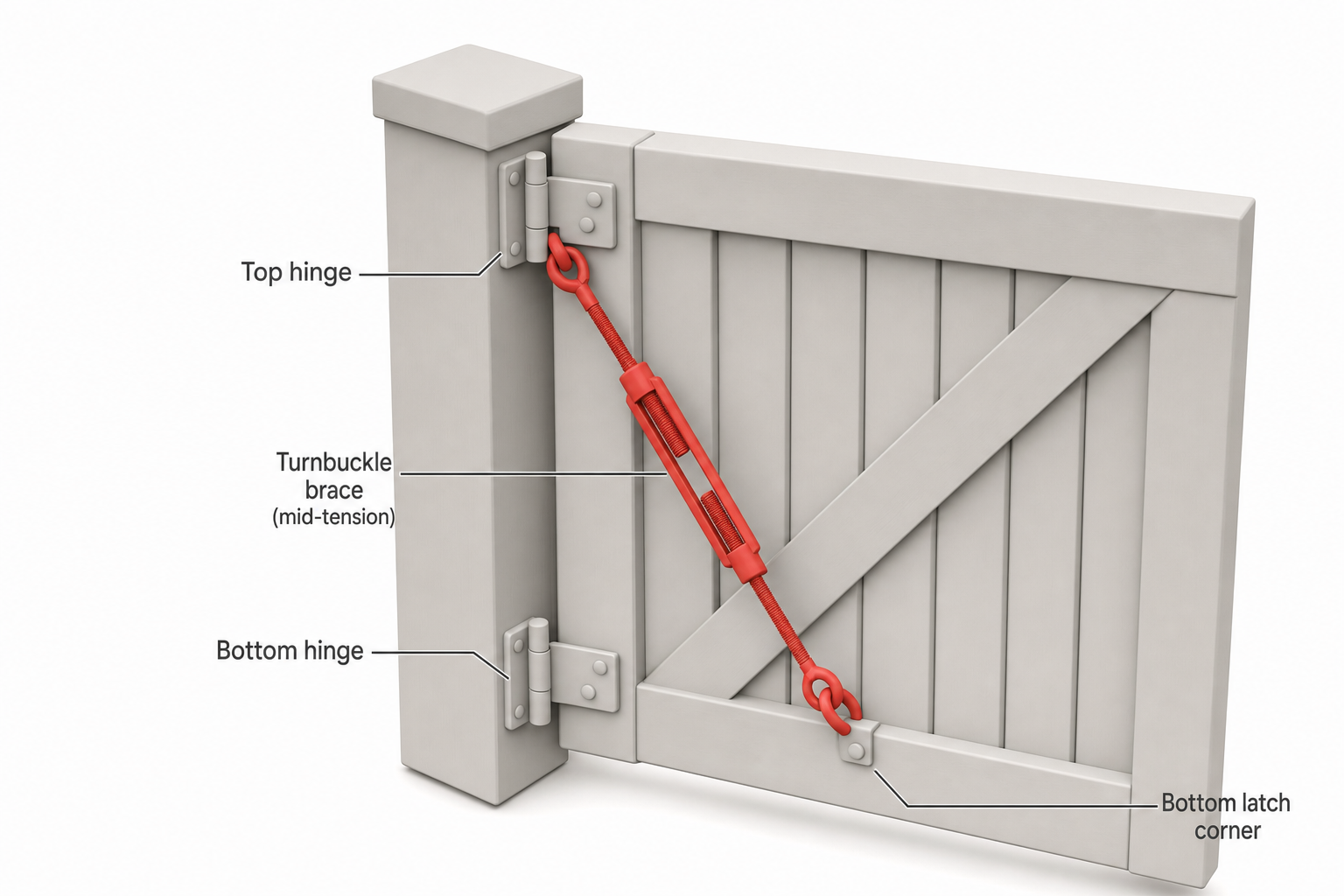
- Add a diagonal brace if the gate frame itself has racked out of square (a common issue on older wooden gates without a cross-brace). A brace running from the top of the hinge side to the bottom of the latch side, tensioned with a turnbuckle, pulls the frame back square and keeps it there.
- Consider heavier-duty hinges if the current ones are visibly bent or too light for the gate's weight — the recommendations below include options sized for different gate weights.
[!safety] If a gate is heavy (solid wood, metal, or wider than about 6 feet), have someone support its weight while you work on the hinges, and never place your fingers between the gate and post while testing swing — a heavy gate can pinch hard enough to cause serious injury.
Cause 3: Latch Misalignment
If the posts are plumb and the hinges are solid but the latch still doesn't catch, the issue is usually a simple alignment problem between the latch bolt and the strike (the receiving piece mounted on the post).
How to fix it:
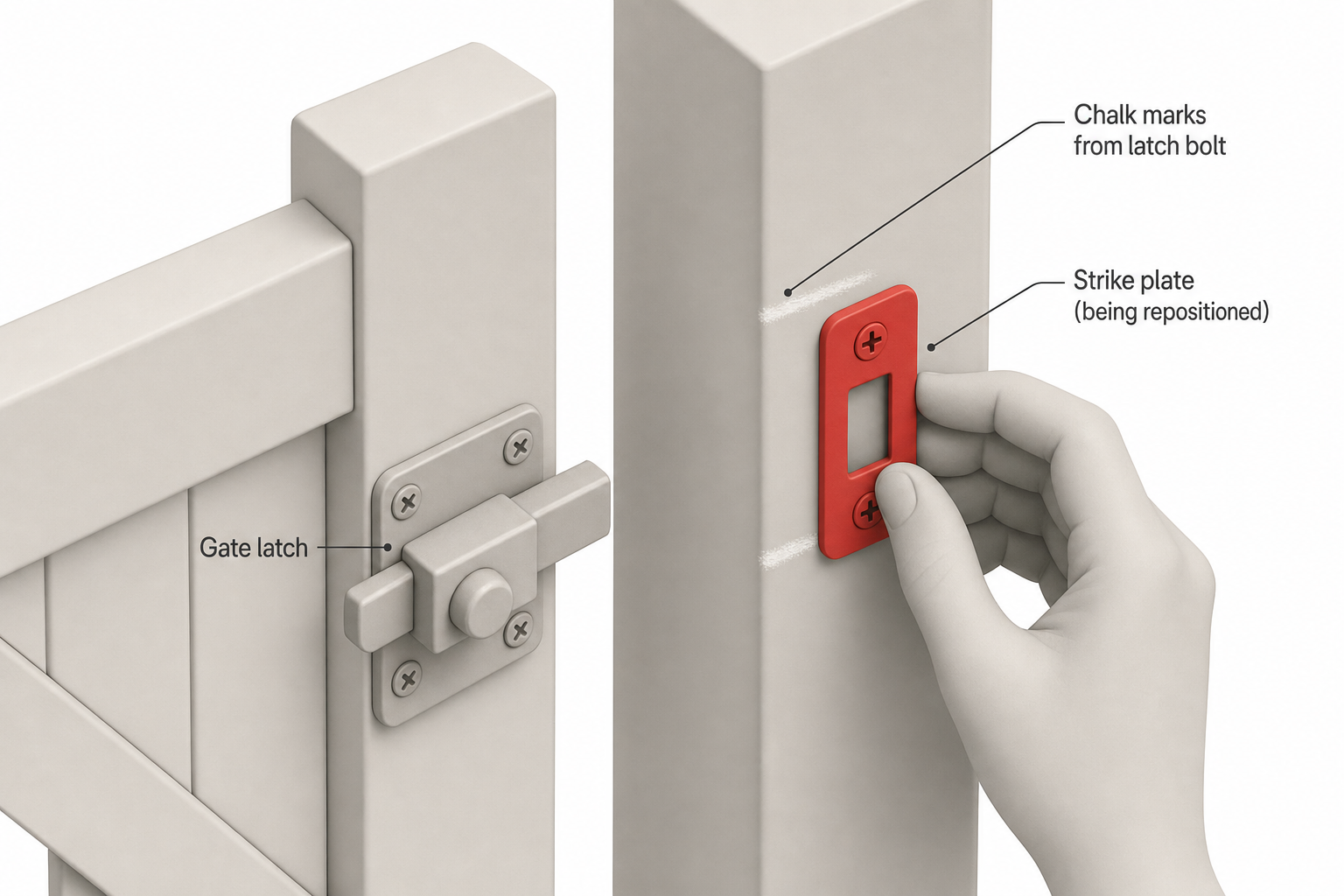
- Loosen the strike plate screws (don't remove them) so the strike can slide slightly.
- Close the gate and mark where the latch bolt actually contacts the post — use a pencil or a bit of chalk on the bolt itself so it leaves a mark.
- Reposition the strike plate to line up with that mark, then test the latch several times before fully tightening the screws.
- If the latch bolt is too short to reach the strike because the gap between gate and post has widened (often from hinge wear or a slightly reset post), you have two options: shim the strike plate outward with washers or a thin wood shim behind it, or replace the latch with a version that has a longer throw.
- For gravity latches (common on simple wooden garden gates), check that the latch bar drops freely into the catch without rubbing — sand down any high spots on the wood where the bar rides, and make sure the catch bracket is angled slightly to guide the bar in rather than blocking it square-on.
- For spring-loaded or self-latching hardware (common on pool safety gates), test the self-closing action multiple times after adjustment — the latch should engage automatically every time, not just occasionally.
[!safety] If your gate is part of a pool enclosure or other required safety barrier, many local codes mandate that the gate be self-closing and self-latching, and specify minimum latch height and gap tolerances. Because these requirements vary by jurisdiction and are safety-critical, confirm your adjustments meet local code, and consider having a licensed contractor verify compliance rather than relying solely on DIY adjustment.
Quick Reference: Matching Symptom to Cause
- Even gap, but latch misses side-to-side: latch/strike misalignment — go to Cause 3.
- Gap wider at top than bottom, or vice versa: hinge sag — go to Cause 2.
- Entire gate leans or the post wobbles at the base: post settling — go to Cause 1.
- Gate drags on the ground: almost always hinge sag or a dropped post, not the latch — check hinges and posts before adjusting the latch.
FAQ
Why does my gate latch fine in summer but not in winter? This is a classic sign of wood movement or post shift from ground moisture and temperature changes. Wood gates expand and contract slightly with humidity, and posts can shift with freeze-thaw cycles in colder climates. If the problem is seasonal and reverses itself, a small adjustable strike plate or a latch with some tolerance built in can accommodate the movement better than a rigid fixed latch.
Can I fix a leaning gate post without digging it up? Sometimes. If the post is only slightly loose and not rotted, tamping fresh gravel or a quick-setting concrete mix around the base can stabilize it without a full reset. If the post is visibly leaning more than a couple of degrees or rocks significantly, a proper reset is more reliable long-term.
How do I know if it's the hinges or the post causing the sag? Push straight down on the latch-side corner of the closed gate. If you feel the hinges flex or hear screws move, it's the hinges. If the entire post moves when you push on it separately, it's the post. Testing them independently avoids fixing the wrong thing.
Should I replace the whole latch or just adjust the strike plate? Try adjusting the strike plate first — it solves the vast majority of misalignment issues and costs nothing but time. Only replace the latch hardware if the bolt itself is bent, corroded, or too short to reach the strike even after repositioning.
How often should I check gate hardware to prevent this from happening again? A quick check once or twice a year — tightening hinge screws and testing the latch — catches small issues before they become full misalignments. Gates exposed to heavy daily use, direct weather, or coastal salt air may need more frequent attention.